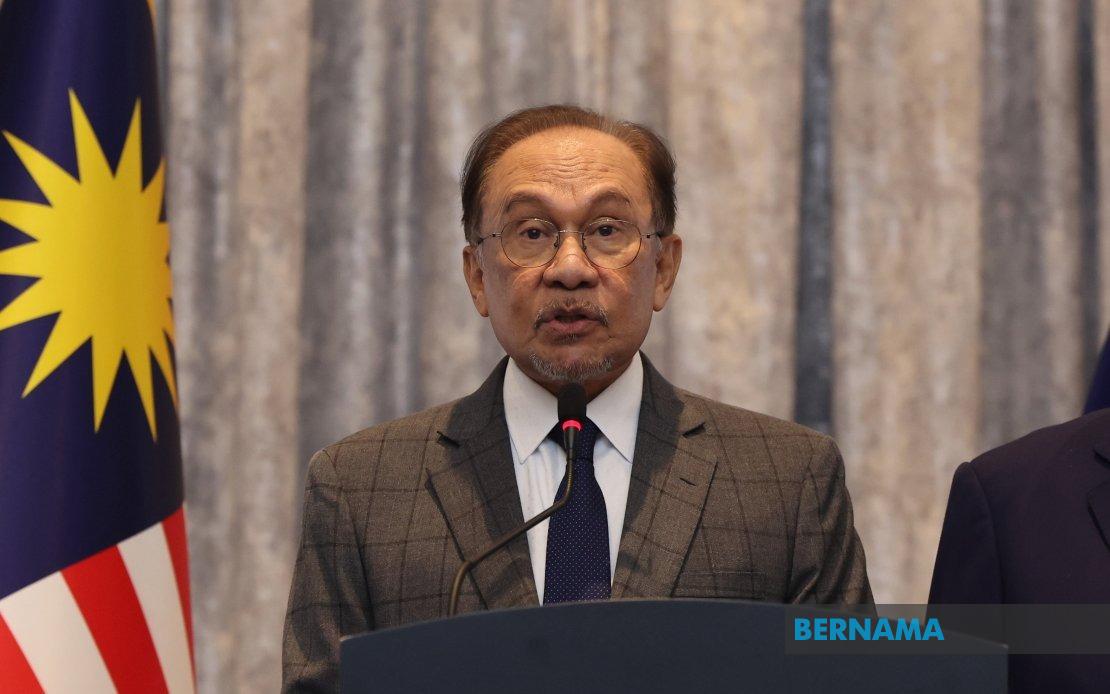
Prime Minister Datuk Seri Anwar Ibrahim has cautioned the Malaysian media landscape against sacrificing fundamental journalistic values in its race to adopt cutting-edge technologies, delivering his message at a significant gathering of press representatives in Kuala Lumpur this week. The warning comes as newsrooms across the region grapple with integrating artificial intelligence, digital platforms and automated content distribution systems into their operations, often at the expense of editorial principles and culturally rooted storytelling traditions.
Anwar's intervention into the technology-media nexus addresses a mounting concern among policy makers that rapid digital transformation, without corresponding safeguards, could undermine the press's ability to serve as an independent voice accountable to local communities. The Prime Minister acknowledged that technological freedom in information systems, digital infrastructure and artificial intelligence deployment remains essential for Malaysia's competitive positioning, yet he cautioned that such progress must remain anchored to established ethical frameworks and values that reflect Malaysian identity and aspirations.
The historical context Anwar invoked carries particular weight in Southeast Asia, where media scholars have long documented how Western news organisations shaped global narratives to serve geopolitical interests throughout the colonial and post-colonial periods. By drawing this parallel, Anwar suggested that contemporary technological dominance presents a structurally similar threat: the concentration of digital and algorithmic power in foreign hands risks determining which stories gain visibility, whose voices reach audiences, and ultimately how citizens perceive their societies and their place in the world.
Anwar introduced the concept of technological "captive mind" as a successor to earlier forms of ideological capture. Whereas previous generations faced direct political pressure and colonial administrative control over information flows, today's challenge emerges through the architecture of digital platforms, search algorithms, and artificial intelligence systems that can invisibly shape information consumption patterns. This transformation, he suggested, requires media institutions to develop new forms of vigilance and resistance, moving beyond traditional press freedom arguments to encompass data governance and algorithmic accountability.
The government, through Communications Minister Datuk Seri Fahmi Fadzil and the Malaysian Communications and Multimedia Commission, must coordinate with the media industry to establish frameworks that permit technological experimentation while preserving editorial independence and local cultural perspectives. Anwar's framing positions this as a shared national responsibility rather than a conflict between government and press, emphasizing that Malaysia cannot afford internal divisions on this foundational question of how technology will be governed and deployed.
The Prime Minister's remarks occurred during the Malaysian Press Night 2025 and the Malaysian Press Institute-PETRONAS Journalism Awards 2026, flagship events that convene leading editors, journalists and media executives. This venue signalled that Anwar views the conversation as requiring direct engagement with journalism's institutional leadership rather than regulation imposed through traditional legislative channels. By praising the Malaysian Media Council and the Malaysian Press Institute for driving media innovation, Anwar suggested that solutions must emerge from within the profession itself, with government playing a supporting rather than directive role.
For Malaysian journalists and editors, the implications are substantial. News organizations increasingly face pressure to deploy automated headline generation, algorithmic story selection, and AI-assisted reporting tools to remain cost-competitive against global digital outlets. Yet Anwar's intervention suggests that government and civil society expect Malaysian media to demonstrate how advanced technology can enhance rather than displace human editorial judgment, contextual reporting, and connection to local concerns. This framing creates space for media outlets to argue for investment in quality journalism and human expertise as a competitive advantage rather than a cost burden.
The regional dimension also merits consideration. Across Southeast Asia, smaller nations struggle to develop domestic technological capacity while competing with Chinese and Western digital platforms for audience attention and advertising revenue. Anwar's emphasis on preserving national identity and local values through media practice offers a template for other governments seeking to encourage indigenous media innovation without descending into outright censorship or protectionism. Malaysia's relatively open media environment—despite periodic tensions between press and government—positions it as a potential model for technology-enabled journalism that maintains editorial integrity.
Anwar's acknowledgment of press freedom and his appreciation for journalistic criticism and alternative viewpoints represent an important rhetorical positioning. By thanking media practitioners for upholding democratic principles and offering constructive critique, the Prime Minister created political space for the press to continue challenging government policies while engaging seriously with his underlying argument about technology governance. This approach differs markedly from attacks on "fake news" or attempts to restrict press freedom in the name of technological progress, suggesting a more nuanced policy orientation toward media regulation.
The challenge ahead involves operationalizing Anwar's principles into concrete institutional arrangements. Media organisations must decide which technological tools to adopt and which to resist, a decision calculus that requires both editorial judgment and business acumen. Without specific policy frameworks or industry standards, individual outlets may find themselves unable to resist competitive pressure toward technological adoption, even when such adoption conflicts with their understanding of professional values. The government's role in facilitating industry coordination—perhaps through the MCMC or through partnerships with professional bodies—could prove decisive in enabling Malaysian media to chart a distinctive path between technological stagnation and uncritical adoption.
Ultimately, Anwar's intervention reflects recognition that media technology is not neutral infrastructure but rather a domain of political and cultural contestation. How Malaysian newsrooms integrate artificial intelligence, how algorithms determine story visibility, and how digital platforms shape journalistic business models will influence not only the health of Malaysian journalism but also the country's capacity to maintain cultural autonomy in an increasingly digitized information environment. The Prime Minister's emphasis on vigilance, values and shared national responsibility suggests that media practitioners should expect both continued government engagement with these questions and an expectation that the profession itself will develop credible answers about how to preserve journalism's democratic function while embracing legitimate technological innovation.

