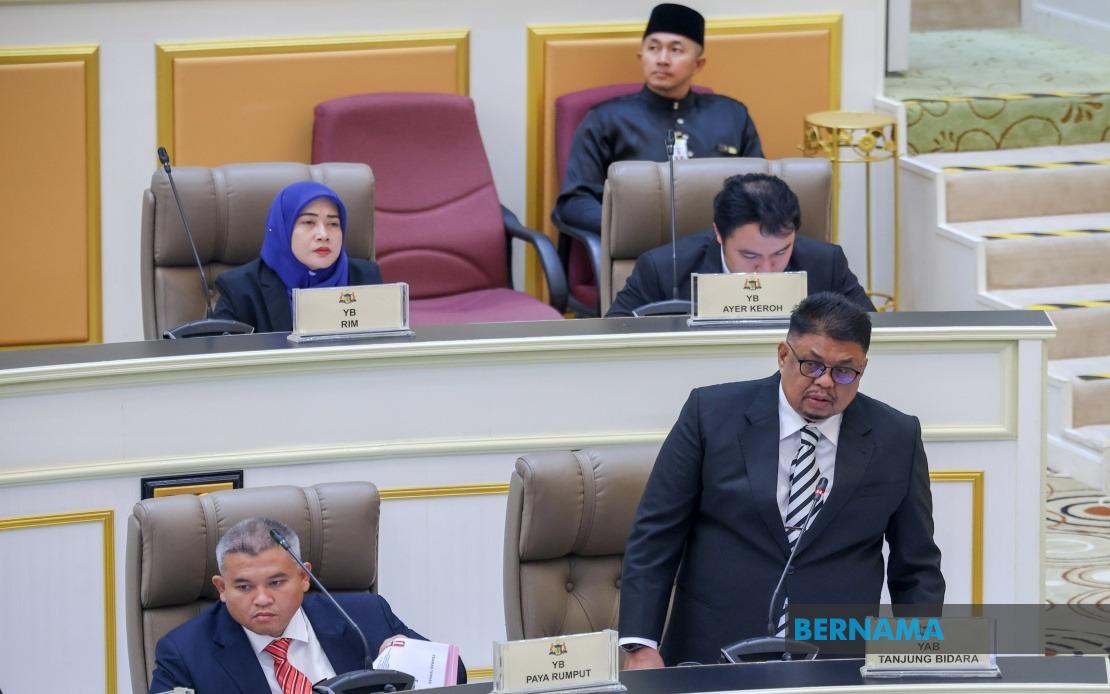
The Melaka State Legislative Assembly has cleared the way for a significant reform to its composition by approving constitutional amendments that would introduce appointed members into its ranks. Passed on July 14 with the backing of 23 lawmakers, the Melaka State Constitution (Amendment) Bill 2026 represents a deliberate shift in how the state legislature sources its talent and expertise. Just five assemblymen voted against the measure, suggesting broad political consensus around the proposal despite its departure from the conventional electoral model.
Chief Minister Datuk Seri Ab Rauf Yusoh framed the amendment as a strategic move to fortify legislative capacity by inviting individuals with distinguished backgrounds in specialised fields to join the assembly. The rationale centres on the recognition that electoral processes, while democratically legitimate, may not always surface candidates with the technical depth needed for complex policy debates. By enabling the nomination of up to seven additional members with credentials in areas such as law, economics, education, investment, technology and state development, Melaka intends to inject rigour into its deliberations on legislation and administrative matters affecting the state's future trajectory.
Beyond the expertise angle, the government has positioned the amendment as an inclusion mechanism for constituencies that face systemic barriers within competitive electoral contests. Women, youth representatives, Orang Asli communities, and minority group members stand to benefit from appointment pathways that sidestep the winner-take-all dynamics of constituency-based elections. This approach acknowledges that democratic representation encompasses not merely winning votes but ensuring that diverse perspectives and lived experiences inform the policymaking apparatus. The ability to channel such voices into legislative chambers through alternative entry routes remains a contested but pragmatic consideration in modern governance.
Senior State Executive Councillor Datuk Rais Yasin, who seconded the proposal, joined Ab Rauf in emphasising the procedural advantages the amendment would yield. The inclusion of appointed members carrying relevant professional credentials could elevate the calibre of technical scrutiny applied to government bills and administrative decisions. These individuals, freed from the electoral calculations that sometimes constrain elected representatives, may offer more detached and evidence-based commentary on policy proposals. The amendment thus frames appointed membership not as a substitute for electoral accountability but as a complementary layer designed to strengthen institutional checks and balances within the state machinery.
The legislative process itself reflected measured deliberation rather than rushed adoption. Three assemblymen contributed substantively to debate, with two backing the government position and one representing the opposition perspective. This allocation of speaking slots underscores the amendment's non-partisan character. Melaka Opposition Leader Dr Mohd Yadzil Yaakub notably signalled opposition support for the principle, provided implementation adheres to transparent and merit-based protocols genuinely serving public interests rather than factional advantage. His comparison to federal appointments within the Dewan Negara provided a constitutional precedent, suggesting that such mechanisms enjoy established legitimacy within Malaysia's governance structures.
The opposition's conditional endorsement carries strategic implications for the amendment's credibility. When opposition legislators publicly back measures affecting legislative composition, it sends a signal that safeguards beyond the bill's language matter—specifically, that execution will be scrutinised for partisan taint. This implicit compact reflects awareness that appointed seats can devolve into mere patronage if governance standards erode. The reference to transparent mechanisms and people-centric focus thus becomes a benchmark against which future appointments will be judged by both the public and political actors.
Contextually, this constitutional change traces its origins to Barisan Nasional's 2021 state election platform, particularly its Thrust 1 commitment to promoting political maturity and stability. The extended timeline between that electoral promise and today's passage reflects deliberate gestation rather than rushed innovation. Such delays often indicate that legislation affecting foundational state structures undergoes careful review and stakeholder consultation before implementation. For constituencies observing Melaka's approach, the extended preparation period may have served to build cross-party acceptance and refine implementing procedures.
The amendment's implications extend beyond Melaka itself, potentially establishing a template for other state legislatures contemplating similar reforms. Malaysia's federal structure permits constituent states considerable autonomy in structuring their internal governance, and constitutional innovations in one state frequently inspire emulation elsewhere. If Melaka's appointed members demonstrate tangible contributions to legislative quality and inclusive representation, other state governments may pursue parallel amendments. Conversely, if implementation becomes mired in controversy or perceived favouritism, the experiment could chill appetite for such measures elsewhere in the federation.
For Malaysian political observers, the appointment mechanism raises enduring questions about legitimacy and representation. Electoral mandates provide democratic legitimacy through constituent preference, yet they may exclude talented individuals unable or unwilling to contest elections. Appointed chambers offer expertise and diversity but risk becoming vectors for elite capture or factional advancement. Melaka's success in balancing these tensions will likely influence broader national conversations about legislative design and democratic quality. The state's decision to proceed with both transparency commitments and opposition buy-in suggests institutional maturity worth monitoring as implementation unfolds.

