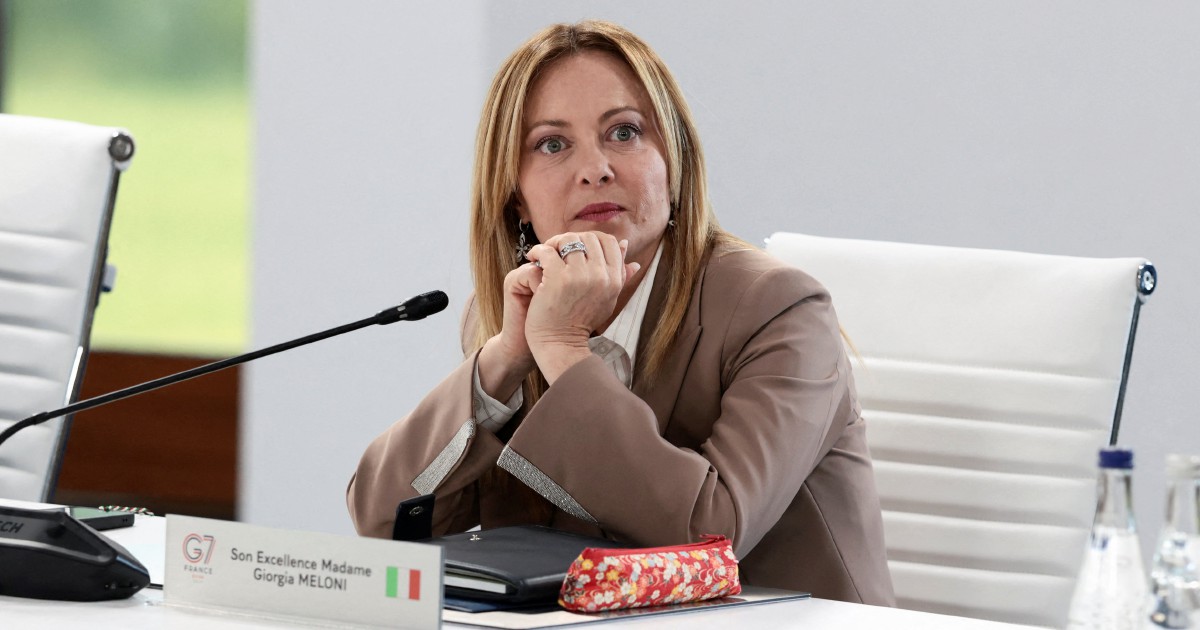
When Donald Trump took the presidential oath in January 2025, Italian Prime Minister Giorgia Meloni stood uniquely positioned among Europe's leadership: she was the sole European head of government granted an invitation to witness the inauguration ceremony in Washington. That singular distinction seemed to herald the opening of a prosperous new chapter between the United States and Italy, one that would place Rome at the centre of Trump's European strategy and consolidate Meloni's emerging role as a bridge-builder between Washington and the continent.
Meloni's privileged access to Trump reflected months of carefully cultivated personal rapport. The Italian leader had positioned herself as genuinely sympathetic to Trump's worldview, contrasting sharply with the wariness displayed by other major European counterparts. Her government's rhetoric emphasised shared conservative values, nationalist priorities, and scepticism toward multilateral institutions that Trump had long criticised. This alignment appeared to offer Italy tangible diplomatic and economic advantages in a new Washington administration that seemed inclined to reward friendly nations and punish perceived adversaries.
Yet the trajectory from that January optimism to recent months reveals a striking reversal. Meloni has increasingly adopted a confrontational tone toward Trump's policies, emerging as an unexpected voice of criticism within the conservative camp. This transformation raises fundamental questions about the sustainability of personalised diplomatic arrangements and the deeper structural tensions between American priorities and European interests, particularly regarding trade, defence spending, and geopolitical strategy in regions like Ukraine and the Middle East.
The shift reflects several converging pressures on the Italian government. Domestically, Meloni must balance her genuine ideological affinity with Trump's nationalist conservatism against mounting concerns from Italian businesses, labour unions, and mainstream political opinion about his protectionist trade policies. Any American tariffs targeting European goods—particularly Italian exports of fashion, agricultural products, and luxury items—would inflict real economic damage on constituencies that form part of her political base. The cost of maintaining an exclusive relationship with Washington cannot exceed the cost of angering Italian voters and economic interests at home.
Regionally, Meloni faces pressure from fellow European leaders who view Trump's unpredictability as a threat to continental stability. While she cannot abandon her distinctive positioning, she also cannot afford to be seen as America's representative in European councils or as indifferent to shared European concerns. The Italian government must thread a needle between maintaining constructive channels to Washington while signalling enough independence to reassure European partners that Italy remains committed to collective European interests and decision-making processes.
The Ukraine situation exemplifies this tension acutely. While Trump has signalled openness to a negotiated settlement that many regard as disadvantageous to Ukraine, Italy—bound by NATO commitments and EU solidarity frameworks—cannot be perceived as undercutting European support for Kyiv. Similarly, Trump's inconsistent approach to Middle Eastern allies and conflicts creates strategic uncertainty that European governments, including Italy, find deeply troubling. Meloni's turn toward criticism allows her to signal to European audiences that she recognises these legitimate concerns.
There is also a domestic political calculation embedded in Meloni's repositioning. Her government, while conservative and nationalist in tenor, must ultimately govern within European institutional frameworks and legal systems. Demonstrating excessive subordination to any external power—even a sympathetic American president—could eventually damage her credibility as an independent national leader defending Italian sovereignty. Gradually establishing distance from Trump, even as she maintains functional relations, allows her to reclaim political space.
From a Malaysian and Southeast Asian perspective, this dynamic illustrates broader truths about international relations in the contemporary era. Even when ideological alignment and personal relationships appear robust, they remain subordinate to national interests, domestic politics, and regional pressures. No country—regardless of its size or ideological affinity—can indefinitely prioritise one bilateral relationship above all other considerations. The Meloni case demonstrates that transatlantic partnerships, despite their historical depth and institutional complexity, remain subject to the same gravitational forces of national interest that shape all statecraft.
For regional observers, the lesson extends further. The presumption that conservative or nationalist leaders will naturally gravitate toward exclusive alignment with American policy has proven repeatedly naïve. India, Hungary, and various Middle Eastern governments have all managed relationships with Washington while pursuing independent foreign policies that sometimes conflict with American preferences. Meloni is following a well-established pattern of maintaining pragmatic distance even while preserving ostensibly warm diplomatic relations.
The longer-term significance of Meloni's shift lies in what it portends for Trump's European strategy generally. If even his most ideologically compatible European partner finds sustained alignment untenable, the prospects for building a durable, unified Western bloc under Trump's leadership appear limited. Europe, whether through formal EU mechanisms or through individual national calculations like Italy's, seems likely to assert greater autonomy from Washington in determining its own strategic priorities. The promise of a new golden age of US-European relations, suggested by Meloni's inaugural attendance, appears to have given way to more complicated, conditional arrangements reflecting the deeper divergences in interests and values across the Atlantic.

