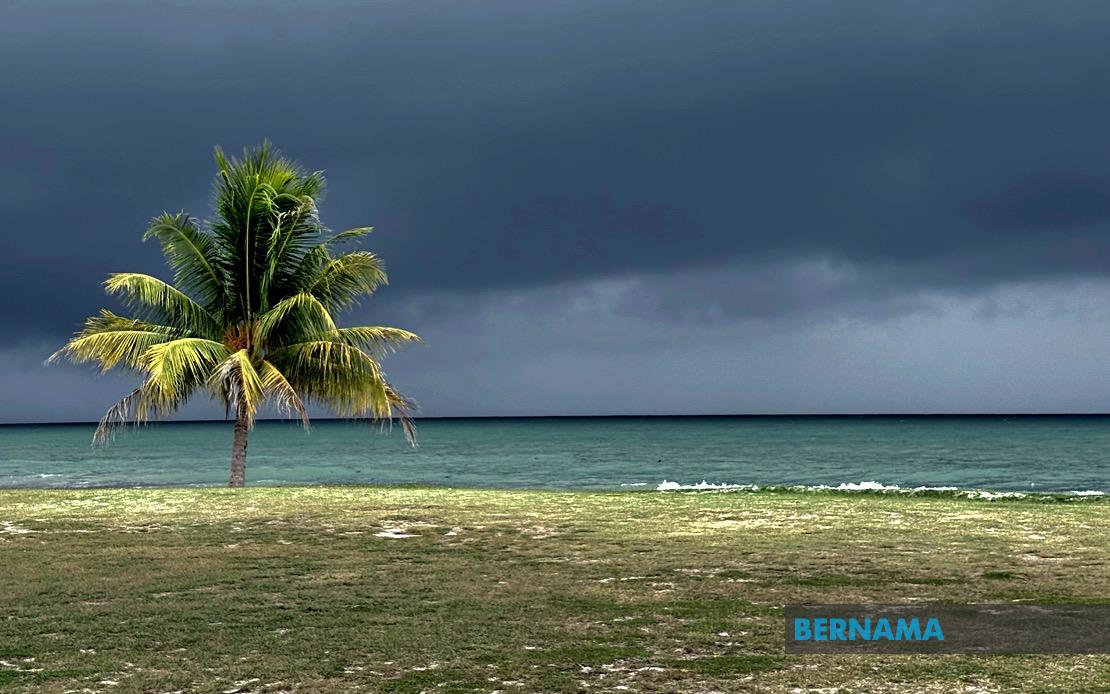
The Malaysian Meteorological Department (MetMalaysia) has cautioned residents across five states to prepare for severe weather conditions, issuing an alert for thunderstorms, heavy rainfall and strong gusts of wind expected to persist through the evening of June 25. The warning reflects growing concern over localised atmospheric instability affecting broad swathes of both Peninsular and East Malaysia, with residents advised to take precautions against potential flooding and weather-related hazards.
In Peninsular Malaysia, the primary focus of the warning centres on the east coast. Kelantan faces the most extensive alert, encompassing the administrative districts of Kota Bharu, Bachok, Machang and Pasir Puteh, all vulnerable to the convergence of moisture-laden air masses typical of the region during this period. Terengganu's Kemaman district and several areas within Pahang—specifically Jerantut, Temerloh, Maran and Kuantan—fall within the affected zone, suggesting a concentrated band of unstable weather stretching across the eastern coastal belt.
The timing of this weather system carries particular significance for the region. June marks the transition between monsoon seasons, a period when Malaysia's weather patterns become increasingly unpredictable. The east coast of Peninsular Malaysia, sheltered from direct exposure to the southwest monsoon, often experiences localised thunderstorm activity as warm, humid air encounters orographic uplift and friction from topographical features. These conditions can produce intense but geographically limited rainfall events capable of overwhelming drainage systems and triggering flash flooding in low-lying areas.
Beyond the peninsula, MetMalaysia's alert extends to East Malaysia, reflecting the region's susceptibility to afternoon convective activity. Limbang in Sarawak, particularly the Lawas district, has been identified as vulnerable to adverse conditions. Limbang's position in the northern part of Sarawak, near the Brunei border, places it in a zone frequently affected by cumulus cloud development during periods of high atmospheric moisture and thermal instability.
In Sabah, the warning encompasses three distinct geographical zones. The Interior division, covering Nabawan and Keningau, may experience thunderstorms as air masses flow inland and encounter highlands. The West Coast region, including Ranau, typically faces moisture-laden winds from the South China Sea, creating conditions favourable for organised convective systems. Sandakan and surrounding districts on the east coast, including Tongod, Telupid and Beluran, round out the alert coverage, representing a comprehensive warning across Sabah's diverse topography.
Thunderstorms of this nature, while often brief, pose significant hazards for communities and infrastructure. Strong winds accompanying these systems can damage structures, uproot vegetation and disrupt power supplies. Heavy rainfall, concentrated within short timeframes, creates runoff that exceeds drainage capacity, particularly in urban areas with impervious surfaces and in communities situated near watercourses. The warning's emphasis on 11 pm as the expected end time suggests meteorologists anticipate the convective systems to weaken as evening cooling reduces atmospheric instability, though localised activity may persist beyond this timeframe.
For residents and businesses in affected areas, the alert serves as a prompt for preventive measures. Those in flood-prone zones should monitor water levels in nearby drains and waterways, while property owners should secure loose outdoor items and ensure drainage systems remain unobstructed. Transport users should exercise caution, as visibility may deteriorate rapidly during intense rainfall, and road surfaces may become hazardous. Outdoor activities and work should be suspended or relocated indoors until the warning is lifted.
MetMalaysia's forecasting capability, underpinned by satellite imagery, radar systems and numerical weather models, enables increasingly precise alerts for such events. The department's decision to specify both the affected districts and the time window for conditions to persist reflects advances in mesoscale meteorology, allowing forecasters to differentiate between broader regional trends and localised phenomenon. This granularity helps authorities and the public respond more effectively than generalised weather warnings.
The issuance of this alert also underscores ongoing climate and weather variability challenges facing Malaysia. While thunderstorms are a normal feature of the tropical climate, their intensity and frequency patterns have shown variations over recent years, influenced by broader atmospheric oscillations and warming trends. Communities in chronically flood-prone areas continue to grapple with the cumulative impact of repeated events, raising questions about long-term resilience and adaptation strategies.
Residents are encouraged to remain attentive to updates from MetMalaysia and local disaster management authorities throughout the afternoon and evening. Additional alerts or extensions may be issued if atmospheric conditions prove more persistent than anticipated. The department typically provides follow-up statements as events develop, ensuring the public receives current information to guide decision-making and safety precautions.

