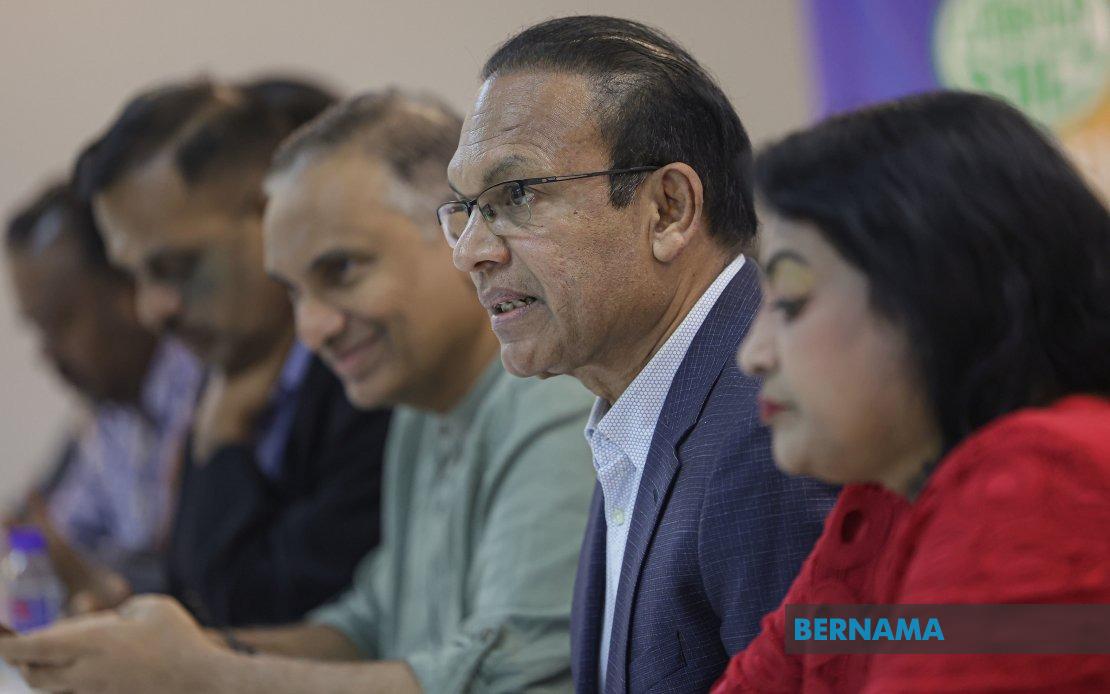
The Malaysian Indian Congress has secured an allocation of four seats for the forthcoming Johor state election, according to party vice-president Datuk T. Murugiah, who disclosed the development following high-level discussions between Barisan Nasional component parties on electoral strategy for both Johor and Negeri Sembilan. The confirmation came from MIC president Tan Sri SA. Vigneswaran during recent coordination meetings that have shaped the coalition's candidate deployment across multiple states heading into the election cycle.
While the Johor allocation remains fixed at four seats, the corresponding number for Negeri Sembilan has not been finalised, leaving the party to maintain flexibility in its planning for the other affected state. This phased approach to seat distribution reflects the ongoing negotiations between BN partners as they balance competing interests and electoral calculations ahead of nomination deadlines. Murugiah emphasised that MIC is actively engaged in mobilisation work, with organisational groundwork accelerating across key constituencies.
To ensure effective campaigning within the Indian community—a demographic that historically forms a substantial voting bloc across multiple Johor constituencies—MIC is investing significant resources in cadre development. The party will conduct an intensive two-day training programme for approximately 150 speakers in Johor Bahru this weekend, equipping them with public speaking techniques and refined messaging tailored to resonate with Indian voters. These trained speakers will subsequently be deployed across all 56 state seats that Barisan Nasional is contesting, expanding the coalition's reach beyond MIC's direct constituencies.
The strategic emphasis on speaker training underscores MIC's recognition that capturing community support requires consistent, coordinated messaging delivered by articulate party representatives. By preparing speakers to address the Indian electorate across BN's full slate of candidates, the party aims to amplify its influence and ensure that community-specific concerns are channelled effectively into the broader coalition narrative. This approach demonstrates how minority parties within BN leverage their community networks and cultural connections to strengthen the alliance's overall electoral performance.
Looking at the party's track record from the previous state election, MIC demonstrated competitive strength in its contested seats. In March 2022's fifteenth Johor state election, the party secured three victories from four attempts, winning Kemelah, Kahang, and Tenggaroh while failing to retain Bukit Batu. This three-from-four performance placed MIC among the more successful BN component parties in terms of seat conversion rates, validating the party's electoral machinery in specific constituencies. The experience gained from that contest, including both victories and the loss at Bukit Batu, will inform tactical adjustments for the upcoming poll.
Current party deliberations suggest that MIC will likely field candidates in Kemelah, Kahang, and Bukit Batu in this election—a configuration that represents a strategic recalibration from 2022. Notably, Tenggaroh is expected to be ceded to UMNO as part of seat-swapping arrangements, with MIC receiving Perling in return. Such inter-party negotiations, while routine within coalition politics, reveal the delicate choreography required to maintain BN unity while accommodating each component party's electoral aspirations. These adjustments typically reflect demographic shifts, incumbent performance assessments, and calculations about which party is best positioned to retain particular constituencies.
The party insider assessment that approximately fifty percent of candidates fielded by MIC in Johor will be new faces signals a conscious effort to inject fresh political talent and broaden the party's appeal. This generational renewal strategy, combined with targeted community outreach, positions MIC to contest from a position of organisational vitality rather than institutional fatigue. The introduction of new candidates, particularly in competitive seats, often energises grassroots organisation and can attract voters seeking alternatives to long-serving representatives.
In neighbouring Negeri Sembilan, MIC is reportedly in contention for two seats, though formal allocation remains pending finalisation within BN discussions. The timeline for finalising Negeri Sembilan arrangements allows MIC flexibility in candidate selection and preparation, though it compresses the operational window for campaign mobilisation. The Election Commission has scheduled polling for Negeri Sembilan on August 1, providing MIC with additional weeks compared to Johor to consolidate its organisational position in that state.
The electoral timeline now fixed, with Johor nominations scheduled for June 27 and polling on July 11, followed by Negeri Sembilan nominations on July 18 and voting on August 1, creates distinct campaign phases for MIC. This staggered schedule allows the party to concentrate resources sequentially, first optimising its Johor presence before pivoting fully to Negeri Sembilan efforts. The compressed nomination-to-polling intervals, particularly the two-week window in Johor, necessitate immediate activation of MIC's campaign machinery to establish candidate visibility and community familiarity.
Beyond electoral competition, MIC is leveraging its eightieth anniversary celebrations to strengthen community bonds through grassroots engagement. The party is organising sports competitions across 152 areas nationwide this weekend, featuring football, badminton, bowling, carrom and hiking—activities explicitly open to participants of all races. This deliberate inclusivity in community activities reflects how political parties in Malaysia use non-electoral platforms to build goodwill and social capital, particularly important for minority-based parties seeking to demonstrate multi-communal credentials beyond their core constituency.
For Malaysian observers of coalition politics, MIC's Johor positioning illustrates the ongoing role that component parties play within Barisan Nasional. Despite demographic changes and the rise of alternative political movements, MIC retains negotiating power sufficient to secure four competitive seats and to deploy speakers across all BN-contested constituencies. This influence derives from the party's historical significance within the Indian community and its continued organisational presence, factors that ensure MIC remains relevant to BN's electoral calculations even as the coalition confronts broader political challenges.
The convergence of careful seat allocation negotiations, intensive cadre training, candidate refreshment, and community-building activities demonstrates MIC's comprehensive approach to maximising electoral returns in both states. As nomination dates approach and campaign intensity escalates, the party's preparation investments will determine whether it can improve upon or maintain its 2022 performance, particularly in reclaiming Bukit Batu while consolidating its traditional strongholds.