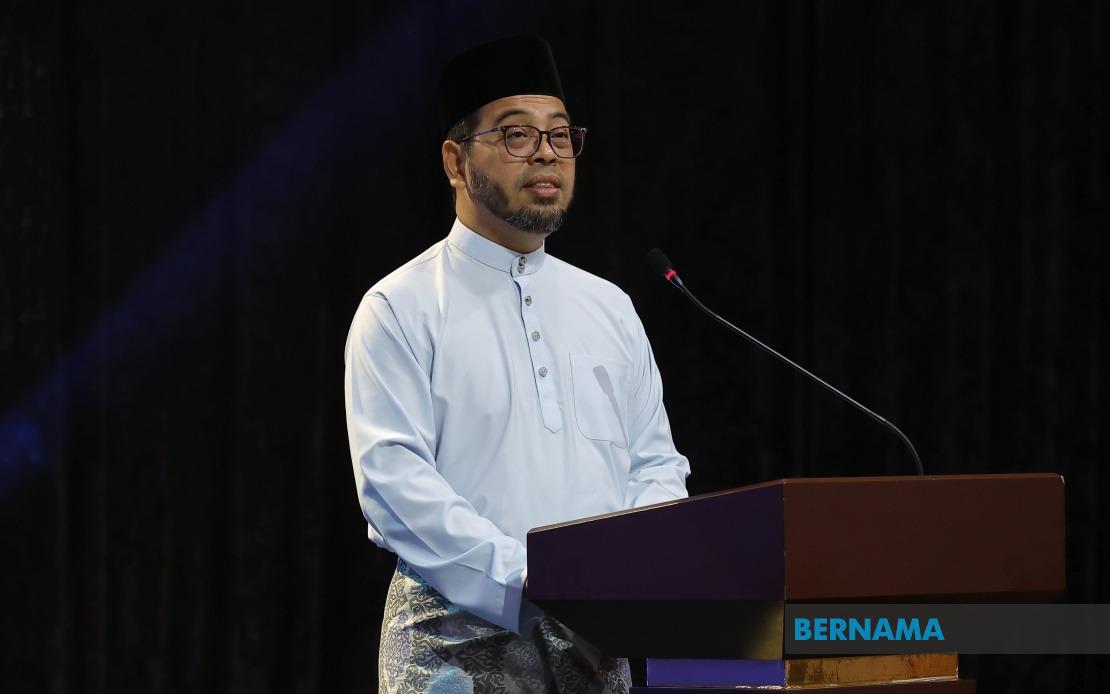
Dr Zulkifli Hasan, Minister in the Prime Minister's Department (Religious Affairs), has issued a forceful appeal for Malaysian Muslims to transcend their differences and work towards a more harmonious community. Speaking at the national-level Maal Hijrah 1448H/2026M celebration held at Putra Mosque in Putrajaya on June 17, Zulkifli emphasised that resolving longstanding grievances and hostilities is fundamental to strengthening the ummah—the global Islamic community—at a time when Malaysia faces mounting external pressures.
The ceremony, themed "MADANI Dihayati, Ummah Diberkati", brought together senior government officials and religious leaders to commemorate the Islamic new year. The event was attended by Sultan Nazrin Shah of Perak and Deputy Prime Minister Datuk Seri Fadillah Yusof, underscoring the government's commitment to elevating Islamic affairs within the national agenda. The high-level participation reflected the administration's recognition that religious cohesion carries strategic importance beyond ceremonial significance.
Zulkifli's core message centred on the transformative power of internal change within individuals as a prerequisite for broader social advancement. He articulated a vision of meaningful transformation that extends across intellectual, spiritual, and moral dimensions—arguing that lasting social progress cannot materialise without individuals first undergoing personal renewal. This framework positions individual development as the bedrock upon which collective strength is built, offering a philosophical approach to community-building that resonates with Islamic teachings on personal accountability and spiritual growth.
The minister articulated a pragmatic rationale for unity, linking it directly to Malaysia's position within an increasingly unstable global economic order. Supply chain disruptions, inflation, and economic uncertainty have become defining features of the post-pandemic international landscape, he noted, affecting nations across diverse regions. Malaysia's exposure to these cross-border challenges means that domestic fragmentation would compound external vulnerabilities. By implication, Zulkifli suggested that internal cohesion represents a form of national resilience, enabling communities to withstand shocks that might otherwise prove destabilising.
Zulkifli presented a contemporary reinterpretation of hijrah, the Islamic concept of migration or spiritual journey traditionally associated with Prophet Muhammad's journey from Mecca to Medina. Rather than understanding hijrah purely as a historical or geopolitical phenomenon, he reframed it as an ongoing personal and collective endeavour to abandon destructive behaviours and cultivate character traits that foster social solidarity. This modernisation of a classical Islamic concept demonstrates how religious traditions can be adapted to address contemporary social challenges while maintaining doctrinal authenticity.
Central to the minister's argument is the proposition that strengthened communal unity becomes a prerequisite for effectively advancing Islamic values within Malaysian society. He emphasised that fragmentation undermines collective capacity to implement reforms and promote Islamic principles in the public sphere. This positions unity not as an end in itself but as an instrumental necessity for achieving broader religious and social objectives. The framing suggests that disputes between different Islamic schools of thought, or between various Muslim communities, ultimately weakens Islam's institutional and cultural influence within the nation.
Zulkifli called upon all Malaysians to sustain their support for government initiatives designed to elevate Muslim dignity and ensure Islamic values continue to flourish in the multicultural Malaysian context. This appeal carries particular weight given Malaysia's constitutional status as a multi-religious nation where Islam occupies a privileged constitutional position while other faiths are also constitutionally protected. The minister's emphasis on government-backed initiatives reflects an understanding that state endorsement and resource allocation play critical roles in institutionalising Islamic values within public institutions and national discourse.
Despite his primary focus on Muslim unity, Zulkifli extended his message to encompass the broader Malaysian population. He acknowledged that citizens of diverse religious and cultural backgrounds share fundamental responsibilities for preserving national peace, stability, and prosperity. This inclusive dimension suggests a sophisticated understanding of how religious and national identity can be complementary rather than competing frameworks. By positioning all citizens as stakeholders in Malaysia's stability, Zulkifli implicitly acknowledged that social cohesion requires buy-in from the nation's religious minorities as well.
The ceremony included recognition of two prominent Islamic figures through national and international awards. Sultan Nazrin presented the National Tokoh Maal Hijrah award to International Islamic University Malaysia Rector Prof Emeritus Datuk Dr Osman Bakar, honouring his contributions to Islamic scholarship and education within Malaysia. Separately, Moroccan Islamic scholar Dr Ahmad Al-Raysuni received the International Tokoh Maal Hijrah award, extending recognition beyond Malaysia's borders to acknowledge intellectual leadership within the broader Islamic world. These acknowledgments suggest an effort to identify and celebrate exemplary Islamic thought and practice as models for emulation.
For Malaysian policymakers and religious leaders, Zulkifli's appeal underscores a conviction that religious unity represents a form of soft power and social stability that governments should actively cultivate. The timing of these remarks—delivered within Malaysia's complex multi-ethnic and multi-religious environment—carries implications for how the government balances Islamic priorities with constitutional obligations to respect other faiths. The appeal for Muslim unity, while rooted in religious conviction, also reflects pragmatic recognition that cohesive communities respond more effectively to economic and security challenges than fractionalised ones.
The minister's intervention arrives amid ongoing discussions within Malaysian Islamic circles regarding theological differences, institutional autonomy, and the appropriate relationship between religious authorities and secular governance. By framing unity as both spiritually desirable and practically necessary, Zulkifli attempted to transcend theological disputes by appealing to shared interests in Malaysia's prosperity and the ummah's strength. This approach suggests that deepening economic pressures and geopolitical uncertainties are reshaping how Malaysian religious leaders conceptualise and communicate Islamic obligations to their communities.