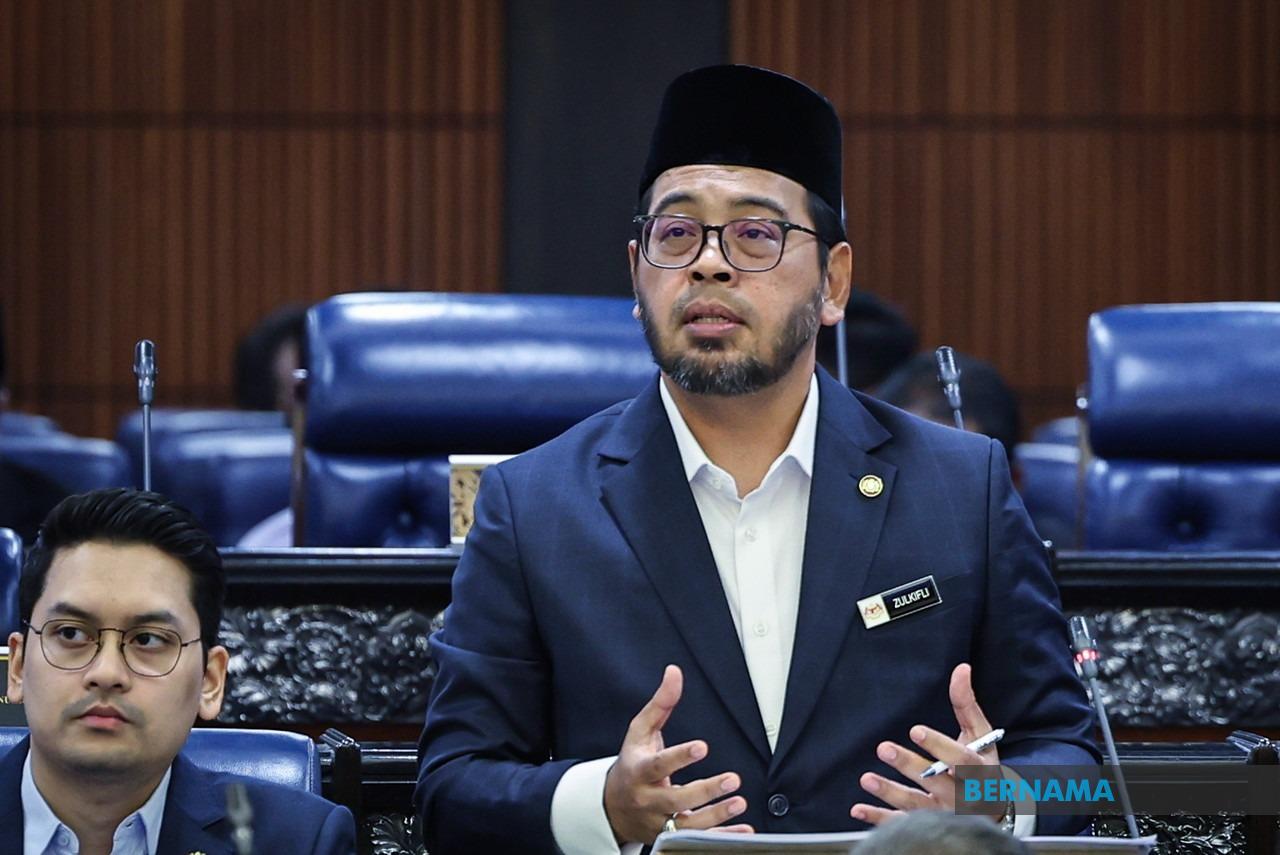
During parliamentary debate on the Royal Commission of Inquiry findings into Tabung Haji's finances, Minister in the Prime Minister's Department (Religious Affairs) Dr Zulkifli Hasan deployed a deceptively simple household analogy to illuminate one of Malaysia's most serious institutional financial scandals. Comparing the fund's situation to a fictional single mother named Mak Cik Senah, he exposed how one of the nation's largest Islamic financial institutions systematically misrepresented its true financial health to investors and the public.
The core of Zulkifli's explanation centred on a fundamental violation of corporate finance law: Tabung Haji distributed dividends to depositors while technically insolvent. Under the Tabung Haji Act, the fund can only declare profit distributions when its total assets exceed its liabilities and other obligations. Instead of meeting this straightforward requirement, the institution's managers engineered a paper illusion, artificially inflating asset values to create the appearance of profitability. The analogy made the betrayal visceral—while Mak Cik Senah might celebrate receiving more money than she invested, she would not understand that the fund's managers were depleting rather than growing her nest egg.
The mechanism of this deception involved what Zulkifli termed "creative accounting," a sanitised euphemism for practices that violated Malaysian Financial Reporting Standards and constituted fraud. The primary tool was a valuation method known as Realisable Asset Value, or RAV, applied outside the institution's audited financial statements. This approach allowed TH to report assets at substantially higher values than independent assessment would justify. The effect was akin to a homeowner claiming their house is worth triple its market value to take out loans against phantom equity—except in this case, the lender and the borrower were the same entity, and the depositors bore all the risk.
The scope of this manipulation was staggering in its audacity. Of RM4.6 billion in total assets reported by Tabung Haji, professional valuers assessed merely RM556 million. This meant over 88 percent of reported assets lacked independent verification, creating an enormous gap between claimed and substantiated value. Zulkifli emphasised that this was not an accounting error or difference of professional opinion—it was a deliberate strategy whose sole purpose was enabling the announcement of unsustainable profit distributions. The institution operated much like a Ponzi scheme, paying current investors with new capital rather than genuine returns, or like the notorious Skim Pak Man Telo that had defrauded ordinary Malaysians through similar mechanisms.
What made this scandal particularly grave was the complicity of professional gatekeepers. PricewaterhouseCoopers, in a 2018 special report, confirmed the manipulation occurred and exposed the inadequacy of asset valuations. Ernst & Young, sometimes cited in discussions of TH's audits, was notably not the fund's principal auditor but rather a firm engaged to review pro forma statements—a distinction Zulkifli clarified to prevent confusion about where responsibility lay. The fact that major accounting firms identified the problems suggests the misconduct was not hidden from those with professional expertise to detect it, raising uncomfortable questions about how long such practices persisted and whether earlier warnings were dismissed or ignored.
The consequences of this financial engineering proved catastrophic. By the time authorities intervened, the deficit between what Tabung Haji owed to depositors and what it actually possessed had grown to crisis proportions. The government found itself forced to inject over RM10 billion to rescue an institution on the verge of insolvency. This bailout was not a matter of economic choice but of necessity—Tabung Haji holds the savings of millions of Muslim Malaysians, many of whom had set aside money for pilgrimage to Mecca or retirement. The institution's collapse would have devastated ordinary Malaysians' life savings and undermined trust in Islamic finance within the nation.
For Malaysian and regional observers, the Tabung Haji case illustrates systemic governance failures that extend beyond a single institution. Religious and community-based funds, which enjoy deep cultural significance and often attract investors with less financial sophistication than those dealing with conventional financial products, require exceptional oversight. That managers were able to manipulate financial statements for years while major auditors and presumably regulators were aware of the problems suggests fragmented accountability and gaps in supervision. The case becomes a cautionary tale about how institutional prestige and religious significance can create environments where challenging management becomes difficult for boards, staff, and even regulators.
The RM10 billion bailout—which Zulkifli pointedly noted could have funded dozens of hospitals, schools, and mosques—represented an opportunity cost borne by the entire nation. This money diverted from public services went to repair damage caused not by market cycles or unavoidable economic conditions, but by deliberate financial manipulation by those entrusted with safeguarding depositors' funds. The Minister's rhetorical question about Mak Cik Senah never receiving help was particularly pointed: Tabung Haji received a massive government rescue while individual citizens who fell victim to similar schemes had no such recourse.
Zulkifli's emphasis on the Tabung Haji Act's specific requirements matters significantly for future accountability. The law clearly stipulates conditions for declaring dividends; the fund's managers violated this standard law deliberately. This was not regulatory capture or ambiguous standards permitting divergent interpretations—it was straightforward breach of explicit legal obligations. The RCI findings thus provide documentary evidence supporting potential enforcement action, making the government's next steps in addressing management culpability crucial for signalling that such violations carry consequences.
Moving forward, the Tabung Haji scandal will likely influence how Malaysian regulators approach oversight of religious and community-based financial institutions. The case demonstrates that good intentions, community trust, and historical significance provide insufficient protection against misconduct. Enhanced independent auditing, tighter restrictions on creative valuation methods, and robust whistleblower protections could prevent similar catastrophes. For Southeast Asia more broadly, where numerous Islamic financial institutions and community funds operate, the Malaysian experience serves as a cautionary template for understanding how institutional prestige can mask financial deterioration until intervention becomes extraordinarily expensive.
The government's decision to conduct a full Royal Commission and subsequently publicise its findings through ministerial briefings reflects an attempt to establish transparency and accountability, differentiating this response from scenarios where financial misconduct is quietly managed behind closed doors. Zulkifli's use of the Mak Cik Senah analogy, while perhaps initially seeming condescending, effectively translated complex financial crimes into terms that non-specialists could grasp and relate to their own financial concerns. In a nation where Tabung Haji has served millions as a trusted savings institution, this translation of scandal into accessible explanation became essential for maintaining public understanding and faith in institutions, even as those institutions prove fallible and susceptible to serious breach.

