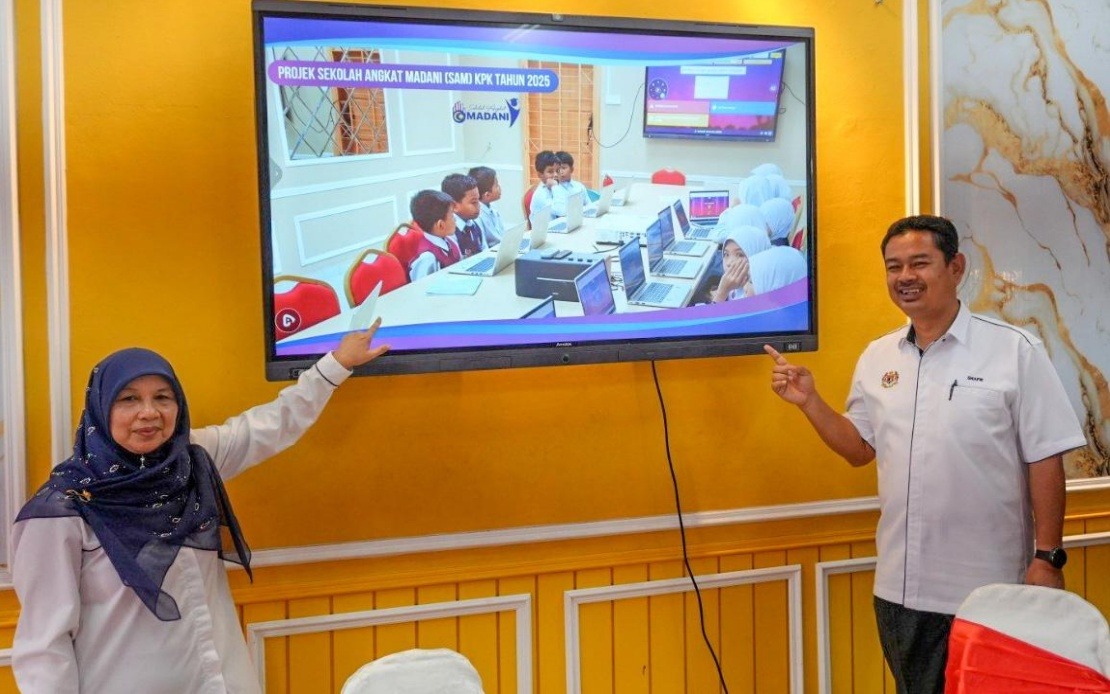
The Ministry of Plantation and Commodities has channelled RM100,000 towards comprehensive improvements at Sekolah Kebangsaan Bendang Kering in Kuala Kangsar, marking a significant step in bridging the infrastructure gap between urban and rural educational institutions. The handover ceremony, held in June, was officiated by Shafie Taib, deputy secretary-general of the ministry, underscoring the importance placed on this initiative by the federal government's education and development priorities.
The investment represents part of a broader school adoption programme, with the Malaysian Rubber Board serving as the implementing agency under the ministry's stewardship. This institutional arrangement reflects a deliberate strategy to leverage existing government bodies and their networks to extend support to schools in less-developed areas, ensuring that facilities modernisation reaches beyond major urban centres. The approach demonstrates how sectoral ministries can contribute meaningfully to educational development beyond their primary mandates.
The financial allocation has been deployed across multiple infrastructure and pedagogical dimensions at the school. Physical upgrades encompass the assembly area and main hall, facilities that serve as gathering spaces for students and the broader school community. Reading corners have been established to encourage literacy development, while preschool classrooms have been renovated to meet contemporary standards for early childhood education. These improvements directly address the often-neglected infrastructure needs of rural schools, where funding constraints frequently limit facility enhancement.
Technology integration forms a cornerstone of the upgrade strategy. Interactive smartboards have been installed across classrooms, enabling educators to move beyond traditional chalk-and-talk instruction towards more dynamic, multimedia-enriched teaching methods. Air conditioning units have been provided to create more comfortable study and working environments—a consideration that becomes increasingly important in Malaysia's tropical climate where classroom temperatures can affect student concentration and well-being. Educational signage and new classroom furniture complete the physical transformation, collectively signalling a commitment to creating learning spaces that reflect modern pedagogical standards.
Beyond infrastructure, the ministry has introduced an academic performance scheme targeting core subjects fundamental to national development priorities. The focus on Malay, English, Science, and Mathematics reflects the government's recognition that proficiency in these areas underpins broader educational and economic outcomes. Incentive systems have been implemented to recognise and motivate high-achieving students, fostering a culture of academic excellence and creating positive peer dynamics around educational achievement. This approach addresses the reality that many rural students benefit significantly from extrinsic motivation structures, particularly when combined with improved learning resources.
The programme extends importantly into character and leadership development, recognising that educational excellence encompasses more than academic metrics. The Student Leadership Motivation Camp and Student Talent Development Camp represent structured opportunities for students to cultivate soft skills, resilience, and interpersonal abilities increasingly valued by employers and universities. In the Malaysian context, where holistic student development has become a stated priority in national education policy, these initiatives align school operations with broader pedagogical goals.
The selection of SK Bendang Kering for the adoption scheme carries symbolic and practical significance. Rural schools in states such as Perak often face chronic underinvestment, particularly in districts like Kuala Kangsar where economic activity centres on agriculture and traditional industries. By targeting such institutions, the ministry directly addresses inequality in educational access and facility quality—an acknowledged challenge in Malaysia's education system where disparities between urban and rural schools contribute to differential outcomes. This gesture signals governmental commitment to the principle that quality education should not be contingent on geographic location.
The adoption programme framework itself merits examination as an institutional innovation. By positioning ministries as education stakeholders, the government creates additional channels for resource allocation beyond the Education Ministry's conventional budget mechanisms. This approach has potential implications for other sectors and schools, suggesting a model whereby specialised government agencies might contribute targeted investments to educational institutions. Such arrangements could prove particularly valuable in resource-constrained environments where competition for ministerial funding remains intense.
For SK Bendang Kering and similar rural institutions, the immediate impact involves tangible improvements in teaching and learning conditions. Students gain access to modern technology and better-maintained facilities that enhance educational experiences. Teachers benefit from upgraded infrastructure that facilitates more engaging instruction. The broader school community, including parents and local stakeholders, witnesses concrete government investment in a valued community asset, reinforcing confidence in public education systems.
The initiative carries implications for student aspiration and trajectory. Research consistently demonstrates that improved school facilities correlate with better attendance, engagement, and academic outcomes. By providing contemporary learning environments comparable to urban schools, the ministry helps level a playing field that historically disadvantaged rural students. This becomes particularly important in the context of national competitiveness, where human capital development across all regions strengthens the country's long-term economic prospects.
The academic improvement initiatives represent an equally important dimension of the intervention. By introducing structured support for subject mastery alongside infrastructure improvements, the programme acknowledges that facilities alone cannot transform educational outcomes. The combination of better resources, skilled teacher facilitation, and student incentive structures creates a more comprehensive environment for learning advancement. This integrated approach reflects contemporary understanding of educational effectiveness factors.
The programme's emphasis on rural educational equity connects to Malaysia's broader development objectives. As the nation pursues upper-middle-income status and seeks to maintain competitive advantage in Southeast Asia's evolving economy, the quality of human capital development across all regions becomes increasingly critical. Investments like that at SK Bendang Kering represent strategic choices to ensure that potential talent in less-developed areas receives adequate nurturing and opportunity.
Looking forward, the success of this adoption scheme at SK Bendang Kering may inform future initiatives. If measurable improvements in academic performance, student engagement, and facility utilisation emerge, the model could be replicated more widely, potentially transforming how government agencies contribute to rural educational development. The programme thereby extends beyond its immediate beneficiaries to potentially influence broader policy conversations about resource allocation, institutional coordination, and equity in Malaysia's education system.

