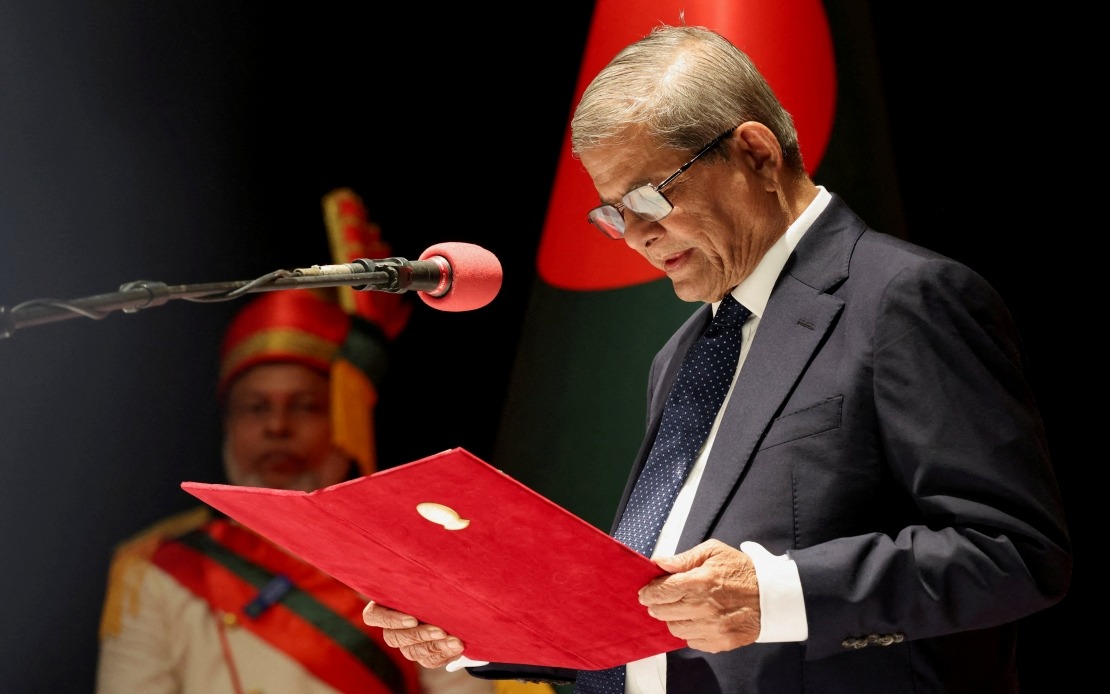
Mirza Fakhrul Islam Alamgir assumed office as Bangladesh's 23rd President on Friday evening, completing a formal constitutional transition at the historic Bangabhaban residence in Dhaka. The oath-taking ceremony, conducted at 7.30 pm local time in the Darbar Hall, represented a significant moment for the South Asian nation as one of its longest-serving political figures accepted the largely ceremonial yet constitutionally important role.
Acting Speaker Barrister Kayser Kamal administered the oath of office, while Acting President Hafiz Uddin Ahmad Bir Bikram formally received the incoming president upon his arrival at the official residence. The ceremonial exchange of seats between the outgoing and incoming presidents symbolised the orderly transfer of executive authority, a process underscored by the presence of key state functionaries including Prime Minister Tarique Rahman, the chief justice, and members of the Cabinet.
The inaugural ceremony drew attendance from members of parliament, foreign diplomatic representatives stationed in Dhaka, and senior officials from both civil and military institutions. This broad representation reflected the occasion's importance within Bangladesh's institutional framework and signalled continuity in the nation's constitutional governance structures. Following the oath administration, Fakhrul executed the mandatory oath of secrecy before the formal proceedings concluded with the national anthem.
Fakhrul's elevation to the presidency represents the culmination of a lengthy political career spanning decades within Bangladesh's national politics. His background as secretary-general of the Bangladesh Nationalist Party, one of the country's principal political organisations, positioned him as a figure of considerable influence and institutional experience. Parliamentary members elected him to the presidency in accordance with Bangladesh's constitutional procedures, a process that reinforces the legislative branch's role in selecting ceremonial heads of state.
The timing of this transition carries significance for Malaysia and other regional neighbours seeking to understand Bangladesh's current political direction. The incoming administration under Prime Minister Tarique Rahman represents continuity from previous governance, and Fakhrul's appointment suggests an alignment of senior leadership figures within the ruling coalition. For Southeast Asian observers, such institutional stability indicators matter considerably when assessing the reliability of bilateral relationships and collaborative initiatives across the region.
Bangladesh's presidential system vests considerable ceremonial authority in the head of state, though executive power remains concentrated with the Prime Minister and Cabinet. Fakhrul's assumption of the presidency therefore reflects recognition of his political standing rather than a dramatic shift in decision-making authority. However, the symbolic weight of the office—as guardian of constitutional values and national unity—ensures that his tenure will carry resonance beyond purely ceremonial functions.
The oath-taking procedure itself adhered to longstanding constitutional conventions, with Fakhrul signing both the general oath of office and the supplementary oath of secrecy. These dual commitments legally bind the president to uphold the Constitution and maintain confidentiality regarding classified state matters, establishing the formal boundaries of presidential authority and responsibility. The ceremonial nature of these proceedings should not obscure their constitutional significance in anchoring Bangladesh's democratic institutions.
For Malaysian policymakers and businesses engaged with Bangladesh, Fakhrul's presidency may influence the tenor and priority-setting within bilateral relationships. His extensive tenure in senior political positions means he likely maintains established networks and preferences regarding international engagement. The continuity represented by his appointment, occurring under a government led by Prime Minister Tarique Rahman, suggests that Bangladesh's external policy direction will likely remain consistent with recently established patterns rather than undergoing dramatic realignment.
The broader institutional context of Fakhrul's presidency reflects Bangladesh's ongoing consolidation of democratic practices despite periodic political turbulence. Parliamentary selection of the president, formal oath-taking ceremonies, and the orderly transfer of power between successive officeholders demonstrate adherence to constitutional procedures that have evolved since the nation's independence. These processes provide reassurance to regional partners about the stability and predictability of Bangladesh's institutional framework, particularly important given the interconnectedness of South and Southeast Asian economies and security arrangements.
Looking forward, Fakhrul's presidency will be judged partly on his ability to transcend partisan political associations and embody the constitutional role of a unifying national figurehead. The largely ceremonial nature of the presidency offers opportunities for him to focus on nation-building activities and symbolic reconciliation, roles that can complement the Prime Minister's policy-focused responsibilities. For regional observers, his performance in this capacity will provide insights into whether Bangladesh's senior leadership can balance partisan governance with broader institutional responsibilities.

