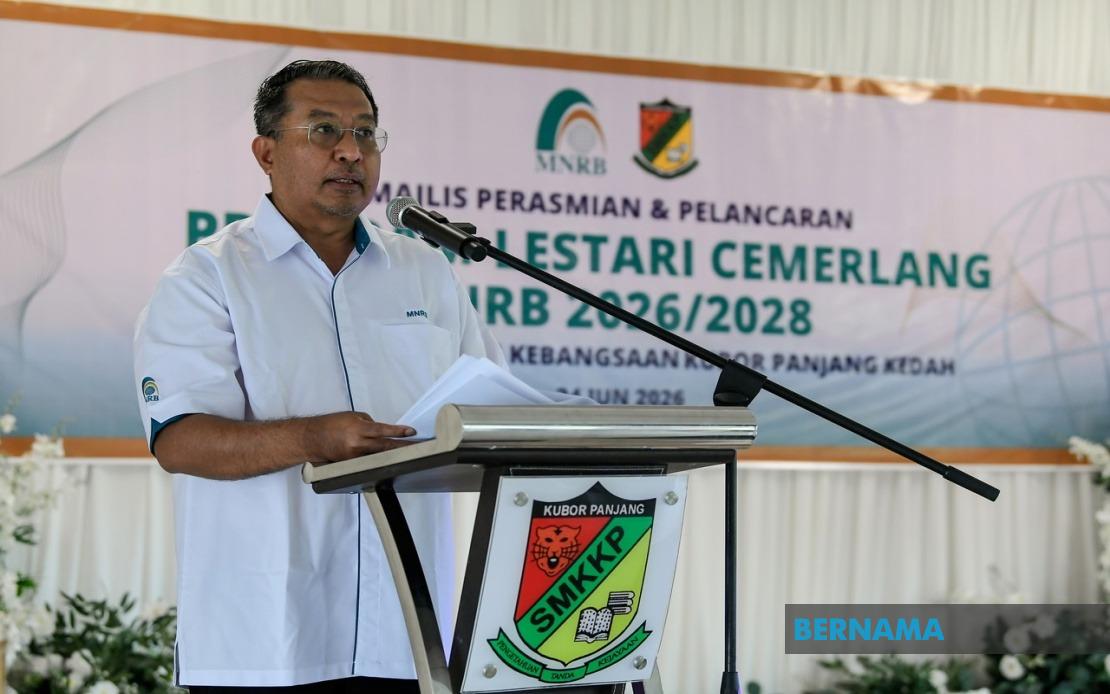
MNRB Holdings Berhad, an investment holding company, has allocated nearly RM600,000 to support six schools across Malaysia through its Lestari Cemerlang Programme, marking the latest expansion of a corporate social responsibility effort aimed at transforming educational outcomes in underserved communities. The programme was formally launched at Sekolah Menengah Kebangsaan Kubor Panjang in Pendang, Kedah, which becomes the sixth institution to benefit from the initiative.
According to Datuk Rudy Rodzila Che Lamin, interim president and group chief executive officer of MNRB Holdings, the adopted school programme represents more than a decade of commitment to educational advancement. Since its establishment in 2011, the initiative has evolved into a comprehensive framework addressing multiple dimensions of student development beyond traditional academic metrics. The programme deliberately targets rural areas, recognizing that geographical and socioeconomic constraints often limit educational opportunities in these regions.
The strategic design of Lestari Cemerlang reflects a holistic understanding of what constitutes educational excellence. Rather than concentrating solely on examination results, MNRB has structured interventions to encompass character development and overall school excellence. This dual-track approach acknowledges that contemporary educational needs extend far beyond classroom instruction, incorporating values formation and life skills that prepare students for meaningful participation in society. The company's leadership articulates the philosophy that unlocking student potential requires simultaneous investment in academic rigour and personal development.
On the ground, the programme manifests through diverse practical initiatives that address immediate school needs. Additional classes for Form Five students provide targeted academic support during the critical examination year, while motivational camps are designed to instill confidence and aspirational thinking. Student development programmes engage younger cohorts in skill-building exercises, preparing them for future pathways. Infrastructure improvements, including upgrades to learning facilities and the provision of sports jerseys, demonstrate attention to the tangible conditions that affect student engagement and school pride.
A particularly notable innovation under the programme is the establishment of MNRB Smart e-Learning Rooms. These dedicated spaces represent an institutional investment in digital literacy and modern pedagogical methods. Equipped with smart television technology and robust internet connectivity, these rooms create interactive learning environments that would otherwise be unavailable in rural school settings. This intervention directly addresses the digital divide that continues to disadvantage students in less affluent areas, providing infrastructure necessary for participation in increasingly technology-mediated education.
The inclusion of SMK Kubor Panjang as the sixth adopted school follows successful implementation across five other institutions located in Perak, Pahang, Negeri Sembilan, Melaka and Selangor. This geographic spread reflects a deliberate strategy to balance intervention across different regions, avoiding concentration in any single state while systematically building a network of partner schools. The expansion to Kedah suggests continued momentum and potentially signals readiness for further growth.
Beyond immediate school-based support, MNRB has developed a complementary scholarship initiative called Tabung Biasiswa MNRB, which provides pathways for exceptional students to access tertiary education. Five top-performing students from SMK Kubor Panjang have been selected to receive sponsorships covering diploma, bachelor's and master's level studies. This multi-tiered support structure recognizes that educational transformation requires sustained investment across different life stages, not merely primary or secondary interventions.
The scholarship programme operates with explicit sectoral focus, directing support to students pursuing fields aligned with MNRB's business operations: insurance, takaful and finance. This approach creates direct pipeline development while ensuring that sponsored students enter fields where their qualifications directly translate to employment opportunities. As noted by MNRB Group chief people officer Hazlina Hazani, fourteen students from previously adopted schools have received sponsorship, with eight already employed by MNRB Group upon graduation. This employment outcome demonstrates that the investment yields measurable returns not only in educational attainment but in meaningful economic integration.
For Malaysian readers evaluating corporate social responsibility practices, the MNRB initiative exemplifies several contemporary trends in business-led education support. The programme avoids purely transactional charity by building sustained institutional partnerships with schools, creating conditions for systemic change rather than episodic assistance. The emphasis on rural areas addresses persistent educational inequality that shapes long-term economic mobility and social stratification. The integration of digital infrastructure responds to contemporary skill requirements in an increasingly technology-dependent economy.
The programme also reflects Malaysia's policy priorities around human capital development and inclusive growth. By targeting both academic excellence and character formation, MNRB aligns with national education frameworks emphasizing balanced individual development. The explicit attention to underserved rural communities addresses demographic realities in which students from such areas face compounding disadvantages in educational outcomes and employment prospects.
From a regional perspective, corporate investment in secondary education remains relatively concentrated, with most major initiatives clustered in urban and semi-urban areas. MNRB's deliberate rural focus suggests an emerging recognition among major corporations that social license to operate increasingly depends on demonstrable commitment to geographical equity in development outcomes. This approach may influence broader sectoral practices as competitive pressure mounts for corporations to articulate substantive educational contributions.
The institutional architecture of Lestari Cemerlang demonstrates sophisticated programme design that extends beyond simple fund transfers. By combining academic support, infrastructure investment, character development initiatives and long-term scholarship pathways, MNRB has constructed a multi-layered intervention system addressing various barriers to educational success. The programme's emphasis on creating interactive digital learning spaces particularly merits attention in an era when technological competence fundamentally shapes career trajectories.

