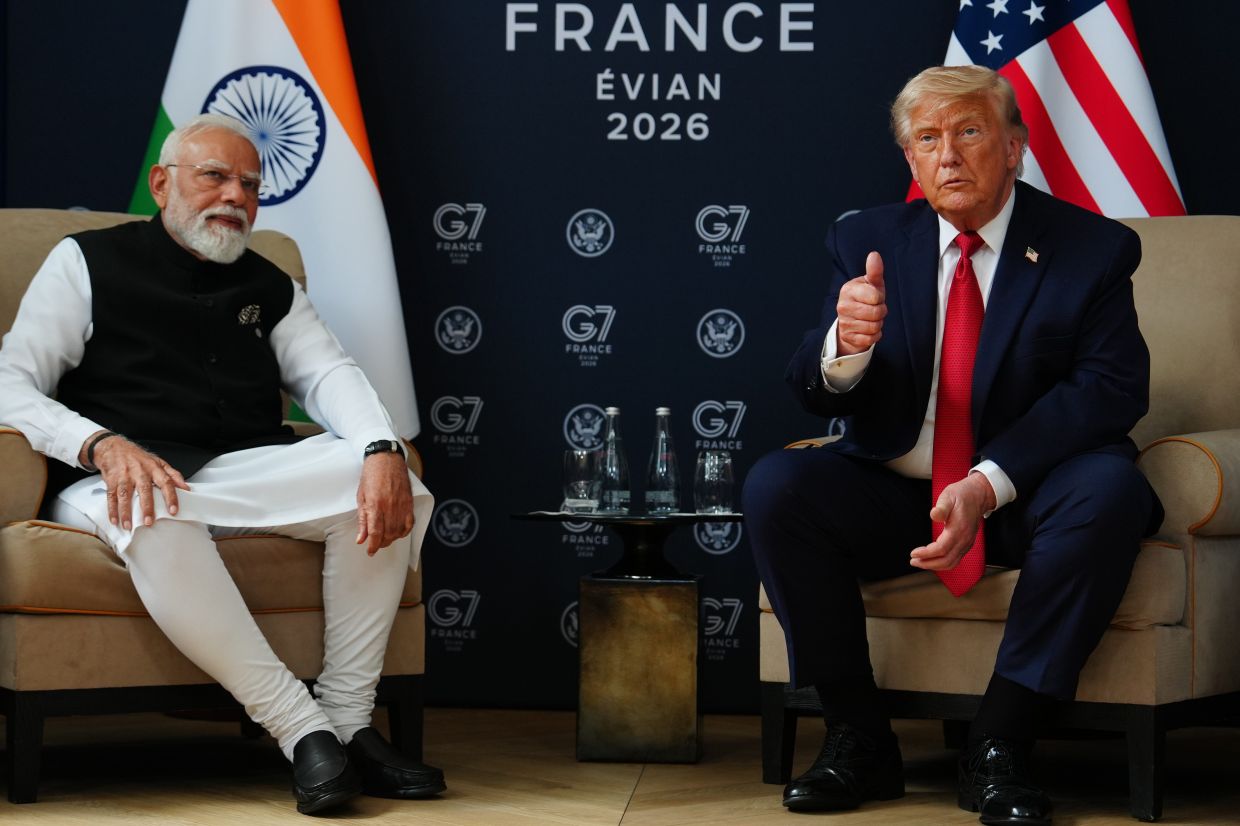
Indian Prime Minister Narendra Modi emerged from his meeting with US President Donald Trump at the G7 summit in Evian, France this week declaring substantial momentum in long-stalled trade negotiations between the two nations. The encounter, their first in-person discussion since February 2025, resulted in a joint statement emphasizing what both capitals are characterizing as meaningful advancement toward a commercially viable interim bilateral trade agreement. Trump told assembled journalists that the two countries stood "very close" to clinching a deal, while Modi's readout from New Delhi's foreign ministry indicated the leaders had tasked their respective negotiating teams to work with renewed urgency toward finalizing terms at the earliest opportunity.
The trajectory of US-India trade negotiations reflects the broader competitive dynamics reshaping global commerce under the Trump administration. The two nations have been engaged in protracted talks aimed at raising their bilateral trade volume to US$500 billion by 2030, a target that underscores the strategic importance both governments attach to deepening economic ties. That ambition stands in sharp contrast to current bilateral trade levels and suggests both sides view the relationship as underexploited, particularly given India's growing manufacturing capacity and the United States' interest in diversifying supply chains away from China.
India's Commerce Minister Piyush Goyal revealed in early June that negotiators had resolved approximately 99 percent of outstanding issues related to the first phase of the agreement, a disclosure that lent credibility to the optimistic tone of the Modi-Trump conversation. Yet this apparent consensus on technical matters masks the substantial complexities that have repeatedly slowed negotiations. The talks have centered on market access and tariff disputes—fundamental questions about which sectors each country will open and how steeply they will lower import duties. These negotiations typically involve intense lobbying from domestic industries in both countries and reflect competing national priorities.
The progress announced this week gains particular significance when viewed against the backdrop of legal and political turbulence that has roiled US trade policy in recent months. After the US Supreme Court struck down Trump's sweeping tariff measures, the administration responded by launching investigations into alleged unfair trade practices by multiple countries, including India. Simultaneously, Washington imposed a blanket 10 percent tariff on all imports, a move that created uncertainty about the stability of any negotiated trade framework. For Indian exporters and policymakers, this shifting landscape raised questions about whether commitments made at the negotiating table would prove durable.
US Trade Representative Jamieson Greer's scheduled visit to India in the week following the G7 meeting signals that both governments intend to maintain momentum rather than allow negotiations to languish. Such high-level visits typically occur when negotiators are closing in on final details, suggesting that outstanding disagreements may be confined to the margins rather than extending to core principles. The presence of the US trade chief in New Delhi would provide an opportunity for senior Indian officials to resolve any remaining ambiguities and demonstrate to domestic constituencies that negotiators have secured favorable terms.
Beyond the commercial aspects of the trade agreement, Modi used the G7 platform to raise pressing concerns about India's vulnerability to regional instability. He specifically urged Trump to implement safeguards protecting Indian seafarers as part of broader efforts to stabilize the Middle East, an appeal that gained urgency following the deaths of three Indian sailors aboard a commercial vessel off Oman in early June. India's maritime workforce represents a significant portion of global shipping crews, and threats to their safety have become an increasingly salient political issue in New Delhi.
The broader Middle East conflict has imposed severe economic strain on India and other developing nations dependent on energy imports and vulnerable supply chains. Modi's warning that disruptions to fuel, fertiliser, and food supplies stemming from the crisis would continue to burden the Global South for an extended period reflects genuine concerns animating Indian foreign policy. Iran's closure of the Strait of Hormuz, a critical chokepoint for global oil and gas commerce, has directly threatened India's energy security and contributed to inflationary pressures affecting ordinary Indians at the petrol pump and for agricultural inputs.
For Southeast Asian economies, the conclusion of a significant US-India trade deal carries implications beyond bilateral commerce. Closer economic integration between Washington and New Delhi could reshape regional supply chains and investment flows, potentially drawing more manufacturing away from traditional Southeast Asian hubs as companies seek to access the US market through Indian operations. Additionally, a strengthened US-India economic partnership typically accompanies deeper defence and strategic cooperation, reinforcing the security architecture that major powers are constructing in response to Chinese assertiveness in the Indo-Pacific region.
The timing of this trade announcement also reflects the broader political calendar shaping international economic relations. With Trump's position as US president restored and his administration pursuing a more transactional approach to foreign policy, India has positioned itself as a valuable partner deserving preferential treatment and market access. Modi's government, meanwhile, has sought to balance its non-aligned tradition with pragmatic engagement with Washington, viewing the trade deal as advancing India's development while avoiding any appearance of strategic subordination to the United States.
The success or failure of finalizing a bilateral trade agreement in coming weeks will test whether the declared momentum translates into substantive compromise on contentious issues. Previous rounds of negotiations have foundered when one side's demands clashed with the other's domestic political constraints. Agricultural products, intellectual property protections, and financial services have emerged as particularly thorny issues in past discussions, with Indian farmers wary of US competition and American pharmaceutical and technology companies pressing for terms favourable to their interests.
For Malaysian observers and policymakers, the prospective US-India trade deal represents a significant development in the reconfiguration of global commerce. As a major trading nation with deep ties to both the United States and India, Malaysia stands to benefit from closer economic integration across the Indo-Pacific region. However, it also faces potential challenges if preferential bilateral arrangements divert investment and market share away from established trading partners in Southeast Asia. The manner in which Washington and New Delhi structure their trade agreement—whether it remains relatively open or becomes an exclusive arrangement—will influence how significantly it reshapes competition and opportunity in the region.
The momentum evident in Modi and Trump's G7 meeting reflects mutual recognition that a bilateral trade agreement serves both nations' strategic interests. From India's perspective, enhanced market access to the United States supports its industrial ambitions and provides an alternative to excessive dependence on Chinese markets. For the United States, deepening economic ties with India advances its strategic objective of maintaining global leadership while building coalitions of like-minded democratic nations committed to rules-based commerce. Whether this political will translates into a finalised agreement within months, as the optimistic tone of recent statements suggests, remains to be seen.