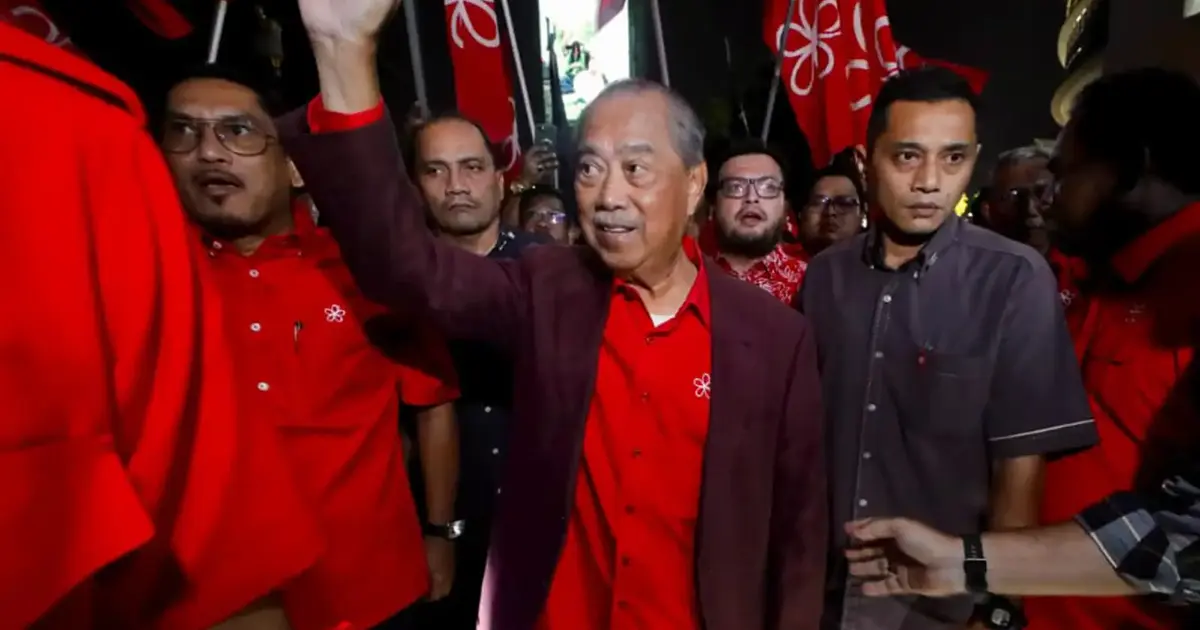
Perikatan Nasional's Bersatu party witnessed a significant show of internal solidarity when over 200 members converged to demonstrate their backing for party president Muhyiddin Yassin in the lead-up to a pivotal party gathering. The rally underscores the degree of mobilization within the party as it confronts a series of strategic decisions that will shape its political trajectory in the coming months.
The upcoming party meeting assumes considerable importance given the agenda items expected to dominate discussions. Among the pressing matters Bersatu faces is charting its course through the forthcoming state elections in Johor and Negeri Sembilan, constituencies where the party's performance will directly influence its standing within the broader opposition coalition. These elections will serve as a barometer of Bersatu's electoral strength and its ability to retain ground it has previously contested.
Equally significant is the question of Bersatu's working relationship with PAS, its coalition partner within Perikatan Nasional. The nature of this alliance has come under intermittent scrutiny, particularly regarding seat allocations, policy alignment, and the division of political influence. How the party navigates this partnership will determine whether Perikatan Nasional presents a unified front to voters or risks exposing internal fractures that could undermine its collective electoral prospects.
For Malaysian observers, the timing of this show of support is strategically important. Bersatu has occupied an unusual position within Malaysia's political landscape, positioning itself as neither fully aligned with the ruling coalition nor unambiguously oppositional. This liminal status has provided tactical flexibility but also generated questions about the party's long-term political identity and sustainability. The rally suggests Muhyiddin retains sufficient organizational control and member loyalty to maintain party cohesion during a period of external pressure and internal deliberation.
The gathering also signals that Bersatu's grassroots structure remains functionally active and capable of mobilization. In Malaysian politics, where personality-driven movements have historically superseded institutional party structures, the ability to assemble over 200 members reflects a reasonable degree of organizational capacity. This logistical competence will be essential if the party seeks to contest the Johor and Negeri Sembilan elections with credible resources and committed volunteers.
The Johor and Negeri Sembilan electoral contests assume heightened significance within the broader Malaysian political context. Johor, as the country's second-largest state by economy and population, represents territory where any party's performance carries implications beyond mere seat counts. A strong showing would validate Perikatan Nasional's claim to represent a viable alternative political force, while underperformance could accelerate narratives of decline. Negeri Sembilan, though smaller, nonetheless presents electoral opportunities for coalition partners seeking to build momentum heading toward the next general election cycle.
Bersatu's relationship with PAS deserves particular scrutiny given the complexities that have historically characterized such alliances. PAS brings formidable organizational networks, particularly in peninsular Malaysia's heartland, and maintains deep roots within rural constituencies. However, Bersatu appeals to a different demographic in certain respects, particularly professionals and urban constituencies concerned with governance and institutional performance. Reconciling these differing voter bases while maintaining coalition discipline will require sophisticated political management from Muhyiddin's leadership.
The domestic political environment provides additional context for understanding this rally's significance. Malaysia's coalition politics has become increasingly volatile, with parties frequently reassessing partnerships and considering strategic realignments. The show of member loyalty toward Muhyiddin suggests that at least the party's activist base remains committed to his leadership direction, even as external observers question whether Bersatu's political positioning serves the party's long-term interests.
Regionally, Bersatu's trajectory carries implications for opposition dynamics across Southeast Asia. Malaysia's political developments have historically influenced neighboring countries' political calculations, particularly Singapore and Indonesia, where Malaysian political movements have commercial and family connections. A strengthened Bersatu could theoretically influence regional alignments, though this prospect remains contingent on the party's electoral performance and the durability of its coalition partnerships.
The months ahead will clarify whether this rally represents a genuine endorsement that translates into electoral gains or merely a symbolic gesture preceding possible internal reorganization. The Johor and Negeri Sembilan elections will provide the clearest measure of whether Bersatu's current trajectory commands genuine popular support or whether the party faces a gradual erosion of political relevance. Muhyiddin's challenge involves translating this internal mobilization into external electoral performance while simultaneously managing the complex calculus of maintaining the PAS alliance without subordinating Bersatu's organizational autonomy.
Ultimately, this gathering demonstrates that despite Malaysia's complex coalition politics and frequent strategic repositioning, Bersatu retains the capacity to convene its membership and project an image of internal cohesion. Whether this translates into measurable political gains will depend on factors extending beyond internal party dynamics, including voter preferences, opponent strategies, and the broader economic and social conditions that shape electoral behavior across Malaysia's diverse constituencies.