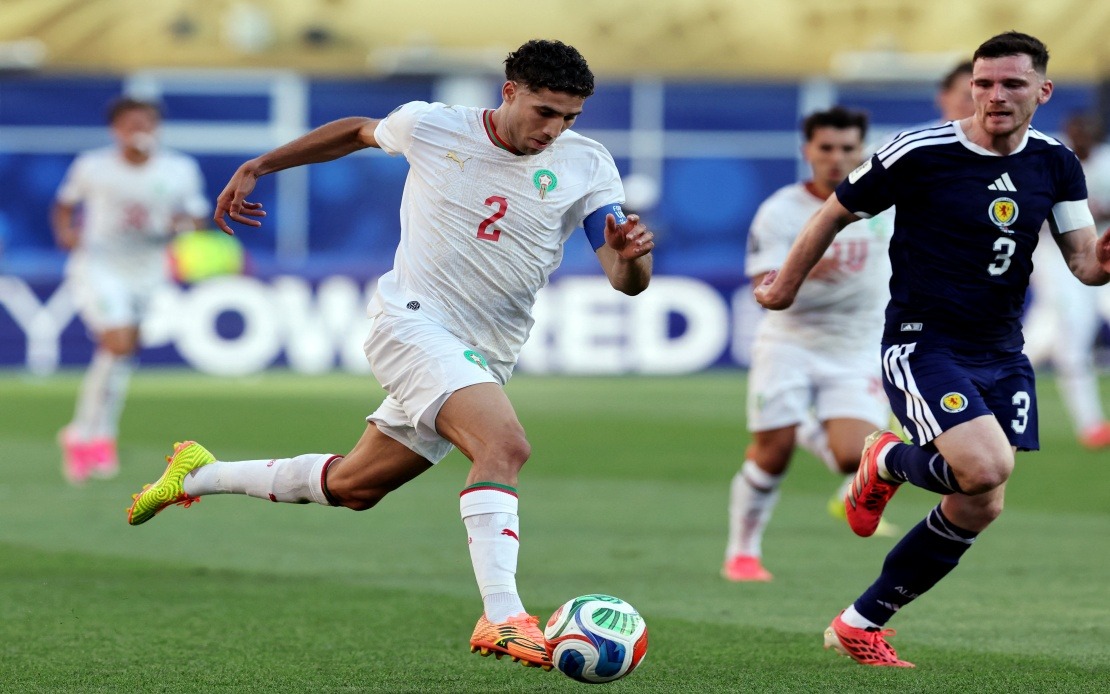
Morocco's football programme faced an extraordinary test of unity when captain Achraf Hakimi took to the pitch in Foxborough, Massachusetts, on Friday amid a storm of legal controversy and public disapproval. The team's 1-0 victory against Scotland would normally dominate headlines, but instead the match became overshadowed by the personal crisis engulfing one of the squad's most prominent figures. Coach Mohamed Ouahbi nonetheless publicly threw his weight behind the embattled defender, signalling that the Moroccan camp intends to compartmentalise the unfolding legal proceedings from their World Cup campaign.
The timing of events created an unusually charged atmosphere at the ground. Just hours before kickoff, a Versailles appeal court in France handed down a decision ordering Hakimi to stand trial on allegations of rape involving a 24-year-old woman. The alleged incident is said to have occurred at his home in 2023. The court's announcement came after Hakimi had appealed an earlier determination by an investigating judge, and the development injected significant tension into what should have been a routine group-stage encounter. The cascade of booing and whistling that greeted the Morocco captain's name during the team announcement appeared to reflect public sentiment shaped by widespread media coverage of the case.
Hakimi's reception deteriorated further as the match progressed. Sections of the crowd continued to voice their disapproval each time he touched the ball, creating an uncomfortable backdrop for a player tasked with anchoring Morocco's defensive line. Such hostile crowd behaviour during international fixtures is relatively rare, particularly directed at opposing teams' players rather than the home side, underscoring the intensity of feeling surrounding his legal situation. Yet the Paris Saint-Germain right-back managed to complete the match without apparent disruption to his focus or performance.
When questioned about the incident and the mounting pressure on his captain, Ouahbi adopted a strategy of deflection and consolidation. He emphasised that the coaching staff and management had deliberately refrained from discussing the legal matters with Hakimi or the broader squad, preferring instead to maintain concentration on football-related objectives. This reflects a common approach among international sports organisations facing player-level crises: insulating the team environment from external distractions. Ouahbi's public comments suggested the Morocco camp views the courtroom battle as fundamentally separate from competitive performance.
The coach's backing went further in offering a positive assessment of Hakimi's actual contribution during the Scotland match. Ouahbi characterised the captain's demeanour as composed and relaxed, suggesting that contrary to what might have been expected given the circumstances, Hakimi appeared mentally prepared and appropriately focused. Such testimonials from the coaching staff serve multiple purposes: they reinforce squad cohesion, signal to other players that the organisation stands by its key personnel regardless of external complications, and subtly push back against narratives suggesting Hakimi is a liability or distraction.
Ouahbi's broader statement hinted at Hakimi's world-class credentials and implied confidence that the player would use the World Cup platform to demonstrate his quality. By anchoring his support in terms of footballing ability rather than responding to the substantive allegations, the coach navigated the delicate territory of backing a teammate without commenting on the judicial process. This rhetorical move allows Morocco to maintain loyalty to their captain while simultaneously appearing to respect the integrity of French legal proceedings.
Hakimi's own response to the court decision has been notably restrained. The defender released a statement on social media following the Versailles court ruling, suggesting that the opportunity to present his perspective in a legal setting represented a form of vindication. His use of the phrase "at last, I will be able to speak" suggests frustration with a period of silence, though he has consistently denied all allegations. The fact that he has engaged publicly at all, however minimally, distinguishes his case from many athletes who adopt a complete media blackout when facing legal jeopardy.
From a broader Southeast Asian sporting perspective, the Morocco situation highlights an uncomfortable intersection between elite international football and the judicial spotlight. Malaysian fans and officials are increasingly familiar with such scenarios, whether involving domestic or regional players, and the case offers lessons in crisis management and institutional loyalty. The willingness of Morocco's coaching staff to publicly defend Hakimi rather than distance themselves speaks to a particular football culture that prioritises team solidarity over reputational protection.
The Scotland match itself, while achieving the primary objective of securing three World Cup points, will likely be remembered more for its peripheral circumstances than for tactical or strategic achievements on the pitch. This represents a broader challenge facing Morocco at the tournament: managing narrative control whilst competing at the highest level. Every subsequent match featuring Hakimi will inevitably attract scrutiny beyond normal football analysis.
Ouahbi's public posture also reflects practical considerations regarding squad morale and cohesion. International football teams operate under intense pressure, and fractures over how management treats individual players under stress can undermine collective performance. By demonstrating that the coaching staff remains united with Hakimi, Ouahbi sends a message to the entire squad about organisational values and loyalty.
Looking forward, Morocco faces the challenge of maintaining this unified front whilst the legal process unfolds. Hakimi's potential on-field performances will inevitably be interpreted through the lens of his legal situation, complicating what should be straightforward assessments of sporting merit. The Versailles court's decision to proceed with trial means the issue will not simply disappear during the tournament, continuing to generate headlines and public reaction.
For Malaysian observers, particularly those involved in sports administration and media, the Morocco situation underscores the complexity of supporting players through genuine adversity without compromising institutional credibility. The resolution of Hakimi's legal matters remains years away, but his World Cup performance in the meantime will shape how both supporters and critics evaluate his character and capability.

