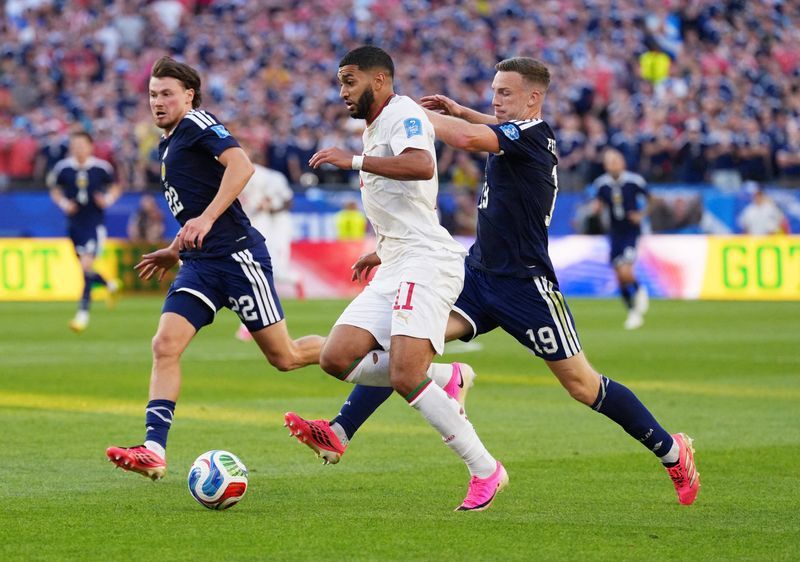
Morocco seized control of World Cup Group C with a dominant 1-0 triumph over Scotland in Foxborough, Massachusetts, establishing themselves as genuine contenders despite their early opening. The North African side struck with devastating speed, with Ismael Saibari converting after barely a minute of play to deliver what became the fastest goal of the tournament. The emphatic nature of the performance suggests Morocco have moved far beyond their surprise run to the semi-finals in Qatar four years ago, now positioned to challenge for further advancement when they face Haiti on Wednesday.
Scotland travelled to this match with genuine optimism following their historic 1-0 victory over Haiti in their opening fixture, marking their first World Cup win in 36 years. However, that newfound confidence proved wholly inadequate against Morocco's relentless intensity and tactical superiority. The Scots were comprehensively outplayed throughout, with their defensive frailty exposed within seconds when central defender Grant Hanley stepped out too early, leaving Saibari unmarked to receive Brahim Diaz's precise cross and finish clinically. The early breakthrough appeared to have rattled the Scottish team, who never recovered their composure.
Saibari's strike carried additional significance beyond its timing. The 24-year-old has now scored in consecutive World Cup appearances, joining Egypt's Mohamed Salah as only the second African player to achieve this feat. The midfielder's impressive form has already attracted the attention of elite European clubs, with recent reports suggesting he has passed a medical examination to join German giants Bayern Munich. His emergence as a reliable goalscoring threat represents a considerable boost for Morocco's ambitions in this tournament.
The dominance Morocco displayed extended far beyond the scoreline, which arguably understated their superiority. They controlled possession effectively, pressed aggressively to win the ball in dangerous areas, and launched attacking moves with such regularity that Scotland appeared perpetually on the back foot. The visitors created numerous additional opportunities throughout the match, with Azzedine Ounahi's incisive running down the left wing nearly leading to a second goal when his cutback found teammates unmarked in the penalty area. Bilal El Khannouss fired over the bar following yet another slick move, while Saibari himself struck the post with a deflected effort that might have wrapped up the contest.
Scotland's attacking threat proved virtually non-existent during the opening forty-five minutes, failing to register a single shot on or off target until deep into first-half stoppage time. This statistical reality reflected their complete inability to mount meaningful pressure on goalkeeper Brahim Diaz's distribution or create genuine problems for Morocco's defence. The Scots appeared content to survive rather than compete, a passive approach that proved wholly ineffective against opponents who grew in confidence as the match progressed.
The second half provided no respite for Steve Clarke's struggling side. Morocco continued their pattern of dominance with El Khannouss forcing goalkeeper Angus Gunn into a good save with a glancing header shortly after the restart. Scotland attempted to respond with greater urgency late in the match, but their desperate attempts lacked the quality and precision required to breach Morocco's increasingly comfortable defensive shape. The North Africans managed the closing stages with professionalism, content to preserve their lead while maintaining enough attacking threat to prevent Scotland from gaining momentum.
The victory positions Morocco superbly within Group C as the tournament enters its decisive stages. With four points from two matches, they now top the standings ahead of Wednesday's encounter with Haiti. Scotland's situation has become considerably more precarious. Despite possessing three points from their two games, they face an daunting final match against five-time world champions Brazil, a fixture that offers little prospect of accumulating the points necessary for automatic qualification. Meanwhile, Brazil and Haiti meet later Friday in a separate contest that will further shape the group's mathematical possibilities.
Off-field controversy added an uncomfortable dimension to proceedings. Morocco captain Achraf Hakimi was booed by Scottish supporters during the match, reflecting wider awareness that the defender is currently facing a rape trial. His presence nonetheless remained a focal point of his team's attacking play, though the controversy served as an unwelcome reminder of serious allegations extending beyond sporting considerations.
Azzedine Ounahi had courted attention before the match when suggesting Morocco intended to reach the final, a statement that some dismissed as mere bravado. However, their performance against Scotland demonstrated precisely the quality and ambition required to sustain such aspirations. The efficiency of their attacking play, combined with their physical dominance and tactical discipline, suggests this Morocco team possesses genuine credentials. For Scottish supporters still celebrating their breakthrough victory over Haiti, the harsh reality of tournament football was brutally exposed within seconds.

