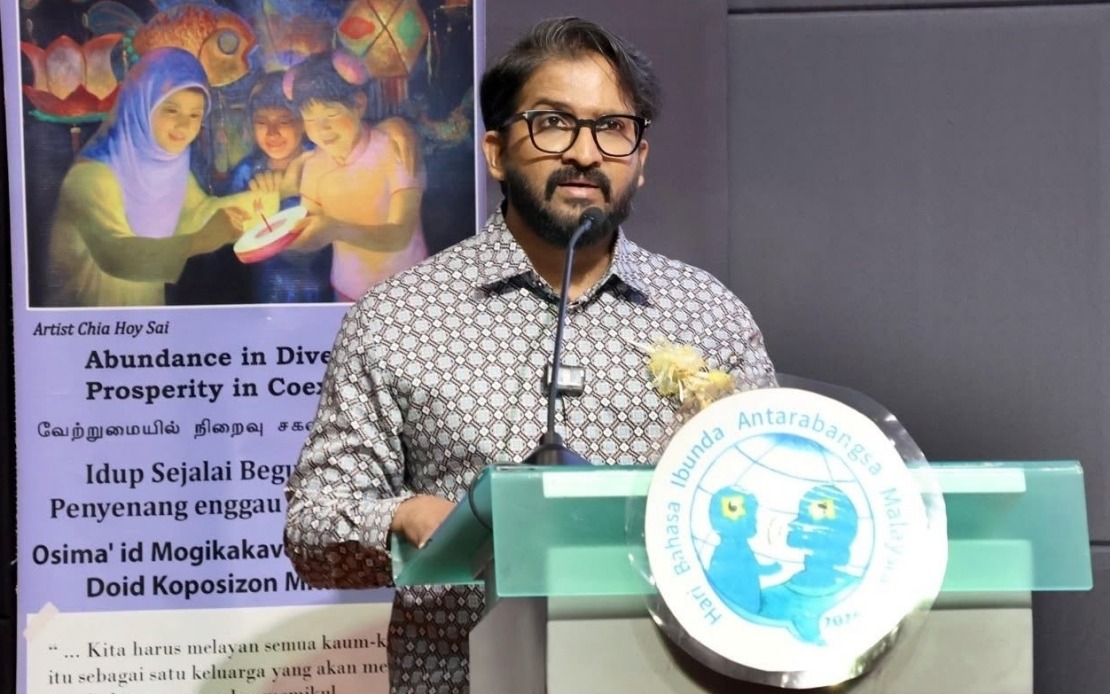
Deputy National Unity Minister R. Yuneswaran has made a compelling case for elevating mother-tongue education as a critical tool in addressing the escalating tensions surrounding race, religion and royalty—commonly known as 3R issues—that plague Malaysian social media and threaten social cohesion. Speaking on the matter this week, Yuneswaran contended that the underlying problem fuelling these contentious debates stems fundamentally from insufficient mutual understanding of each other's historical narratives, linguistic traditions and cultural contexts.
The minister's intervention arrives amid growing concern about how social media platforms amplify divisive rhetoric on sensitive communal matters. Rather than seeking to suppress discussions through regulation alone, Yuneswaran's approach targets the root cause: a deficit in cultural and linguistic literacy. His position reflects an understanding that surface-level communication often masks deeper misunderstandings rooted in unfamiliarity with how different communities view their own identities and values. When citizens lack grounding in their own cultural heritage, they become more susceptible to simplistic, inflammatory narratives that circulate online.
Yuneswaran emphasised that language functions as far more than a mere vehicle for exchanging information. Instead, he characterised it as an intrinsic carrier of identity, heritage and the fundamental values upon which entire communities are constructed. This distinction is crucial for Malaysian policymakers, as it reframes language education from a technical skill acquisition into a deeper engagement with what makes different communities distinctive and worthy of respect. The minister's framing suggests that when individuals possess genuine fluency in their mother tongue, they simultaneously possess deeper connections to their cultural foundations and greater capacity to appreciate parallel complexity in other traditions.
Malaysia's linguistic landscape presents both an extraordinary opportunity and a potential vulnerability. The nation recognises approximately 130 languages among its diverse population, a figure that underscores the country's remarkable ethnic and cultural heterogeneity. While this diversity constitutes a defining national characteristic and a source of potential strength on the global stage, it simultaneously creates space for misunderstanding when different communities lack meaningful exposure to one another's languages and worldviews. Yuneswaran's proposal essentially reframes this diversity as an asset to be cultivated rather than a liability to be managed through division.
A particularly significant aspect of Yuneswaran's argument addresses a widespread misconception that proficiency in one's mother tongue necessarily creates barriers to learning the national language or other tongues. Through his own background—drawing from Indian, Chinese and national school educational streams—he demonstrated how multilingual competency actually strengthens rather than weakens national cohesion. His personal experience suggests that individuals who maintain strong connections to their heritage languages simultaneously develop the intellectual flexibility and cultural confidence necessary to master additional languages and engage respectfully with different communities.
The implications of this position extend beyond simple educational policy. By advocating for enhanced mother-tongue proficiency, Yuneswaran implicitly argues that Malaysian national identity need not be constructed through the diminishment or marginalisation of community-specific linguistic traditions. Instead, he proposes a more inclusive model where national unity emerges from the mutual recognition and celebration of different cultural expressions. This approach contrasts with assimilationist frameworks that historically positioned community languages as obstacles to be overcome rather than resources to be developed.
The National Unity Ministry's mandate under the 13th Malaysia Plan positions language and cultural understanding as foundational to nation-building efforts. Within this framework, initiatives to strengthen mother-tongue education take on enhanced significance as deliberate strategic interventions rather than merely preserving heritage. The ministry has effectively identified a leverage point through which to advance its broader mandate of fostering mutual understanding, respect and genuine willingness among Malaysians to learn about one another's experiences and perspectives.
Yuneswaran's intervention also speaks to the peculiar challenge posed by social media ecosystems. These platforms disproportionately amplify content that triggers emotional reactions, meaning that divisive 3R discussions often gain traction precisely because they activate unresolved tensions rooted in incomplete understanding. By promoting deeper engagement with mother-tongue languages and their associated cultural contexts, policymakers might equip citizens with the conceptual frameworks necessary to resist oversimplified narratives and respond to provocative content with nuance rather than reflexive defensiveness.
For Malaysia's educational institutions, Yuneswaran's remarks carry practical implications. Schools and universities might reconsider how they position mother-tongue languages within their curricula—whether as optional heritage subjects or as integral components of comprehensive citizenship education. Enhanced investment in teaching and learning resources for minority language communities could demonstrate tangible government commitment to the principles Yuneswaran articulated, while simultaneously providing young Malaysians with concrete opportunities to deepen their understanding of heritage languages and their cultural significance.
The minister's conclusion that language fundamentally unites rather than divides Malaysia reflects an optimistic but evidence-informed perspective. When citizens possess genuine proficiency in their own languages, they develop the cultural confidence and understanding necessary to approach other communities with curiosity rather than defensiveness. This proposition challenges Malaysian society to move beyond viewing linguistic and cultural diversity as an inevitable source of friction requiring management, toward recognising it as a national resource requiring intentional cultivation and celebration across all sectors of society.

