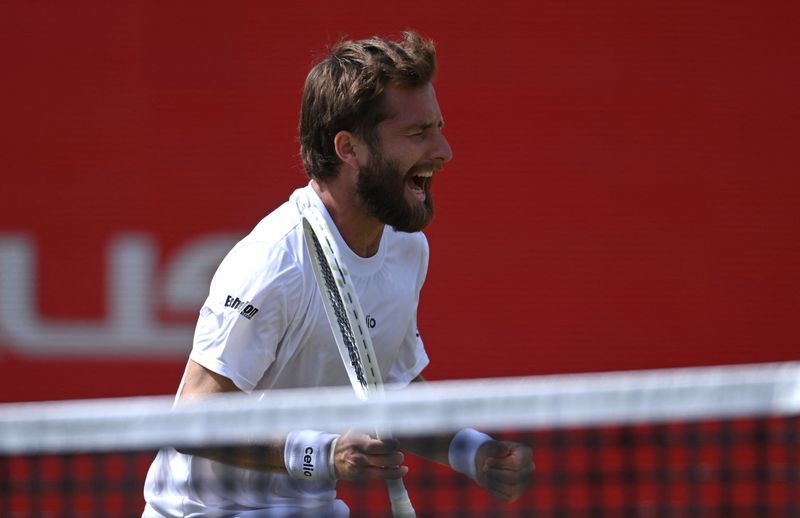
Corentin Moutet's fortnight at Queen's Club has ended in financial and reputational damage after the ATP handed the French player a substantial fine for his expletive-ridden conduct during a BBC interview immediately following his opening-round victory. The 27-year-old, currently ranked 36th in the world, was penalised $40,000 for unsportsmanlike behaviour, a sum that nearly wipes out the $43,000 he earned for advancing to the second round at the prestigious London venue. The sanction leaves Moutet with minimal financial return from his participation in the tournament, which took place in mid-June.
Moutet's disciplinary crisis unfolded during a seemingly routine court-side interview with the BBC after his straight-sets win over fellow Frenchman Giovanni Mpetshi Perricard. The exchange quickly became uncomfortable as Moutet deployed expletives on seven separate occasions whilst discussing his match performance. When the interviewer attempted to redirect the conversation after the first instance, requesting that Moutet refrain from repeating the profanity, the player continued regardless, uttering the same word three additional times before the segment was abruptly terminated. The broadcaster subsequently issued apologies to both the crowd at Queen's Club and television viewers who had witnessed the outburst.
Moutet's justification for the incident, posted later on Instagram, characterised his tirade as humorous rather than genuinely aggressive. He claimed he was "just joking," a defence that appears to have carried limited weight with tennis authorities. The ATP's decision to classify the conduct as unsportsmanlike reflects the sport's ongoing efforts to maintain professional standards during televised events, where player behaviour is increasingly scrutinised by audiences and sponsors alike. The prominence of the Queen's Club tournament, one of the ATP's flagship events on grass courts, likely elevated the severity of the response from governing bodies concerned about protecting the sport's image.
Specifically, Moutet's outburst occurred when discussing being aced by a 142mph second serve at match point, a moment of extreme frustration that clearly overwhelmed his composure. Rather than managing his emotions in the aftermath of a thrilling point, Moutet allowed his disappointment to spill into the broadcast, demonstrating poor judgment about the platform he was occupying. For international broadcasters like the BBC, which maintains strict content standards for live sports programming, such language creates immediate editorial problems and potential regulatory complications, particularly given Queen's Club's afternoon scheduling that reaches family audiences.
The financial consequence of the $40,000 fine is particularly stark when contextualised against Moutet's prize earnings from the tournament. His second-round participation, which generated $43,000 in total prize money, now leaves him with minimal net return once the penalty is deducted—effectively reducing his earnings to just $3,000 for two rounds of professional tennis. This disparity underscores the severity with which the ATP is treating on-court misconduct, sending a message that infractions can quickly erase the financial rewards players accumulate through competitive success. For a player ranked 36th globally, prize money remains critically important for sustaining career costs and development.
Moutet's disciplinary history suggests this is not an isolated incident but rather a recurring pattern of behavioural issues that have troubled tennis authorities. In 2022, he was dramatically defaulted from the Adelaide International after verbally abusing the match umpire during a contest against Serbia's Laslo Djere—an incident that resulted in his removal from the tournament entirely. That same year, the French Tennis Federation took the extraordinary step of suspending his access to federation resources and support due to ongoing behavioural concerns, indicating that Moutet's conduct problems extended beyond the professional tennis circuit and reflected deeper disciplinary challenges within the French tennis system.
The cumulative effect of these infractions paints a picture of a talented but temperamentally fragile athlete whose emotional regulation issues periodically undermine his professional standing and earning potential. The Queen's Club incident, occurring just two years after the Adelaide default and federation suspension, suggests that Moutet has not successfully implemented meaningful behavioural modifications. Tennis, unlike some other sports, places significant emphasis on player conduct and decorum, with governing bodies viewing professionalism as integral to the sport's integrity and appeal to sponsors and broadcasters.
Moutet's subsequent loss to Spain's Alejandro Davidovich Fokina in the second round ended his tournament involvement, meaning his disciplinary fine essentially represents the entirety of his financial gain from the event. The appeal he has filed against the ATP's decision offers a potential avenue for reducing the penalty, though the strength of that appeal remains unclear given the clear documentary evidence of his conduct captured on live television. Appeals of disciplinary matters in professional tennis rarely result in substantial reductions, particularly when the infraction occurred in such a public, broadcast setting.
For Malaysian and regional tennis enthusiasts, the Moutet case serves as a reminder that even at the highest echelons of professional sport, behavioural standards remain enforced with financial and reputational consequences. The incident highlights how modern athlete conduct extends far beyond play itself—post-match commentary, interviews, and public comportment all form part of players' professional obligations. Moutet's situation, particularly given his relatively young age and previous warnings from French authorities, raises questions about whether he possesses the maturity required to sustain a elite tennis career, or whether ongoing disciplinary measures will continue to constrain his professional development and financial prospects.

