The parliamentary debate surrounding the Royal Commission of Inquiry report on Tabung Haji has crystallized around a singular demand from lawmakers: any subsequent investigation must operate with complete transparency and independence to protect the interests of millions of Malaysian depositors and the broader public. This position reflects growing concern that the controversy surrounding the Islamic pilgrim fund has become mired in competing narratives, mutual accusations, and claims of defamation that obscure rather than illuminate the underlying issues.
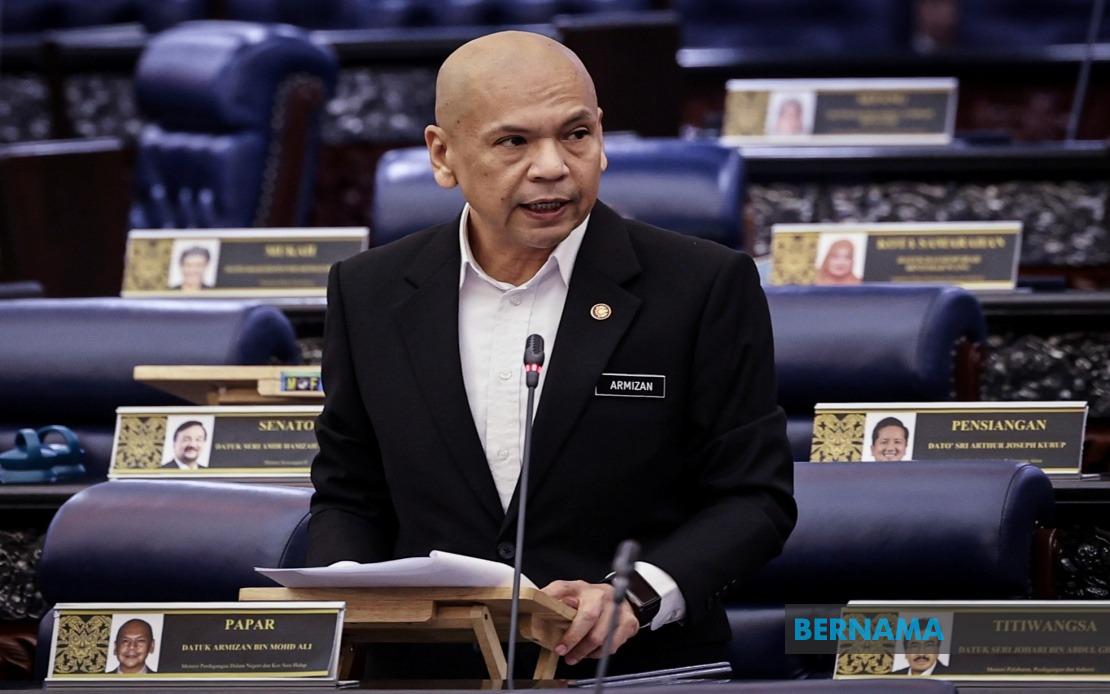
Minister of Domestic Trade and Cost of Living Datuk Armizan Mohd Ali articulated the frustration many MPs feel about the current discourse. He noted that the debate has devolved into a complicated web of competing claims, with various stakeholders accusing one another of slander and defamation, making it increasingly difficult for ordinary citizens to discern truth from rhetoric. This confusion, he suggested, underscores the critical importance of allowing professional enforcement agencies to take the lead in investigating the RCI's findings. Only through such an institutionalized approach, conducted with rigorous adherence to facts and legal principles, can clarity be restored and public trust rehabilitated.
The context for this demand is significant for Malaysian readers. Tabung Haji, the board that manages investments for Malaysian Muslims intending to perform the hajj pilgrimage, represents not merely a financial institution but a deeply important religious and cultural trust. When governance failures emerge at such an organization, the implications extend far beyond balance sheets and administrative procedures. The RCI report, released publicly on July 29 following government approval, documented substantial weaknesses in the organization's management and operations spanning 2014 to 2020, a period that encompasses significant financial turbulence in Southeast Asia and globally.
Armizan emphasized that investigation alone is insufficient. Equally important is the systematic examination of the RCI's 25 improvement recommendations, which represent the pathway toward genuine organizational rehabilitation. He praised the current Tabung Haji administration for its recovery initiatives, suggesting that the organization has made measurable progress toward stability. However, this recovery trajectory will only be credible if accompanied by thorough implementation of structural reforms and governance improvements. The minister's comments indicate that parliamentary leadership sees the RCI report not as an endpoint but as a foundation for comprehensive institutional renovation.
The question of how Tabung Haji's operations should be structured administratively sparked parallel discussion among government ministers. Nancy Shukri, Minister of Women, Family and Community Development, defended the current arrangement wherein hajj affairs remain under the Minister in the Prime Minister's Department (Religious Affairs), while financial and investment matters fall under the Finance Ministry's purview. This division of labour, she argued, represents an appropriate specialization of responsibilities based on areas of expertise and functional requirements, while simultaneously reducing bureaucratic overlap and ensuring that specialized knowledge is applied to complex issues.
A more contentious issue emerged in parliamentary discussion regarding political appointments to the Tabung Haji board. Nancy Shukri reframed the debate by shifting focus from whether appointees possess political connections to whether they possess the necessary integrity, qualifications, experience, expertise, and capability to execute their responsibilities effectively. This rhetorical move is significant because it acknowledges that political appointments exist while attempting to establish a merit-based justification for them. Her argument carries particular resonance for Malaysian governance, where the intersection of political patronage and institutional independence remains perpetually contested.
Shukri's position essentially proposes a reorientation of how board appointments should be evaluated. Rather than viewing political background as categorically disqualifying, her framework suggests that individuals with political credentials may still be appropriate choices if they meet established professional standards. However, she simultaneously cautioned against allowing political considerations to substitute for proper fit-and-proper requirements. This balanced approach reflects an attempt to navigate the legitimate governance concern—ensuring that boards contain individuals with genuine expertise and integrity—while acknowledging the political reality that governments naturally tend to appoint individuals with whom they share ideological affinity or personal connection.
To operationalize these principles, Shukri advocated for establishing specific criteria for board member appointments, implementing transparent selection methodologies, and explicitly identifying required areas of expertise. Such formalized procedures would supposedly ensure that merit and suitability become the primary considerations in the appointment process. For Malaysian observers, this proposal connects to broader ongoing debates about institutional governance standards and the proper relationship between political leadership and independent institutional management.
The RCI report itself presents a substantial foundation for reform. As of July 30, Tabung Haji had already implemented approximately 75 percent of the 25 recommendations, indicating both a willingness to address identified deficiencies and an awareness of the institutional stakes involved. The speed with which implementation commenced suggests that the fund's management recognizes that public confidence—essential for an organization managing the religious savings of millions—cannot be restored through defensive posturing but only through demonstrable remedial action.
For Malaysian depositors specifically, the parliamentary insistence on transparent investigation carries concrete implications. These individuals, many of whom are middle-income or lower-income Muslims saving for one of Islam's five pillars, depend on Tabung Haji to preserve and grow their funds in preparation for what is often a once-in-a-lifetime spiritual journey. When governance failures emerge, these depositors face not merely financial jeopardy but also uncertainty about whether their savings will reach their intended religious purpose. The RCI investigation was therefore not an abstract matter of institutional administration but touched the fundamental security and religious aspirations of a substantial segment of Malaysia's Muslim population.
The parliamentary debate also illuminates how Malaysian governance institutions are attempting to process the tension between accountability and forward-looking reform. While previous scandals at Malaysian institutions have sometimes resulted in defensive responses or incomplete investigations, the apparent commitment by both government and parliamentarians to transparent, independent investigation suggests some institutional learning has occurred. The challenge now lies in ensuring that such investigations actually maintain their independence when pressures arise, and that resulting reforms address not merely the symptoms of institutional dysfunction but their underlying causes.
Moving forward, the test of parliamentary intentions will be whether the commitment to transparent investigation translates into actual institutional practice. The RCI report's recommendations for improved governance structures, clearer appointment criteria, and enhanced financial oversight require not merely announcement but rigorous, sustained implementation. For Malaysian citizens and depositors, the ultimate measure of success will be whether Tabung Haji emerges from this period of scrutiny as a demonstrably more transparent, professionally managed, and trustworthy institution—one that can be confidently entrusted with preserving the hajj aspirations of future generations of Malaysian Muslims.

