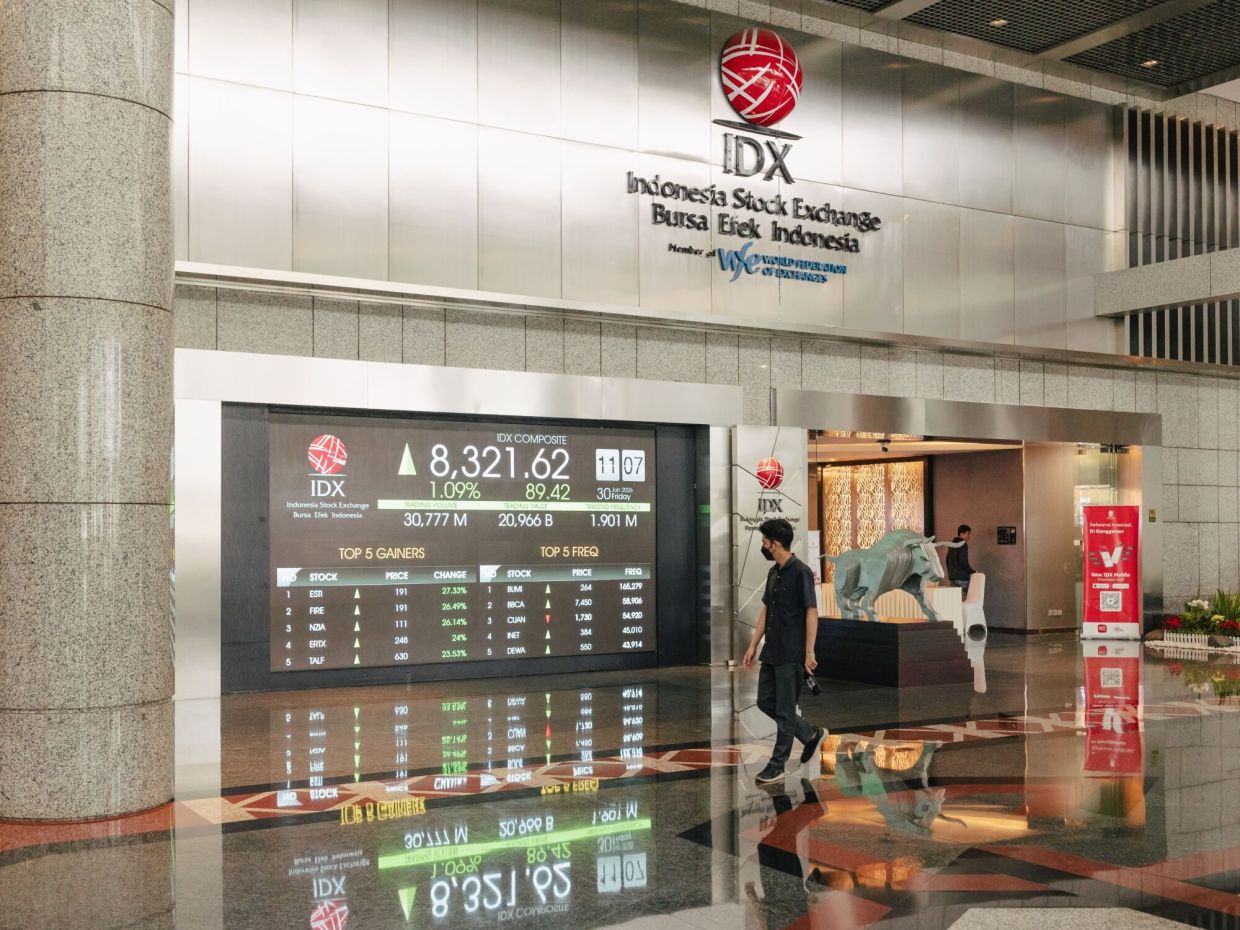
MSCI, the influential index provider that tracks trillions of dollars in global investment flows, has intensified its scrutiny of Indonesia's financial markets by highlighting governance shortcomings that could undermine international investor confidence. The fresh warning, released on Thursday through a market accessibility review, centres on the opacity surrounding share ownership patterns and coordinated trading activity that may distort price discovery. These concerns arrive at a critical juncture, as MSCI prepares to announce its verdict next week on whether to relegate Indonesia from emerging market status to the lower-tier frontier classification—a decision carrying far-reaching consequences for the nation's capital markets and broader economy.
The potential downgrade represents an existential threat to Indonesia's investment profile. Should MSCI proceed with the reclassification, passive investment funds tracking the index would be forced to liquidate holdings, potentially releasing as much as $13 billion in selling pressure across the market. For a nation already grappling with currency weakness and sinking investor sentiment, such forced outflows could trigger a sharp deterioration in financial conditions and asset valuations. The psychological impact alone—signalling to global investors that Indonesia no longer meets emerging market standards—would likely extend beyond the mechanical rebalancing, creating a reputational wound that takes years to heal.
MSCI's latest assessment downgraded Indonesia's information flow criterion to negative, reflecting the regulator's concerns about how shareholding data and trading activity are disclosed and monitored. This metric directly affects the ability of international asset managers to assess the true free float of listed companies—the proportion of shares genuinely available for public trading rather than locked up by controlling shareholders or state entities. When free float visibility is murky, global investors struggle to properly value stocks and gauge their actual market exposure. The opacity creates friction for sophisticated capital allocators who demand transparency to justify allocating capital into emerging markets that carry inherent geopolitical and currency risks.
The warning compounds an already fraught situation that began in January when MSCI first flagged transparency concerns and signalled a potential downgrade. That initial alert catalysed a retreat from Indonesian equities, with the Jakarta stock exchange recording significant declines as foreign investors reassessed their exposure. The Indonesian authorities responded with a flurry of reforms aimed at demonstrating commitment to improved governance standards. The government doubled the minimum free float requirement for listed companies to 15 per cent, a move designed to reduce concentration of ownership and broaden the investor base. Tellingly, the crisis forced the resignation of the exchange and regulatory body chiefs in a single afternoon, underscoring the severity with which authorities treated the downgrade threat.
Yet despite these remedial efforts, MSCI extended its review period in April, suggesting the initial reforms had not fully addressed underlying governance gaps. In May, MSCI removed six companies from its indexes, the majority with ties to prominent tycoons, signalling that ownership concentration and related-party transaction concerns remain live issues. These removal decisions generated another wave of selling, demonstrating how fragile confidence has become and how sensitive markets are to negative signals from the index operator. For Indonesian companies and shareholders, each MSCI announcement has become a closely watched event with immediate market repercussions.
One observer offering a more measured perspective is Mohit Mirpuri, a fund manager at SGMC Capital in Singapore, who cautioned against reading too much doom into the latest review. He noted that only one accessibility measure deteriorated in the report, while Indonesia continued to demonstrate competitive strength against regional peers such as South Korea, China, and India across several important governance dimensions. This nuance suggests the market may be overreacting to headline risk, though the fundamental challenge remains: MSCI's decision next week is binary, and the downgrade outcome would erase any reassurance from comparative strengths.
The broader context of Indonesia's investment crisis extends beyond governance metrics to encompass macroeconomic instability and policy uncertainty. Under President Prabowo Subianto, the government has pursued populist economic measures that have rattled investors concerned about fiscal sustainability and inflation risks. The rupiah has weakened to record lows, prompting the central bank to tighten monetary policy through successive interest rate hikes to defend the currency. These monetary tightening cycles typically weigh on corporate earnings and equity valuations, creating a headwind that compounds the structural governance concerns. Additionally, MSCI noted that Indonesia lacks an efficient offshore currency market while onshore markets face constraints, limiting the hedging options available to foreign investors seeking to manage currency risk—a critical operational consideration for international asset managers.
Rating agencies have reinforced these concerns by cutting their debt outlooks for Indonesia to negative in recent months. Both Moody's and Fitch cited eroding policymaking credibility, suggesting that confidence in the government's ability to manage the $1.4 trillion economy has deteriorated markedly. Indonesia, once celebrated as a stable emerging market darling, now confronts questions about whether its institutional strength can withstand the combination of external pressures and internal policy challenges. The downgrade of rating outlooks typically precedes formal debt rating cuts, which would raise borrowing costs for the government and potentially trigger further capital outflows as risk-averse investors reassess their exposure.
The market performance data underscores the severity of the investor exodus. Indonesia's benchmark Jakarta stock index has contracted 29 per cent in 2024, making it one of the worst-performing major stock markets globally. More concerning for policymakers, foreign investors have liquidated approximately $3.65 billion worth of Indonesian stocks during the year, a substantial outflow relative to the market's total capitalisation. This selling reflects not temporary volatility but a fundamental reassessment of risk-reward dynamics, as international asset managers reposition away from Indonesia in favour of more stable alternatives elsewhere in Asia. The cumulative effect of governance concerns, macroeconomic headwinds, and rating downgrades has created a self-reinforcing cycle of capital outflows and asset price depreciation.
The forthcoming MSCI verdict will likely prove decisive not just for short-term trading flows but for Indonesia's medium-term investment attractiveness. A downgrade to frontier status would represent a severe blow to national pride and investor confidence, but it would also create clarity—markets often stabilise once the worst fears are confirmed and priced in. Conversely, a decision to retain emerging market status would signal that Indonesia's reform efforts have gained traction, though the index provider's continued monitoring would likely persist. Either outcome underscores the critical importance of genuine institutional reform in Indonesia's governance frameworks, particularly regarding ownership transparency and enforcement of anti-manipulation standards. Without sustained progress on these fronts, the nation risks becoming increasingly marginalised from global capital flows.

