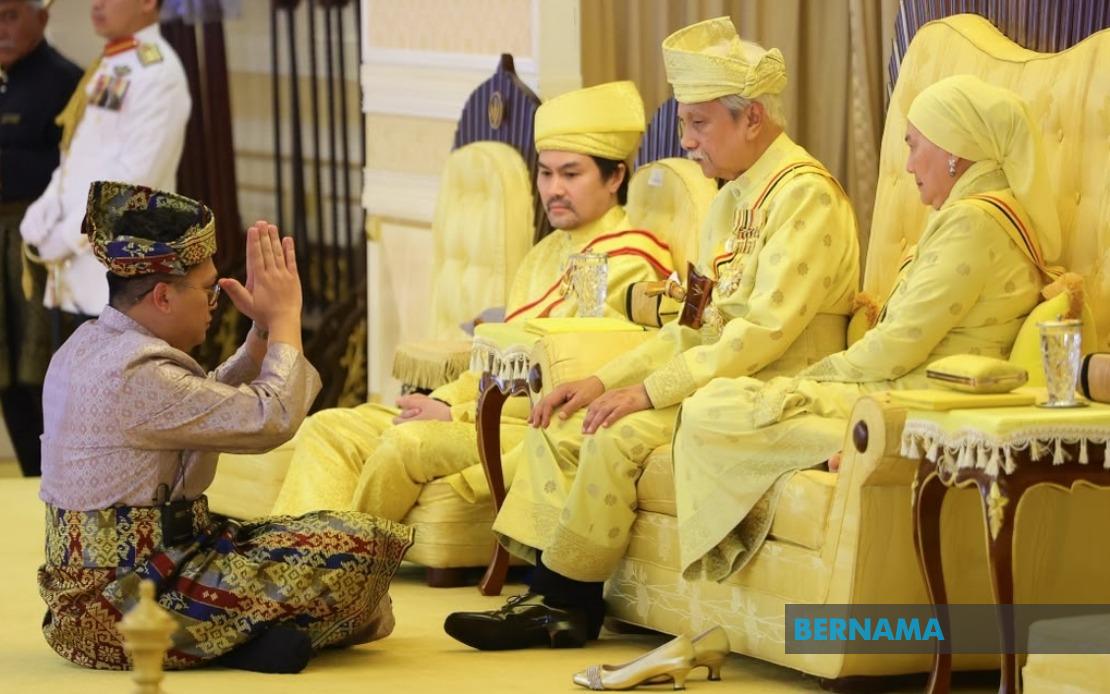
Muhammad Faris Johari has been formally installed as the 11th Undang of Luak Sungei Ujong following a traditional ceremony conducted by Tuanku Muhriz Tuanku Munawir, the Yang Dipertuan Besar of Negeri Sembilan, at Istana Besar Seri Menanti this morning. The appointment marks the continuation of a succession line that has governed this particular luak, or traditional administrative division, within Negeri Sembilan's distinctive feudal structure.
The installation ceremony adhered to longstanding customary protocols that reflect the state's commitment to preserving its unique Adat Perpatih system, a matrilineal customary law practised exclusively in Negeri Sembilan. The proceedings commenced when the Orang Empat Istana, senior traditional officials who serve as the ruler's advisors, formally sought Tuanku Muhriz's permission to proceed, underscoring the hierarchical relationship between the customary leadership and the monarchy. Following this formal petition, Muhammad Faris took an oath affirming his allegiance to Tuanku Muhriz, a crucial moment that reinforces the constitutional bonds linking the undang to the state ruler.
Upon completion of the oath-taking, Tuanku Muhriz issued the formal proclamation conferring on Muhammad Faris the chiefly title of Datuk Klana Petra, elevating him to the uppermost echelon of Sungei Ujong's traditional hierarchy. This conferment of title represents more than symbolic recognition; it endows the new undang with customary authority and responsibilities spanning land governance, dispute resolution according to adat principles, and community leadership within the luak.
In his address during the investiture, Tuanku Muhriz emphasised the cardinal importance of honouring the pledges undertaken during the ceremony with unwavering dedication to sincerity, integrity and purposeful stewardship. The ruler underscored that the success of Negeri Sembilan's governance depends fundamentally on maintaining the trust and loyalty of the chieftain class, the Orang Kaya, towards the institution of the Yang Dipertuan Besar and towards the Palace as a whole. This emphasis reflects broader concerns within Malaysia's constitutional monarchy about sustaining institutional cohesion and respect across different layers of governance.
Tuanku Muhriz articulated a broader vision of how customary traditions and modern constitutional governance must coexist through frameworks rooted in reciprocal respect, confidence and collective deliberation. The ruler stressed that these principles are indispensable for upholding the constitutional monarchy, maintaining adat customs and traditions, and safeguarding Negeri Sembilan's prosperity and stability. This framing suggests that traditional leadership continues to play a meaningful role in the state's political ecology, a perspective that carries implications for how other Malaysian states might approach their own customary institutions.
The ceremony drew distinguished attendance from senior members of the royal household, including Tunku Ampuan Besar Tuanku Aishah Rohani Tengku Besar Mahmud, the principal consort; Tunku Besar Seri Menanti Tunku Ali Redhauddin Tuanku Muhriz; and Tunku Panglima Besar Tunku Zain Al-'Abidin. The presence of Menteri Besar Datuk Seri Aminuddin Harun and leading officials from state government departments underscored the state administration's endorsement and participation in the traditional ceremonial process, demonstrating the interlocking nature of customary and civil governance structures.
Muhammad Faris, aged 28, brings contemporary professional credentials to the role of undang, having completed tertiary education at Universiti Teknologi MARA with a bachelor's degree in accountancy and subsequently obtaining professional certification through the Association of Chartered Certified Accountants programme in 2022. His relatively young age and modern accounting background suggest an effort to blend traditional authority with contemporary administrative competence, a pattern increasingly observed in appointments across Malaysia's customary hierarchies. He is married to Sharifah Amirah Syed Ismail Ash-Shahab.
The appointment of Muhammad Faris occurs within the context of Negeri Sembilan's commitment to preserving Adat Perpatih, the state's distinctive matrilineal system of customary law and land tenure. Unlike other Malaysian states, Negeri Sembilan maintains this ancient governance framework where property and certain rights pass through female lines, reflecting a pre-Islamic inheritance tradition that has persisted through centuries of change. The installation of a young, professionally trained undang suggests the state seeks to maintain these traditions while ensuring the customary leadership possesses skills relevant to contemporary administrative challenges.
Tuanku Muhriz directed the people of Negeri Sembilan to collaborate actively with customary leadership in fulfilling collective responsibilities while steadfastly preserving and advancing the values embedded in Adat Perpatih that have been transmitted across generations. This appeal to collective custodianship of traditions reflects anxieties across Southeast Asia about the erosion of customary practices amid modernisation and globalisation, positioning the undang as not merely a governing figure but a custodian of cultural inheritance.
Following the completion of Muhammad Faris's installation, the Palace conducted another formal audience later that same day to formalise the installation of the 22nd Undang of Luak Rembau, indicating that Negeri Sembilan was undertaking a broader renewal of its customary leadership structure. These simultaneous appointments suggest a structured succession process within the state's traditional governance framework and underscore the ongoing relevance of the luak system to Negeri Sembilan's administrative organisation, even as Malaysia navigates contemporary pressures on monarchical and customary institutions.

