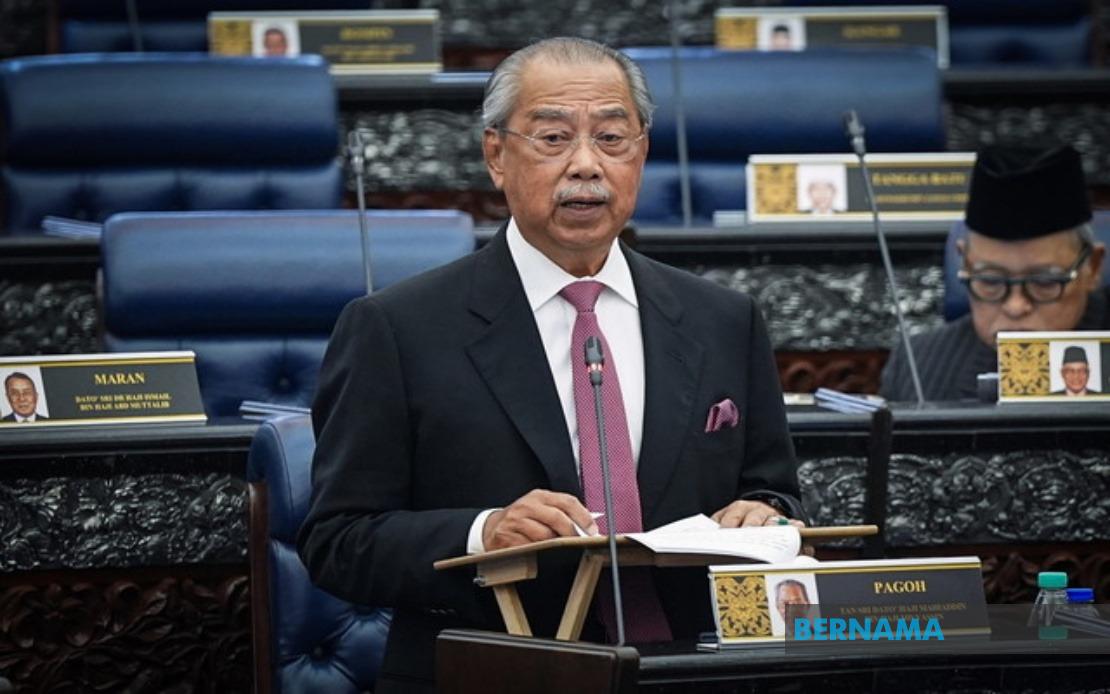
Former Prime Minister Tan Sri Muhyiddin Yassin has pressed the government to launch a comprehensive and transparent forensic audit of Lembaga Tabung Haji (TH) management and governance, with completion targeted for within twelve months. Speaking during parliamentary debate on the institution's Royal Commission of Inquiry findings, Muhyiddin emphasised that such an investigation was imperative given the serious weaknesses uncovered in how TH oversaw its funds during a critical seven-year period.
The RCI report, released publicly on July 29, painted a damning picture of TH's operational and governance failings. Most striking was the revelation of cumulative estimated losses ranging between RM10 billion and RM12.6 billion accumulated over the 2014-2020 period. These figures represent a catastrophic loss of pilgrim savings and institutional credibility at an organisation managing one of Malaysia's largest pools of individual investment funds. The magnitude of these losses underscores why parliamentary attention and urgent corrective action have become unavoidable.
Muhyiddin, who also leads Bersatu, articulated the necessity for independent forensic investigation rather than routine internal review. An external audit of this scope and depth would be tasked with tracing fund flows across multiple investment vehicles and counterparties, detecting fraudulent transactions, and exposing instances where institutional power was misused or fiduciary duty abandoned. The former premier was unambiguous that accountability must follow investigation: individuals culpable for losses, whether through deliberate wrongdoing, abuse of institutional position, or reckless negligence, must face legal consequences.
Paralleling this call, Member of Parliament Syed Saddiq Syed Abdul Rahman from MUDA representing Muar proposed a more targeted enforcement approach. He advocated for establishment of a Multi-Agency Task Force specifically to investigate fourteen problematic investments identified within the RCI report itself. Rather than allowing investigations to proceed through separate institutional channels with limited coordination, such a task force would consolidate effort across the Malaysian Anti-Corruption Commission, Royal Police and Inland Revenue Board. This integrated approach would prevent gaps, eliminate duplication, and ensure systematic interrogation of how particular investment decisions were made and subsequently failed.
Syed Saddiq expanded the scope of concern beyond TH alone, flagging similar governance questions surrounding Felda, FGV Holdings and Eagle High investments. His recommendation that forensic audits examine these problematic investments alongside the Multi-Agency investigation reflects mounting parliamentary concern that institutional mismanagement may represent a broader pattern within government-linked entities rather than isolated failures within TH. Establishing clear lines of accountability and quantifying resultant losses across multiple entities would provide greater transparency to Malaysian citizens and institutional investors.
BN Member of Parliament Datuk Seri Hasni Mohammad from Simpang Renggam advocated for structured accountability mechanisms going forward. He proposed that MACC, police and other enforcement agencies furnish regular, scheduled progress updates on all investigations spawned by RCI recommendations. Rather than allowing investigations to proceed opaquely until final conclusions emerge months or years hence, periodic reporting would maintain legislative visibility and public confidence in the process. Hasni further recommended that today's special parliamentary sitting should catalyse ongoing bipartisan parliamentary oversight, institutionalised rather than ad-hoc, ensuring that all twenty-five RCI recommendations receive continuous monitoring and regular reporting to the Dewan Rakyat.
The parliamentary inquiry itself represents a significant step in transparency. The government's decision to release the RCI report publicly on July 29 marked a shift toward openness regarding institutional failure. Previously, such investigations might have remained confidential or heavily redacted. Public disclosure enables informed scrutiny by media, civil society, and the broader Malaysian public. For a nation where trust in major institutions has eroded through repeated scandals, transparent acknowledgment of failure and commitment to remediation carries symbolic weight extending beyond the immediate institutional context.
As of July 30, TH had already implemented approximately seventy-five percent of the RCI's twenty-five recommendations for institutional improvement. This suggests that some corrective measures are underway, yet the scale of historical losses demands more than procedural reform. The gap between implementing administrative recommendations and achieving genuine governance transformation remains substantial. Parliamentary oversight, forensic investigation, and accountability mechanisms must accompany operational improvements to restore investor confidence.
The RM10-12.6 billion loss figure requires contextualisation for Malaysian readers. Tabung Haji manages savings for approximately 1.7 million Malaysians intending to perform pilgrimage. Losses of this magnitude represent a proportionally catastrophic diminishment of individual retirement and religious obligation funds. For middle and working-class Malaysians who have contributed consistently over decades, the realisation that institutional mismanagement eroded their accumulated savings inflicts profound material and psychological harm. This extends beyond institutional accountability to questions of individual recompense and whether affected pilgrims will receive compensation or remediation.
The multi-agency investigation and forensic audit recommendations highlight evolving parliamentary approaches to institutional failure. Rather than accepting government assurances of internal reform, opposition and backbench MPs increasingly demand independent external validation, inter-agency coordination, and public accountability. This reflects broader regional trends across Southeast Asia where governance scandals have prompted more aggressive legislative oversight and enforcement coordination. Malaysia's approach will likely influence how other ASEAN nations respond to comparable institutional failures.
The recommendations also address an accountability gap that has historically plagued Malaysian governance. Individual officers responsible for losses, whether through incompetence or malfeasance, have sometimes escaped consequences through bureaucratic insulation or lack of coordinated enforcement pressure. By establishing integrated task forces and demanding forensic analysis, parliamentarians are attempting to close these gaps. Whether enforcement agencies possess political will and institutional capacity to pursue high-level accountability remains an open question with significant implications for institutional reform credibility.
Moving forward, the interplay between parliamentary oversight, forensic investigation, and administrative reform will determine whether this episode catalyses genuine governance transformation or becomes another bureaucratic reckoning that fades without systemic change. The one-year timeline proposed by Muhyiddin is ambitious and must be coupled with adequate resource allocation to investigative bodies. Sustained bipartisan parliamentary attention, as Hasni proposed, will prove essential to preventing momentum dissipation. For Malaysian institutional investors and individual pilgrims, the coming months will reveal whether government commitment to accountability extends beyond rhetorical acknowledgment to material consequences.

