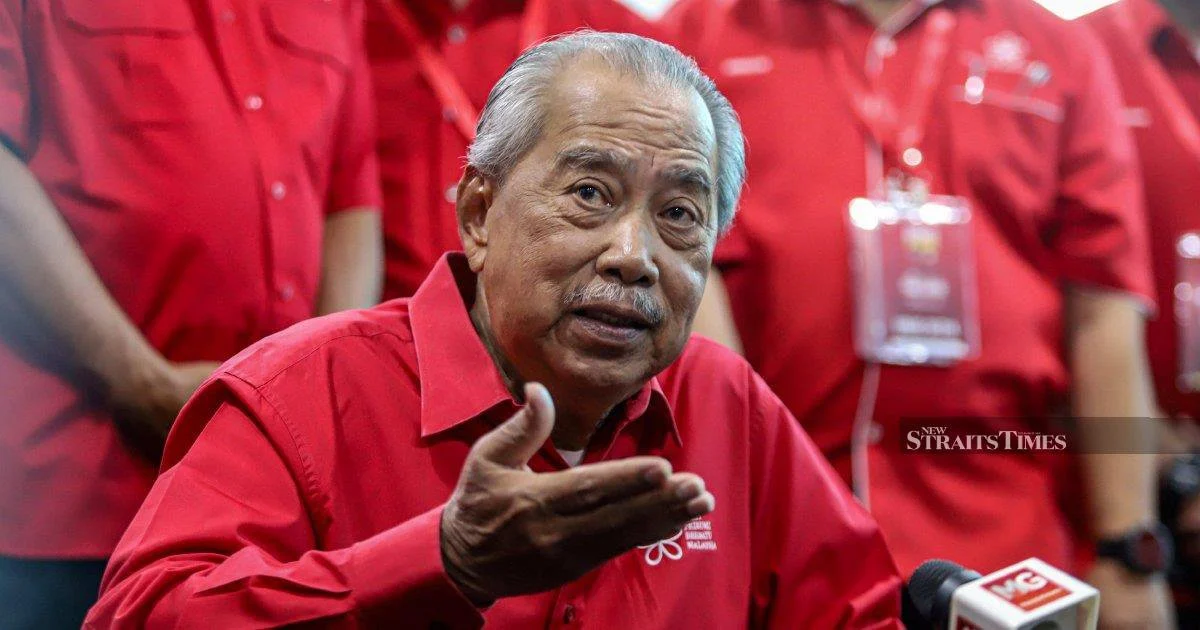
Bersatu President Tan Sri Muhyiddin Yassin has moved to quell growing uncertainty about the future of the Perikatan Nasional coalition, declaring that his party will remain a permanent fixture within the broader opposition alliance. The assertion comes amid mounting speculation in Malaysian political circles regarding the stability and durability of PN as an electoral and legislative force, with various commentators questioning whether the coalition can withstand internal tensions and shifting political dynamics.
Muhyiddin's emphatic reassurance represents a critical moment in the coalition's evolution. Since its formation, Perikatan Nasional has positioned itself as a counterweight to the federal government, bringing together parties with historically divergent interests and ideologies. The Bersatu president's unequivocal commitment to maintaining PN membership signals his party's conviction that the coalition architecture offers the most viable pathway for opposing forces to challenge the current administration and present themselves as a credible alternative government.
The timing of Muhyiddin's statement carries particular weight given the fluid nature of Malaysian coalition politics, where party loyalties have proven malleable and strategic realignments occur with relative frequency. The Perikatan Nasional arrangement itself emerged from unexpected political reconfiguration in recent years, demonstrating how rapidly political landscapes can shift. By anchoring Bersatu firmly within PN, Muhyiddin appears intent on signalling stability to party members, coalition partners, and voters who might otherwise harbour doubts about the opposition's organisational coherence.
Bersatu itself occupies a unique position within Malaysian politics as a party founded by former Prime Minister Dr Mahathir Mohamad, which subsequently became the vehicle for several political manoeuvres and realignments. The party's trajectory from government coalition partner to opposition component represents the kind of volatility that breeds scepticism about coalition permanence. Muhyiddin's leadership has focused on rebuilding the party's institutional strength and clarifying its political orientation, making the current reaffirmation of PN commitment part of a broader narrative about party consolidation.
The speculation surrounding PN's future likely stems from several observable factors in Malaysian politics. Coalition management remains perpetually challenging, particularly when partner parties contest different electoral territories and hold varying policy priorities. Additionally, ongoing developments in federal governance, potential electoral cycles, and shifting public sentiment all create conditions where coalition members might reassess their strategic affiliations. The opposition's persistent effort to coalesce around PN therefore requires constant reinforcement of commitment from senior figures.
Muhyiddin's statement also reflects internal party management considerations. Reaffirming PN membership helps maintain party discipline within Bersatu's ranks, preventing dissenting voices from questioning whether remaining in the coalition serves their individual or collective interests. Such declarations function as leadership pronouncements that constrain the range of acceptable discourse within party structures, establishing expectations among members regarding the party's strategic direction.
For the broader opposition ecosystem, Bersatu's stability within PN holds significant implications. The party contributes parliamentary seats, grassroots organising capacity, and leadership experience to the coalition. Any departure would necessitate recalibration of PN's electoral strategy and parliamentary positioning. Conversely, a smaller coalition might prove more administratively cohesive, though potentially less competitive in terms of electoral mathematics. The opposition's viability as a governing alternative depends substantially on maintaining sufficient parliamentary representation to pose a credible challenge to the federal government.
Regional observers note that Perikatan Nasional's performance and longevity matter for Malaysian democracy's health. A fractious opposition that repeatedly fragments undermines accountability mechanisms and reduces voter choice quality. Alternatively, opposition coalitions that maintain coherence and organisational discipline strengthen competitive dynamics within the political system. Muhyiddin's commitment language contributes to international and domestic assessments of political stability and institutional maturity.
The declaration should be contextualised within broader Southeast Asian patterns of coalition politics. Countries across the region demonstrate how coalition arrangements can either stabilise or destabilise governance depending on partner compatibility, resource distribution, and leadership capability. Malaysia's experience with PN represents an ongoing experiment in opposition coalition management that observers throughout the region monitor for insights into coalition durability and effectiveness.
Looking forward, the Bersatu president's assurance may require periodic restatement as political circumstances evolve. Maintaining coalition coherence typically demands active leadership engagement, regular communication between partner parties, and demonstrated progress toward shared objectives. Muhyiddin's current reaffirmation establishes a baseline expectation that Bersatu leadership will prioritise PN stability rather than pursuing alternative alignments, though electoral results and internal party dynamics will ultimately determine whether such commitments survive future political transformations.

