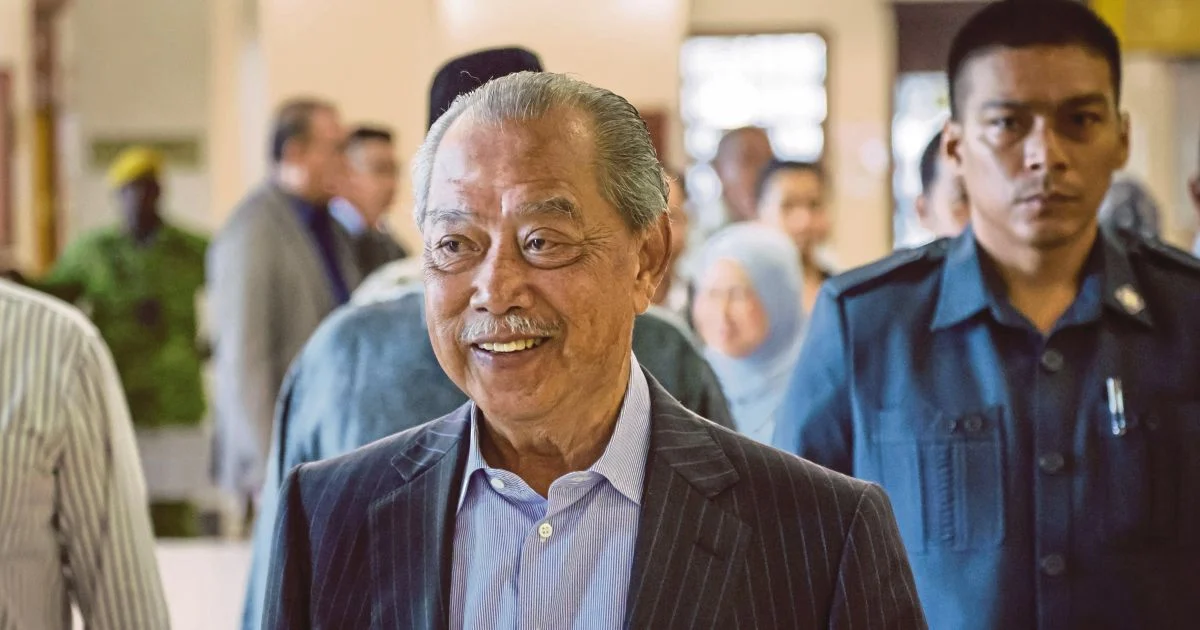
Perikatan Nasional remains bullish about its prospects of capturing the Johor state government despite committing candidates to less than 60 per cent of available seats in the coming state election. Bersatu president Tan Sri Muhyiddin Yassin expressed confidence in the opposition coalition's viability while campaigning in Pagoh, emphasizing that the party's reduced footprint across the state does not diminish its realistic chances of leading the next administration. The strategic decision to contest only 33 seats out of the total 56 reflects internal calculations within the PN machinery about resource allocation and electoral positioning ahead of the polls.
Johor remains a critical battleground in Malaysia's fractured electoral landscape. The state has undergone significant political realignment in recent years, with voter sentiment increasingly volatile and traditional power bases eroding. The Johor state assembly comprises 56 seats, making 29 seats the simple majority threshold necessary to form government. PN's competition with the ruling Barisan Nasional and the resurgent Pakatan Harapan creates a three-way contest that could potentially fragment votes in unpredictable ways. Muhyiddin's confidence suggests PN believes it can accumulate sufficient seats through a combination of direct electoral victories and potential post-election coalition arrangements.
The decision to field fewer candidates than the total available represents a calculated risk assessment by Perikatan Nasional's leadership. By concentrating resources in 33 carefully selected constituencies, PN strategists presumably identified seats where the coalition possesses stronger grassroots organization, higher incumbency advantage, or demographic trends favourable to its messaging. This targeted approach differs markedly from fielding candidates across all 56 seats, a strategy that might dilute campaign resources and reduce competitiveness in marginal constituencies. It reflects lessons learned from previous electoral cycles where spreading campaign machinery too thinly resulted in disappointing outcomes.
The composition of PN's slate carries implications for coalition politics in Johor. While Bersatu forms the backbone of the coalition, PN's Johor apparatus also encompasses other member parties. The distribution of seats among these coalition partners typically involves negotiations that balance each party's political weight, historical performance, and regional influence. The decision to contest 33 seats instead of 56 potentially signals confidence in candidates selected for those seats specifically, suggesting PN's internal polling or grassroots intelligence indicates higher conversion probabilities in these constituencies compared to others.
Muhyiddin's public optimism serves multiple political functions simultaneously. Externally, it projects momentum and confidence to voters who might otherwise view PN's limited seat offering as a sign of weakness. Political campaigns thrive on narratives of inevitability and forward progress, and the party leader's bullish commentary contributes to that perception-building exercise. Internally, such statements reinforce morale among party machinery and volunteers facing an uphill battle against established political structures. The framing of limited seat contestation as strategic rather than constrained helps maintain organizational cohesion.
The Johor electoral context presents unique dynamics compared to other Malaysian states. The peninsula's southern state has historically alternated between dominant coalitions, with Barisan Nasional maintaining traditional strength in rural constituencies while urban areas display greater volatility. Demographic shifts, economic pressures from port decline and manufacturing adjustments, and migration patterns have reshaped the state's political character. PN's focus on 33 constituencies likely reflects concentration in areas where the coalition identified receptive audiences for its political messaging and policy platform.
For Malaysian political observers and Southeast Asian watchers, PN's approach in Johor illustrates the adaptive strategies emerging within Malaysia's increasingly fragmented party system. Rather than the monolithic contest between established blocs that characterized earlier decades, contemporary Malaysian elections involve multiple competitors using sophisticated targeting methods. Perikatan Nasional's formation itself represents a significant realignment, bringing together parties that previously operated in opposing coalitions. Its performance in Johor will substantially influence calculations about the coalition's broader viability as a national political force.
The opposition coalition's prospects depend significantly on translating whatever electoral victories it achieves into governing capability. Even if PN secures the most seats among competing coalitions, actually assembling 29 seats for government formation may require post-election negotiations with independent candidates or smaller parties. Such arithmetic underlies Muhyiddin's confidence, suggesting PN's leadership anticipates being positioned to negotiate effectively once results emerge. This represents a different category of confidence than simply projecting victory in a majority of contested seats.
Political observers remain divided on whether PN's limited seat contestation represents strategic strength or reflects organizational constraints. Critics argue that fielding fewer candidates signifies weakness in campaign infrastructure or financial resources. Supporters within the coalition counter that concentrated effort in winnable seats represents disciplined campaign management. The actual electoral results will provide definitive answers, though the gap between PN's current optimism and final vote tallies often stretches across considerable distance in Malaysian politics, where ground sentiment shifts rapidly and unpredictably during campaigns.

