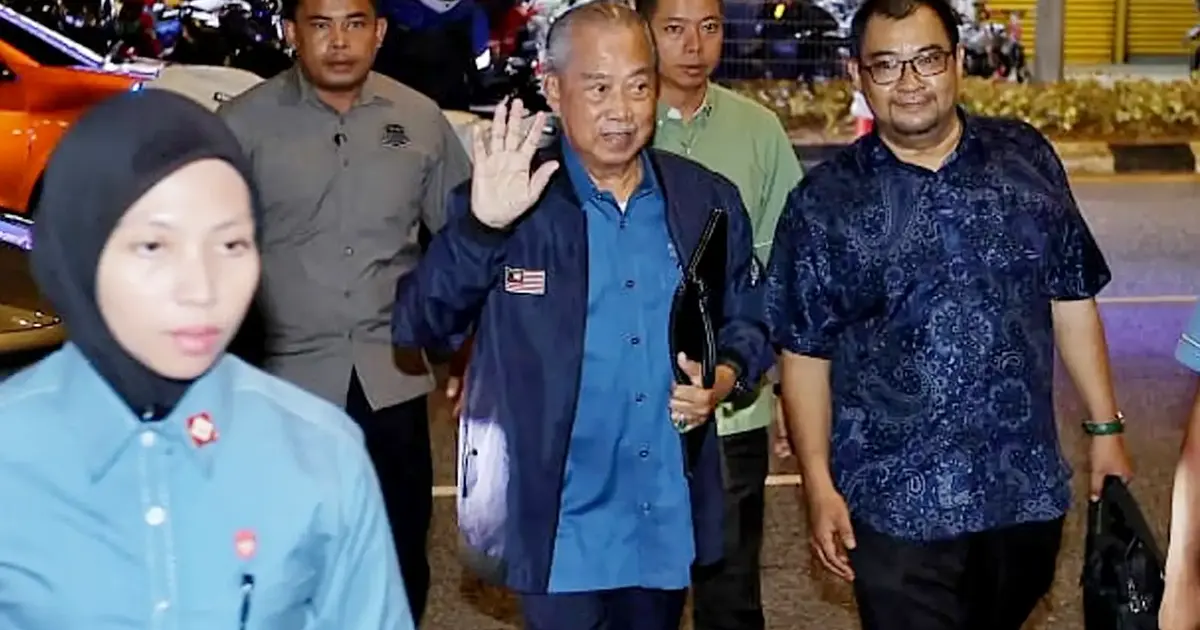
Tan Sri Muhyiddin Yassin convened an urgent assembly of Perikatan Nasional officials as the opposition coalition confronts a significant structural fracture following PAS's unilateral decision to end its association with Bersatu. The hastily arranged gathering brought together senior party figures to deliberate on the implications of the Islamic party's departure and the uncertain trajectory of an alliance that has served as a counterweight to the federal ruling government.
The timing of this emergency conclave underscores the gravity of the situation facing the three-party coalition, which has positioned itself as a credible alternative to the Pakatan Harapan-led administration. PAS's withdrawal introduces considerable uncertainty into PN's parliamentary mathematics and its viability as a unified political force capable of challenging the status quo. The emergency convocation signals that party leadership views the rupture as requiring immediate, high-level attention rather than a matter that could be managed through routine channels.
Bersatu's standing within the coalition has become the central focus of tonight's discussions, reflecting broader anxieties about the stability and longevity of opposition configurations in Malaysian politics. The party's position has been progressively complicated by shifting allegiances and realignments among various political actors over recent months. Leadership must now reckon with the reality that their coalition partner has decided to pursue an independent trajectory, fundamentally altering the parliamentary dynamics that have sustained PN's negotiating power.
PAS's departure represents more than mere administrative separation; it signals a philosophical and strategic divergence that could reshape Malaysian opposition politics. The Islamic party's decision to sever connections with Bersatu suggests calculations that its interests are better served through alternative arrangements or independent positioning. This recalibration forces Perikatan Nasional to confront uncomfortable questions about its cohesion, ideological consistency, and viability as a long-term political project.
For Malaysian political observers, the unfolding crisis within PN mirrors recurring patterns of coalition fragility that have characterized the post-2018 landscape. Coalition arrangements in the country have repeatedly proven susceptible to fracturing when component parties determine that individual advancement outweighs collective benefit. The departure of a major faction like PAS demonstrates how rapidly opposition configurations can deteriorate when underlying tensions reach critical levels.
Muhyiddin's leadership of Bersatu and his stewardship of the broader PN coalition now face their most significant test since the alliance's formation. The party chairman must navigate not only the immediate diplomatic challenge of addressing PAS's withdrawal but also the longer-term strategic question of whether PN can realistically function as a meaningful political competitor with diminished parliamentary representation. His handling of tonight's meeting will substantially influence perceptions of his political authority and problem-solving capacity.
The coalition's predicament carries implications extending beyond the parties directly involved. PN's travails affect the broader opposition ecosystem and the competitive dynamics of Malaysian politics generally. A weakened opposition coalition potentially strengthens the governing administration's parliamentary position and could alter calculations about future political realignments. Conversely, if PN successfully recalibrates and emerges from this crisis with renewed clarity of purpose, it might consolidate its appeal among voters seeking alternatives to Putrajaya.
Bersatu's specific vulnerability within the coalition cannot be separated from the party's broader political trajectory and internal dynamics. The party faces questions about its organizational coherence and ideological distinctiveness at a moment when a major coalition partner has rejected continued association. Leadership must articulate a compelling vision for why Bersatu remains a viable political vehicle worthy of voter support and coalition participation going forward.
Regional Southeast Asian observers watching Malaysian political developments will note how frequently coalition governance has challenged opposition forces across the region. PN's struggles echo difficulties confronted by opposition alliances in Indonesia, Thailand, and elsewhere, where maintaining unity amid divergent interests and leadership ambitions proves persistently difficult. The Malaysian case offers instructive lessons about the inherent fragility of post-election coalition arrangements.
The emergency meeting itself carries symbolic weight beyond its deliberative function. By convening urgently and visibly, PN leadership signals to both internal constituency and external observers that the crisis demands immediate attention and that party stewards retain agency in determining outcomes. However, the optics of emergency sessions can equally reinforce perceptions of disarray if the gathering fails to produce clarity or coherent forward strategy.
Muhyiddin's performance tonight will establish important parameters for PN's next political chapter. Whether the coalition emerges with reinforced commitment to collective action, revised structural arrangements, or acknowledgment of fundamental incompatibility among remaining members will shape its effectiveness as an opposition force. The gathering thus represents a pivotal moment in Malaysian opposition politics, with consequences extending well beyond tonight's proceedings.

