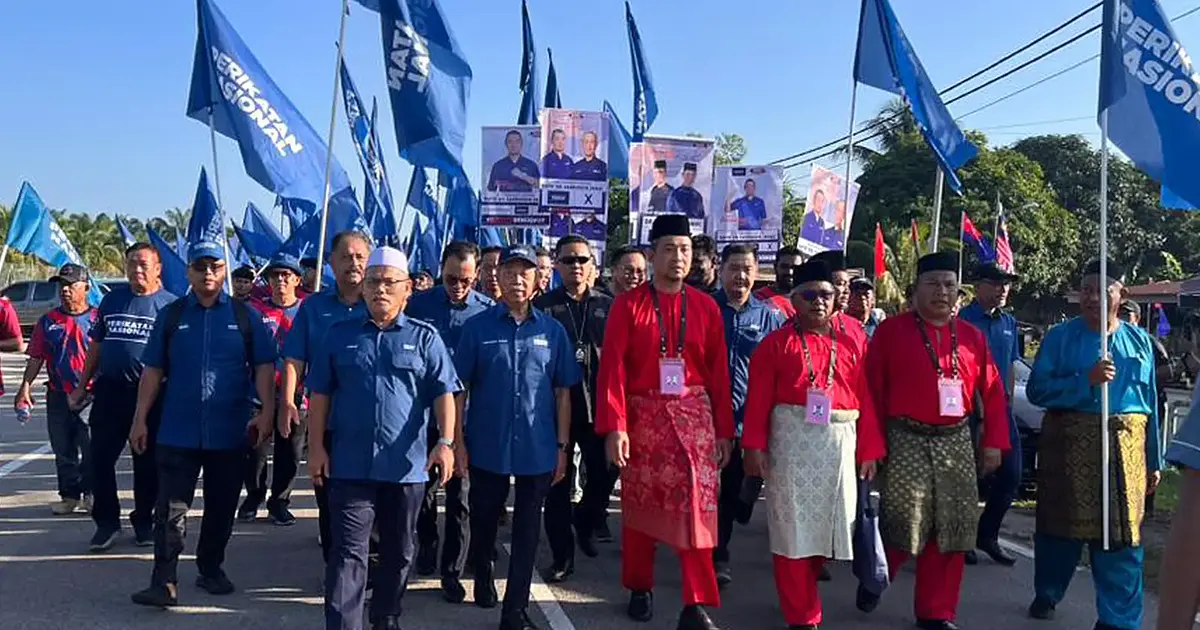
Tan Sri Muhyiddin Yassin, the chairman of Perikatan Nasional, threw his weight behind Dr Sahruddin Jamal on Saturday in a show of coalition unity aimed at galvanising grassroots momentum for the Bukit Kepong state assembly seat. The two-term incumbent from Bersatu Malaysia was accompanied by hundreds of party loyalists during the mobilisation exercise, signalling the coalition's determination to retain the constituency in what analysts view as a closely contested electoral landscape.
The gathering represents a calculated strategic intervention by PN leadership at a critical juncture in the political calendar. By making a personal appearance at the ground level, Muhyiddin sought to energise grassroots volunteers and demonstrate that coalition heavyweights remain engaged in constituency-level campaigns. This approach contrasts with centralised, top-down electoral strategies and reflects the party machinery's emphasis on direct voter engagement in the lead-up to nomination or polling days.
Dr Sahruddin's candidacy carries particular significance given his track record as a returning representative. Two consecutive terms suggest he has developed institutional knowledge of constituent concerns and maintained an organisational presence on the ground. His re-nomination by Bersatu underscores the party's confidence in his ability to defend the seat against likely opposition challenges. In Malaysian politics, assemblyman candidates with proven electoral credentials often serve as anchors for broader coalition fortunes, particularly in constituencies with demographic diversity or shifting voting patterns.
Perikatan Nasional's mobilisation of several hundred supporters reflects the resource intensity of modern electoral campaigns even at state assembly level. Such gatherings serve multiple functions: they provide psychological reassurance to candidates facing uncertain electoral prospects, create visual propaganda assets for social media dissemination, and generate momentum-building narratives in local news coverage. For opposition parties monitoring PN activity, large turnouts signal organisational capacity and volunteer availability.
The coalition's focus on Bukit Kepong implies the seat is neither safely held nor written off, but rather contested terrain requiring active defence. This tactical assessment carries implications for resource allocation across other constituencies. In a multi-cornered fight typical of Malaysian electoral politics, where several parties field candidates, plurality victories become possible with relatively modest vote shares. Such conditions place premium value on grassroots organising and voter identification activities that personalised campaign visits facilitate.
Muhyiddin's presence alongside Dr Sahruddin carries dual messaging. To Bersatu supporters, it signals that the party chairman regards the Bukit Kepong contest as significant enough to warrant his personal intervention. To coalition partners within Perikatan Nasional, the show of support for a Bersatu candidate reinforces power-sharing norms and demonstrates that the coalition operates with some degree of internal coherence, despite the organisational challenges that heterogeneous alliances typically encounter.
The timing of such campaign activities provides important indicators of electoral cycles. Large-scale public mobilisations generally accelerate as nomination deadlines approach and formal campaigns commence. For political observers across Southeast Asia, Malaysian coalition-building at state assembly level offers microcosmic evidence of how multi-ethnic, multi-party political systems manage internal competition while maintaining electoral viability against potential challengers.
Bukit Kepong's electoral profile likely reflects demographic characteristics typical of many Malaysian constituencies: perhaps a mix of urban and suburban voters, diverse ethnic composition requiring coalition appeal across communal lines, and possibly contested between Perikatan Nasional and Pakatan Harapan or independent candidates. Such competitive contests between roughly matched contenders tend to receive disproportionate campaign attention and resource expenditure, as both sides recognise that outcomes hang on mobilisation efficiency and voter persuasion in final campaign weeks.
The mobilisation also reflects Bersatu Malaysia's positioning within Perikatan Nasional. As a party that emerged from fractious politics within the United Malays National Organisation and subsequently pursued coalition strategies with Islamist party PAS, Bersatu's electoral performance becomes consequential for broader PN viability. Retaining assembly seats held by incumbent representatives strengthens the party's negotiating position within the coalition for future negotiations around seat allocations, cabinet appointments, and policy prioritisation.
For Dr Sahruddin specifically, securing Muhyiddin's endorsement and the associated campaign boost provides tangible advantages. Voters often respond to signals that political leaders consider a candidate viable and worthy of senior-level attention. By contrast, candidates receiving minimal leadership engagement may suffer perception damage regarding their electoral prospects or influence. The ceremonial and practical dimensions of such campaign visits thus interweave to shape candidate fortunes in close contests.
Looking forward, Bukit Kepong will likely remain a closely monitored bellwether constituency throughout the electoral cycle. Its outcome will contribute to narratives around Perikatan Nasional's overall electoral health, Bersatu's stability within the coalition, and broader state-level political trajectories in what appears to be a competitive electoral environment. Campaign activities of the kind involving Muhyiddin and Dr Sahruddin will persist and intensify as formal voting approaches.

