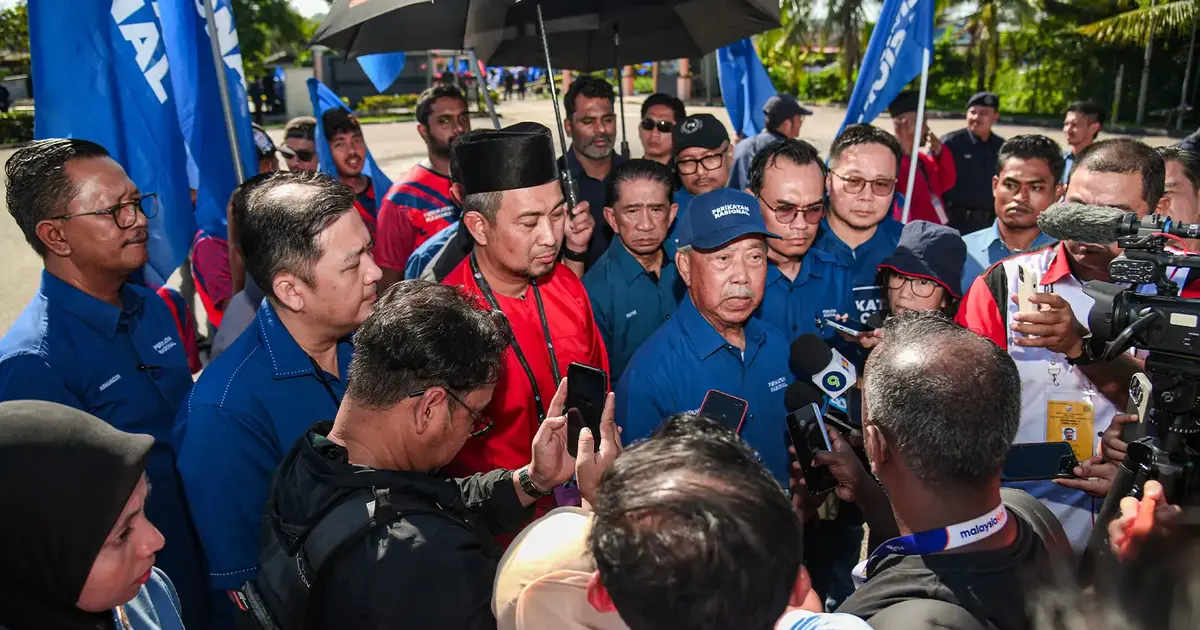
Perikatan Nasional appears positioned to play a decisive role in future state-level politics, according to Bersatu president Muhyiddin Yassin, who voiced optimism about the coalition's ability to form a state administration. His remarks underscore the shifting political dynamics within Malaysia's state assemblies, where coalition composition has become increasingly fluid and negotiable in the post-2018 electoral era.
Muhyiddin's confidence stems from Perikatan Nasional's existing base of support supplemented by potential backing from parties and groups outside the formal coalition framework. The inclusion of potential allies such as Muda—the relatively young political outfit founded in 2020—in calculations regarding government formation signals how modern Malaysian coalition-building extends beyond traditional alliance structures. This flexibility reflects the reality that assembling governing majorities increasingly requires creative political configurations rather than reliance on established grand coalitions.
The dynamics Muhyiddin describes carry particular significance for Malaysian political observers tracking the distribution of power across state assemblies. State governments control substantial policy domains affecting citizens' daily lives, from land administration and local government to education and welfare provision. A Perikatan Nasional-led state administration would represent a meaningful shift in the political landscape, potentially challenging the historical dominance of established coalitions in numerous states.
Muhyiddin's assessment reflects Bersatu's own evolution within Malaysian politics. The party, established by former prime minister Mahathir Mohamad before being taken over by Muhyiddin, has navigated multiple coalition permutations since 2019. Its current positioning within Perikatan Nasional alongside PAS demonstrates the party's strategic pivot toward Islamist-leaning politics, a shift with implications for governance approaches and policy priorities in any state where the coalition assumes control.
The potential contribution of Muda to state government formation warrants closer examination. Founded by activist Syed Saddiq Syed Abdul Rahman, Muda has cultivated appeal among younger voters and urban constituencies dissatisfied with established political options. The prospect of Muda participating in Perikatan Nasional-led administrations would represent a notable expansion of the coalition's reach into demographic segments traditionally aligned with reformist or opposition politics. Such arrangements could reshape state-level discourse and governance approaches.
Muhyiddin's confidence in forming state governments must be understood within the broader context of Malaysian coalition politics' increased volatility. Defections, party switching, and the emergence of independent candidates have rendered assembly composition increasingly unpredictable. The capacity to assemble and maintain sufficient legislative support has become a persistent challenge for all coalitions. Perikatan Nasional's claimed ability to do so, supplemented by external allies, positions it advantageously should assembly mathematics favour coalition-building opportunities.
For regional observers, Malaysia's state-level political maneuvering reflects broader Southeast Asian patterns wherein sub-national governance has become increasingly contested and consequential. As federal-level politics remains relatively stable, competition for state administration has intensified, with various coalitions experimenting with different partner combinations. The Malaysian experience demonstrates how coalition mathematics and political flexibility at state level can create pathways to power even for groups without overwhelming electoral mandates.
The implications for governance quality and policy consistency warrant consideration. Coalitions assembled from ideologically diverse partners—including moderate Bersatu, Islamist PAS, and comparatively progressive Muda—may struggle to develop coherent policy agendas. The precedent of previous state administrations led by multiple-partner coalitions offers mixed lessons regarding administrative effectiveness and political stability. Success depends substantially on leadership capability and partner cohesion around core governance objectives.
Muhyiddin's positioning also reflects Perikatan Nasional's broader national ambitions. Success in forming state governments would accumulate resources, political capital, and administrative experience beneficial for the coalition's eventual pursuit of federal power. Each state administration generates constituencies of supporters, professional networks, and institutional knowledge that strengthen a coalition's overall political position. In this sense, state-level success serves as both an immediate governance opportunity and a stepping stone toward larger political objectives.
Looking forward, the credibility of Muhyiddin's confidence depends on Perikatan Nasional's capacity to maintain coalition discipline and secure external support when opportunities for state government formation emerge. The coalition's heterogeneous composition—combining religious-oriented and secular wings—presents ongoing cohesion challenges. Whether potential allies like Muda will commit to sustained cooperation in state administrations remains uncertain, particularly given the party's stated commitment to governance standards and anti-corruption measures that may conflict with practices within other coalition partners.
For Malaysian voters and observers, the trajectory of Perikatan Nasional's state-level influence represents an important development in the country's post-2018 political recalibration. The coalition's demonstrated ability to form administrations would validate its positioning as a serious contender for power whilst potentially reshaping which political forces control resource allocation and policy priorities across Malaysia's states. The coming period will test whether Muhyiddin's assessment reflects genuine political opportunity or optimistic positioning.

