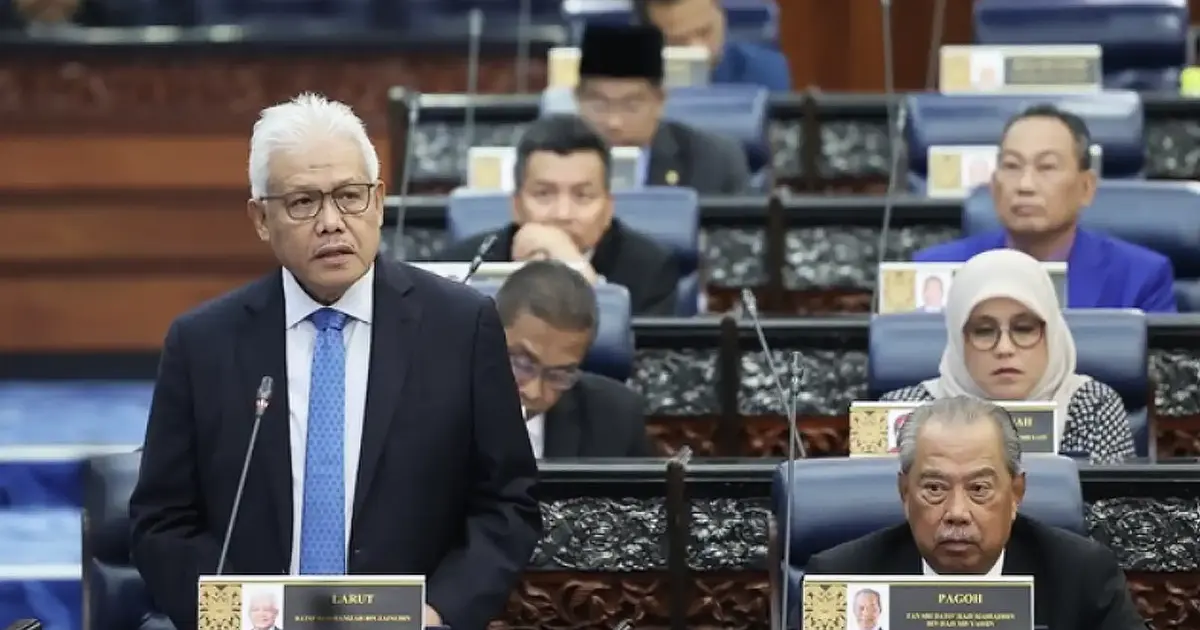
Dewan Rakyat Speaker Johari Abdul has revealed that Muhyiddin Yassin, the Pakatan Harapan politician and former Prime Minister, sought permission to relocate his seat within the lower house of Parliament. The disclosure came as the Speaker confirmed receiving formal documentation establishing Hamzah Zainudin, the Member of Parliament for Larut, in his official capacity as leader of the opposition bloc.
The request for a seat change, though appearing procedurally routine on its surface, carries subtle political significance in the context of Malaysia's fractured parliamentary coalition landscape. Seating arrangements in the Dewan Rakyat often reflect factional positioning and coalition dynamics, making physical placement within the chamber a matter that extends beyond mere comfort considerations. The nature of Muhyiddin's request and whether it was ultimately approved remains a detail of interest to political analysts monitoring the stability of the current government majority.
Speaker Johari Abdul's confirmation regarding Hamzah Zainudin's formal recognition as opposition leader provides clarity on parliamentary procedures that have grown increasingly complex in recent years. The receipt of official correspondence designating the opposition leader carries constitutional weight, as it establishes the parliamentary opposition's formal hierarchy and representation structure. This procedural confirmation ensures that the Dewan Rakyat operates with clearly defined leadership roles on both government and opposition benches.
Hamzah Zainudin's appointment as opposition leader represents a significant institutional development within the Malaysian parliament. As the MP representing Larut, a constituency in Perak, Hamzah brings his own political history and regional influence to the position. The formal recognition of an opposition leader strengthens parliamentary conventions and ensures that the alternative government has a clearly identified spokesperson and principal negotiator within the chamber.
The timing of these revelations reflects the ongoing structural adjustments taking place within Parliament as the nation's political landscape continues to evolve. Malaysia's parliamentary system has experienced considerable shifts in recent years, with multiple coalition realignments and changes in government composition. Against this backdrop, procedural matters such as seat allocations and formal opposition leadership designation help establish institutional continuity and predictability.
Muhyiddin Yassin, who served as Prime Minister from 2020 to 2021 under the Perikatan Nasional coalition, has maintained an active parliamentary presence despite the collapse of his administration. His position within Pakatan Harapan and his continued parliamentary influence make his movements and requests subjects of political observation. The seat relocation request, while not inherently controversial, demonstrates that even established political figures must navigate the procedural requirements of the current parliamentary administration.
The Speaker's role in managing these administrative and procedural matters underscores the importance of the office in maintaining parliamentary order and clarity. Johari Abdul's confirmation of both Muhyiddin's request and Hamzah's formal designation as opposition leader demonstrates the Speaker's responsibility in documenting and formalising parliamentary arrangements. These administrative confirmations, though sometimes overlooked by the general public, form essential components of democratic governance and parliamentary propriety.
For Malaysian legislators and political stakeholders, the clarification of opposition leadership has immediate practical implications for parliamentary business. The opposition leader traditionally holds important rights and responsibilities within the chamber, including priority in parliamentary debates, the right to ask supplementary questions, and the authority to coordinate opposition activity. Hamzah Zainudin's formal recognition thus establishes the framework within which opposition activity will be coordinated and channeled.
The broader context of these procedural developments reflects the maturation of Malaysia's democratic institutions in handling complex political situations. While the nation has experienced periods of coalition instability and government transitions, the parliamentary machinery continues to function through established procedures and conventions. The Speaker's ability to document and confirm these procedural matters demonstrates that institutional mechanisms remain operational even during periods of political uncertainty.
These developments also carry implications for the regional political context. Southeast Asia's democracies increasingly look to one another for models of parliamentary procedure and governance standards. Malaysia's handling of opposition leadership designation and parliamentary seating arrangements contributes to broader regional conversations about maintaining democratic norms during periods of coalition flux and political realignment. The formality with which Malaysian parliamentary officials approach these matters reflects commitments to institutional integrity.

