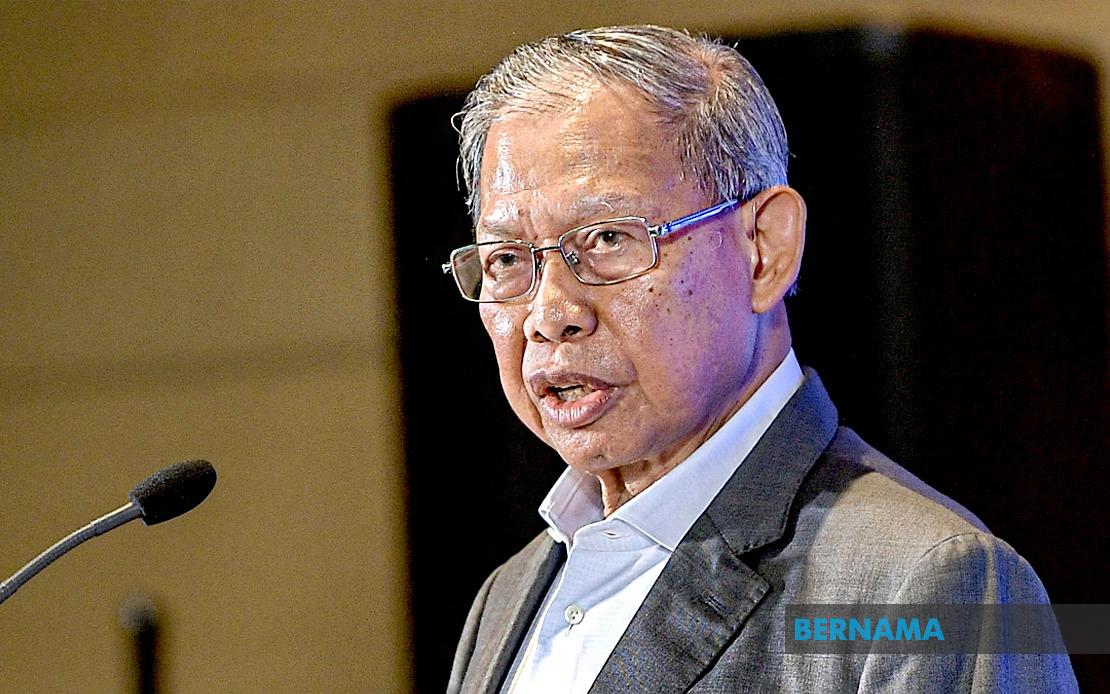
Datuk Seri Mustapa Mohamed has closed the door on any return to electoral politics, announcing at a gathering in Pasir Mas that he will not contest in the 16th General Election and believes the moment has arrived for a new generation of Malaysian leaders to shoulder the nation's political future. The 76-year-old former Jeli Member of Parliament made the declaration at a "Welcome Home" event honouring his political journey, held alongside Independence Month celebrations organised by the Council of Former Kelantan Elected Representatives.
Mustapa's candid assessment of his own capabilities underscored his reasoning for stepping aside. He acknowledged that at his age, his physical stamina and mobility are no longer what they once were, making continued candidacy inappropriate for any political party to consider. Rather than cling to a parliamentary seat, he has chosen to open the way for politicians with greater energy and longevity ahead of them—a stance that reflects both personal realism and strategic calculation about UMNO's electoral prospects. His emphasis on fairness to younger candidates suggests recognition that the party must refresh its talent pipeline to remain competitive in future contests.
The decision comes less than four years after Mustapa rejoined UMNO in June following a five-year absence. He had departed the party in September 2018 to join Bersatu, Mahathir Mohamad's then-new political vehicle, during a period of considerable upheaval within Malay-Muslim politics. His return to UMNO represents a broader pattern of political realignment and reconciliation within the coalition, even as the party grapples with generational transitions across its leadership structure.
Despite withdrawing from frontline electoral competition, Mustapa has pledged to remain a meaningful contributor to UMNO's future direction. He envisions his value to the party shifting from that of candidate to mentor and strategic adviser, particularly as the party navigates an increasingly complex political landscape. His willingness to share three decades of ministerial and diplomatic experience—he previously served as Minister of International Trade and Industry—could prove valuable as UMNO seeks to maintain relevance among an electorate concerned with economic policy and international relations.
Mustapa's positioning reflects a broader pattern evident in Malaysian politics, where senior figures often struggle to accept that their time in frontline politics has genuinely concluded. His explicit rejection of any electoral future, coupled with an articulated commitment to mentoring, suggests he is attempting to redefine political relevance in a manner that acknowledges demographic reality while preserving his influence within party structures. This approach may become a model for other aging politicians contemplating their post-parliamentary roles.
The veteran politician indicated his intention to contribute to public discourse through academic channels, planning to engage with students at both public and private universities to transmit accumulated knowledge. Such platforms offer former ministers a way to shape policy thinking without the demands of campaign schedules or constituency work. For tertiary institutions, access to someone with Mustapa's background in trade and international commerce could enrich business and public policy curricula.
Mustapa's public repositioning holds significance for UMNO's broader generational challenge. Malaysia's largest Malay-Muslim party has long struggled with succession planning, with power traditionally concentrated among long-serving figures who resist vacating positions. His recognition that refusing to step aside would constitute unfairness to younger aspirants introduces an ethical dimension often absent from Malaysian political retirement narratives. Whether this sentiment influences other senior UMNO figures remains to be seen.
The timing of Mustapa's announcement, roughly a year before Malaysia's next general election is constitutionally due, allows ample time for UMNO to cultivate replacement candidates in critical constituencies. Pasir Mas itself, where the event occurred, has been represented by various UMNO figures and holds strategic importance within Kelantan's political geography. The succession transition will likely generate internal party dynamics as younger politicians position themselves for nomination.
Mustapa's emphasis on supporting the younger generation aligns with broader calls across Malaysian politics for leadership renewal. GE15, held in November 2022, saw a shift toward slightly younger candidates in some constituencies, though Malaysia's major parties remain dominated by politicians in their sixties and seventies. Statements like Mustapa's, if followed by action from other senior figures, could accelerate this generational transition, though party machinery and patronage networks often resist such shifts.
His commitment to continue advising UMNO on party-people engagement and strategic direction suggests he intends to remain a consequential figure within internal deliberations, even without holding electoral office. This distinction—between electoral retirement and political withdrawal—represents a calculated approach to maintaining influence while acknowledging physical constraints. For younger UMNO figures aspiring to leadership, such mentorship could prove either valuable or obstructive depending on whether it encourages or discourages substantive policy innovation.
The broader implication for Malaysian politics is that even among traditional power brokers, conversation about generational transition has become unavoidable. Whether this leads to systematic renewal or merely creates space for the next cohort of long-serving politicians remains an open question. Mustapa's example suggests that graceful exits are possible, yet the incentive structures within Malaysian political parties—access to resources, patronage, and status—continue to discourage genuine power-sharing with emerging leaders.

