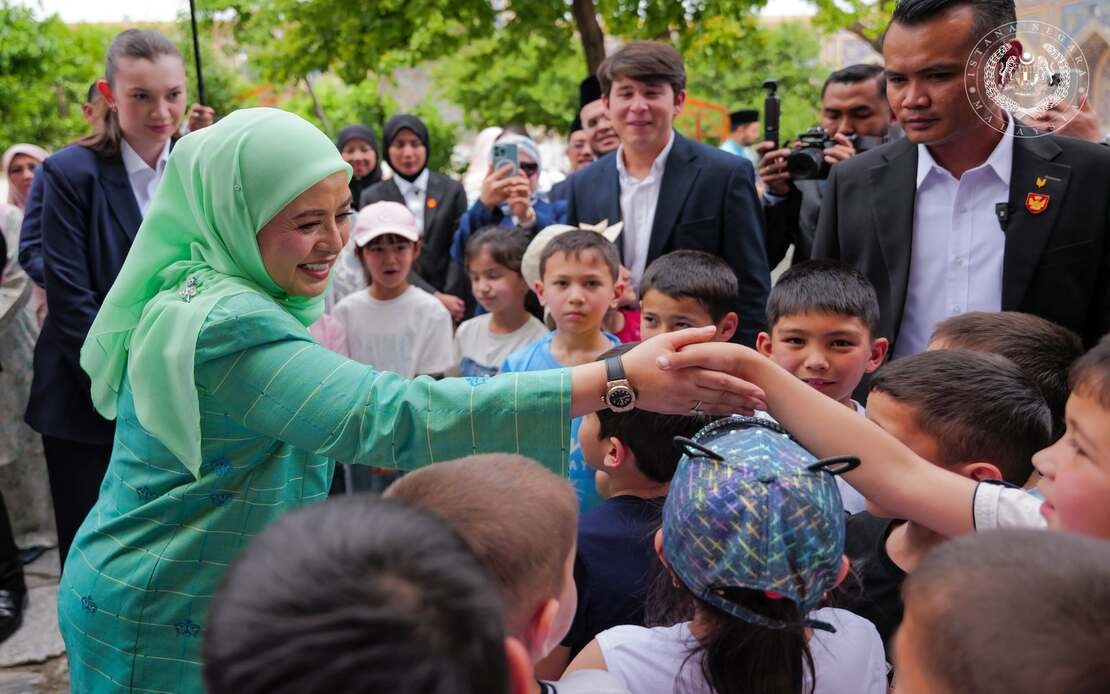
Malaysia's continued stability rests fundamentally on a shared commitment to mutual respect among its diverse population, Her Majesty Raja Zarith Sofiah, Queen of Malaysia, has stated. In remarks posted through the official channel of Sultan Ibrahim Sultan Iskandar, the Queen underscored how this principle has long anchored the nation's social fabric and contributed significantly to the country's overall unity and prosperity. The emphasis comes amid ongoing national conversations about strengthening social cohesion in an increasingly complex and interconnected society.
The Queen's message carries particular weight given her prominent role in representing Malaysian values on the international stage. By drawing attention to respect as a foundational element rather than merely an aspiration, Her Majesty positioned it within the broader context of what defines the Malaysian national character. This framing suggests that respect is not an abstract ideal but rather a practical value system that Malaysians have consistently demonstrated and continue to rely upon for peaceful coexistence.
Central to the Queen's remarks was a call for enhanced courtesy and the deliberate cultivation of mutual respect within communities, addressing both domestic relationships and international engagement. Her Majesty particularly addressed Malaysian Muslims in the country, referencing a significant hadith documented by the classical Islamic scholar Al-Bukhari. The hadith, narrated through Abu Hurairah, contains a teaching attributed to Prophet Muhammad emphasising three interconnected principles: that believers should cause no harm to their neighbours, should honour their guests with generosity, and should carefully guard their speech by either speaking good or maintaining silence.
This theological grounding demonstrates how the Queen drew upon Islamic traditions to reinforce what are, in essence, universal principles of civil society. The hadith's emphasis on neighbour relations addresses the immediate social environment in which Malaysians live, while the instruction on honouring guests extends to the wider principle of welcoming strangers and visitors. The final point regarding speech—either speaking good or remaining silent—touches on contemporary concerns about responsible communication and the avoidance of harmful discourse.
The Queen's invocation of these principles comes at a time when Southeast Asian societies are grappling with challenges related to social division, misinformation, and tensions arising from diverse belief systems and political viewpoints. By anchoring her message in religious teaching respected across Malaysia's Muslim majority population, Her Majesty sought to unite rather than divide, demonstrating how faith-based values can serve as common ground for broader social purposes.
The message also drew upon a concrete recent example that illustrated the Queen's personal commitment to these principles. In February of this year, Her Majesty engaged warmly with more than 100 tourists representing various countries at the main entrance of Istana Negara. This interaction, recorded and shared publicly, demonstrated that the respect and courtesy she advocated extended naturally to international visitors, reinforcing Malaysia's image as a welcoming nation. The spontaneous nature of such encounters, combined with their public documentation, sends a powerful signal about the values Malaysia wishes to project to the world.
The Queen's graciousness toward the diverse group of visitors reflected not merely personal courtesy but a statement about Malaysia's self-identity as a multicultural society that values cross-cultural understanding. International tourism represents an economic interest for Malaysia, but the Queen's interactions suggested a deeper commitment to genuine human connection across national and cultural boundaries. This has implications for Malaysia's soft power positioning within Southeast Asia and globally, as monarchical leadership that visibly embodies inclusive values strengthens national reputation.
For Malaysian readers, the Queen's message carries implications for everyday social interactions. In a nation where neighbours may come from different religious, ethnic, and socioeconomic backgrounds, the emphasis on avoiding harm to one's neighbour provides practical ethical guidance. Similarly, the directive to honour guests speaks to Malaysian cultural traditions of hospitality that predate Islamic teachings but are reinforced by them, creating multiple layers of social sanction for welcoming behaviour.
The timing of these remarks, shared through official royal channels, suggests a deliberate effort to articulate national values during a period when such articulation may be particularly necessary. Leadership statements about unity and respect often serve to counterbalance divisive rhetoric or incidents that threaten social cohesion. By positioning herself as an advocate for these principles, the Queen lends the weight of constitutional authority and cultural respect to their promotion.
The reference to maintaining harmony through mutual respect also carries implications for governance and institutional behaviour. When the monarchy emphasises these values, it sends signals not only to the general public but to government agencies and officials about the standards of conduct expected within Malaysian public life. The Queen's emphasis on courtesy and respect creates a framework within which other institutions can be measured and held accountable.
Furthermore, the Queen's message underscores that harmony is not a passive state but requires active maintenance through conscious choice and behaviour. The hadith quoted emphasises agency—believers must choose not to harm, must choose to honour, must choose their words carefully. This frames social responsibility as something residing with individuals rather than being imposed from above, which carries democratic implications about how Malaysian society functions most effectively.
For regional observers, Malaysia's royal family's continued emphasis on traditional values of respect and courtesy within a modern, diverse society provides a model relevant to other Southeast Asian nations facing similar challenges of managing diversity while maintaining social stability. The Queen's ability to cite Islamic teachings while addressing all Malaysians demonstrates how religious traditions can serve inclusive rather than exclusive purposes when invoked by figures with broad legitimacy.

