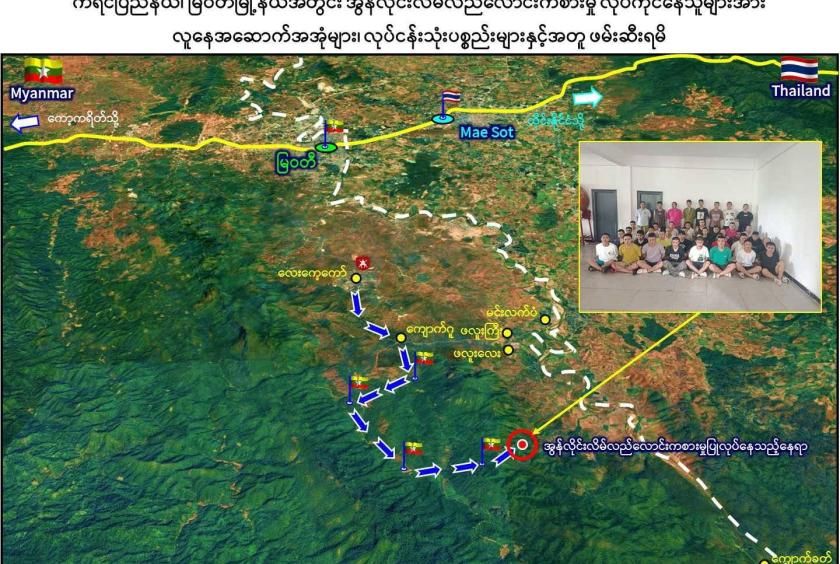
Myanmar's military has conducted a sweeping operation against what it describes as a major organised cybercrime hub, detaining 777 individuals accused of orchestrating extensive online scam and illegal gambling schemes from a remote compound in the border region. The arrests, made during security operations in the Kyauk Khat area of Myawaddy Township in Kayin State, represent one of the largest crackdowns on digital fraud operations across Southeast Asia this year and underscore the growing challenge posed by transnational criminal networks exploiting the region's porous borders and weak law enforcement coordination.
The detainees represent a striking cross-section of participants in what appears to be a sophisticated, multinational criminal enterprise. Among those arrested were 631 Chinese nationals, 143 Myanmar citizens, and three Thai nationals, a composition that reflects how such operations typically recruit expertise and labour from across the region. The predominance of Chinese nationals suggests either direct involvement from organised crime groups based in China or recruitment by regional syndicates with connections to established networks operating across Asia. Such demographic patterns have become increasingly common in recent years as scam operations have become more professionalised and geographically dispersed across Southeast Asia, drawing expertise from multiple countries while exploiting regulatory gaps across border zones.
The scale of technical infrastructure recovered during the raid provides insight into the sophistication of these criminal operations. Authorities confiscated 85 computers, 183 mobile phones, and notably a Starlink satellite terminal, equipment that underscores how modern fraud networks leverage advanced technology to maintain operational continuity and evade detection. The satellite terminal is particularly significant, as it indicates attempts to establish independent communication channels resistant to traditional law enforcement interception, allowing operators to maintain contact with accomplices and victims across borders without relying on conventional telecommunications infrastructure subject to government monitoring.
The military's claim that armed groups provided active protection to the scam operations introduces a complex layer of concern for Myanmar's security situation. According to official statements, forces clashed with members of both the Karen National Liberation Army and the People's Defence Force during the raid, with authorities alleging these groups had been receiving payments to shield the criminal enterprise from detection and disruption. Such arrangements, if substantiated, reveal how armed organisations operating in Myanmar's borderlands have become economically dependent on revenue streams from criminal activities, blurring traditional distinctions between separatist movements and organised crime syndicates.
The military reported that 13 members of armed groups were killed in exchanges of fire during the operation, alongside the seizure of nine firearms, ammunition supplies, and fortified positions. These clashes suggest the compound was not merely a criminal workplace but a heavily defended facility, with military infrastructure designed to resist law enforcement intervention. The loss of life indicates the security forces encountered organised resistance rather than a loosely guarded location, raising questions about the level of militarisation within scam operations and the degree to which armed protection had been institutionalised within the compound's structure.
For Malaysia and other Southeast Asian nations, this operation carries significant implications regarding cybercrime exposure. Victims of online scams operate across the region, and many criminal operations targeting Malaysian nationals, Singaporeans, and other regional populations are believed to be coordinated from similar compounds in Myanmar's borderlands. Malaysian authorities have previously reported cases where scam victims were contacted by operators based in Myanmar, with some cases involving kidnapping and extortion of Malaysian and Singaporean expatriates in border towns. The dismantling of one hub may temporarily disrupt these networks, but the underlying structural factors enabling their operation remain unaddressed.
The operation reflects growing international pressure on Myanmar to address the proliferation of scam compounds, particularly those targeting citizens of neighbouring countries. Beijing has publicly condemned such operations, viewing them as destabilising influences and sources of international embarrassment. Thailand, Singapore, and Malaysia have all raised concerns through diplomatic channels about criminal networks operating from Myanmar and targeting their citizens. This convergence of international concern has created unusual alignment among regional powers, though Myanmar's government faces significant constraints in fully controlling border regions where multiple armed groups maintain de facto autonomy.
The promised coordination with neighbouring countries and international partners indicates recognition that combating these networks requires sustained transnational cooperation. Yet such efforts face persistent obstacles, including Myanmar's fractured governance structure, the autonomy of armed groups in border areas, and limited capacity among some regional law enforcement agencies. Previous promises of increased cooperation have yielded modest results, suggesting that even successful raids against individual compounds represent temporary disruptions rather than comprehensive solutions to underlying systemic problems.
Investigations into those arrested are expected to proceed under existing Myanmar laws, though questions remain about prosecution frameworks and whether detainees will face trial or be subject to less formal judicial processes. International observers have raised concerns about due process protections and the transparency of Myanmar's legal system, particularly regarding foreign nationals. The disposition of confiscated equipment remains unclear, as does whether technical forensics will be conducted to identify additional victims, accomplices, and connected criminal networks operating elsewhere in the region.
The raid simultaneously illuminates and obscures the true scale of online fraud operations across Myanmar's borderlands. While the arrest of 777 individuals represents a significant single operation, credible estimates suggest thousands more operate across similar compounds in Kayin State and other border regions. The sophistication of infrastructure recovered, the international composition of detainees, and the armed protection arrangements suggest these are not opportunistic or small-scale ventures but rather established criminal enterprises with deep operational roots and substantial financial resources. Until Myanmar's government can establish effective control over border areas currently contested by armed groups, such operations are likely to persist regardless of individual enforcement successes.

