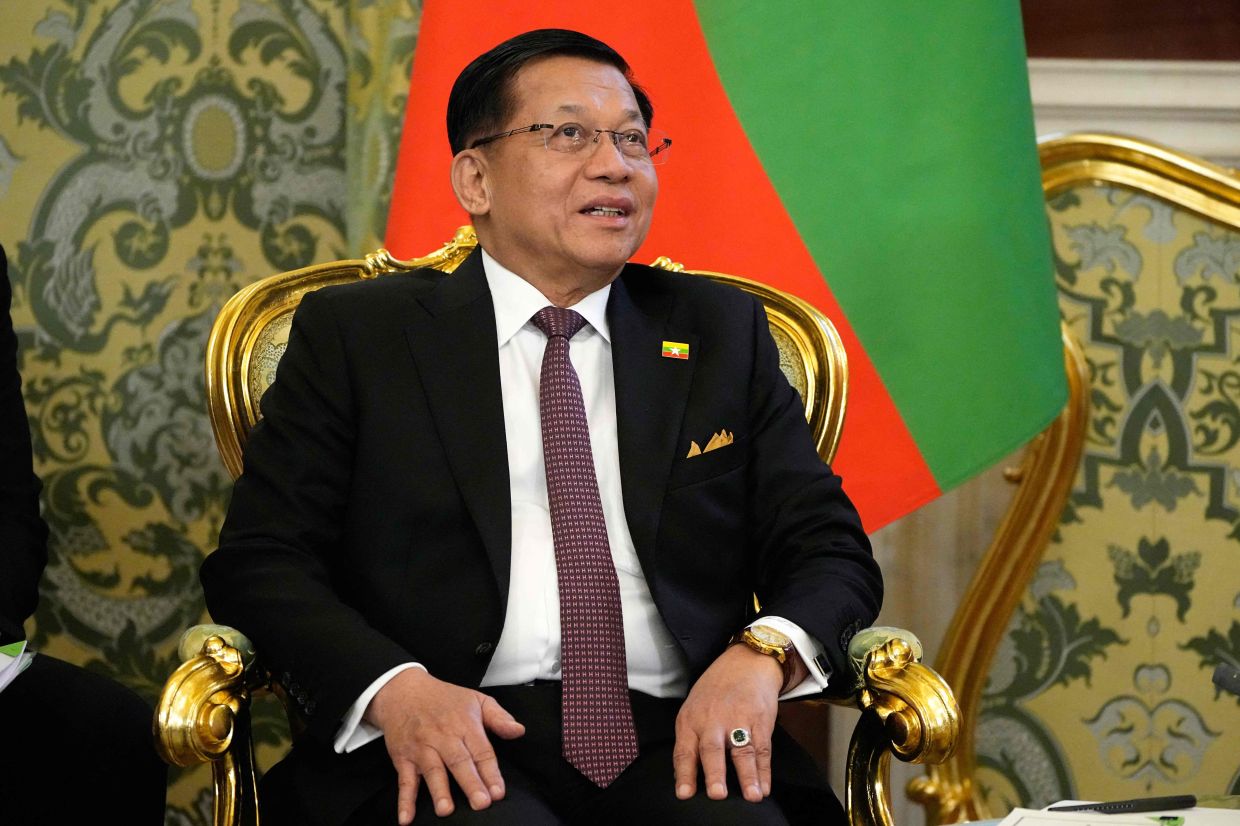
Myanmar's military commander Min Aung Hlaing is preparing for an official state visit to Cambodia in early September, marking the latest stop in an ambitious regional diplomatic offensive designed to bolster his standing on the international stage. The announcement, confirmed by Cambodia's Senate, comes as the Myanmar leader seeks to consolidate his position following his disputed election to the presidency in April, an outcome that regional observers and international commentators have widely dismissed as lacking democratic legitimacy.
The Cambodian government has already begun preparations for the high-profile visit, with senior officials including Kuy Sophal, Minister of the Royal Palace, and Chin Ketna, permanent deputy chairman of the National Committee for Organising National and International Festivals, inspecting potential venues. A Senate spokesman indicated that the visit represents an effort to "strengthen the friendship between Cambodia and Myanmar," with officials emphasising that deepened cooperation between the two neighbours serves mutual interests in the region.
This planned Cambodian visit forms part of a broader pattern of foreign engagements since Min Aung Hlaing's April election. He has already travelled to India, China, Laos, Thailand and Russia, demonstrating a methodical approach to cultivating diplomatic relationships across major Asian powers and regional neighbours. The timing and sequencing of these visits suggest a calculated strategy to build a coalition of international partners willing to engage with his administration despite the controversial circumstances of his rise to power.
Human rights organisations and democracy advocates view these diplomatic missions with considerable concern, interpreting them as an attempt to manufacture international legitimacy for a leader whose military seized power through a coup that removed the democratically elected government of Aung San Suu Kyi in 2021. Her subsequent detention has become emblematic of what critics describe as systematic suppression of civil liberties under military rule. The junta has reportedly detained thousands of activists, journalists and political opponents, creating what observers characterise as a severely repressive environment.
These allegations of widespread human rights violations have had concrete consequences for Myanmar's standing within the Association of Southeast Asian Nations. The bloc has excluded Myanmar from summit meetings, reflecting collective concern among member states about the trajectory of events in Naypyidaw. This diplomatic isolation at the regional level makes Min Aung Hlaing's efforts to secure engagement from individual Asean members, including Cambodia, particularly significant from a political standpoint.
Cambodia's willingness to host the Myanmar leader carries particular weight given its prior engagement with Myanmar's crisis. When Cambodia held the Asean chair in 2022, the country invested diplomatic effort in attempting to mediate tensions surrounding Myanmar's political transition. Kin Phea, president of the International Relations Institute of Cambodia, suggests that the upcoming visit should be understood as a two-directional initiative aimed at advancing the bilateral relationship while simultaneously reinforcing Min Aung Hlaing's presidential credentials.
Phea noted that Cambodia could potentially offer valuable lessons from its own historical experience with post-conflict reconciliation, national reconstruction and peace-building initiatives. However, he cautioned that external engagement, while potentially supportive, cannot substitute for internal processes of reform and restoration within Myanmar itself. The success of any national recovery effort depends fundamentally on actions taken by Myanmar's own leadership and society, rather than on symbolic gestures of diplomatic recognition from neighbouring countries.
The distinction between bilateral state visits and Myanmar's broader international standing within Asean remains crucial to understanding the limitations of such diplomatic engagement. According to Phea, whether Cambodia classifies the visit formally as a state visit is ultimately a matter of bilateral protocol, but Myanmar's return to full participation in Asean summits depends on adherence to the bloc's five-point consensus framework established to guide Myanmar's political transition. This agreement, which includes provisions regarding democratic reform and humanitarian concerns, represents the actual measure by which Myanmar's international standing will be judged within the regional organisation.
The five-point consensus effectively transfers authority over Myanmar's Asean participation from individual member states to the collective body, meaning that Cambodia's bilateral hospitality toward Min Aung Hlaing carries limited bearing on whether the military leader will be able to participate in regional summit meetings. This structural reality underscores the complexity of contemporary Southeast Asian diplomacy, where bilateral relationship-building and multilateral institutional mechanisms operate according to distinct logics and rules.
For Malaysian observers and policymakers, the Myanmar situation presents a broader test case regarding how Asean navigates the tension between its commitment to non-interference in member states' internal affairs and its stated concern for democracy, human rights and regional stability. The question of whether countries should engage diplomatically with military-led governments, and under what conditions, remains unresolved within regional debate, with different member states adopting varying approaches based on their strategic interests and political orientation.

