The government has moved to clarify the purpose and governance of MyKhas, a special allocation mechanism that has drawn scrutiny regarding its distribution and use among parliamentary representatives. Communications Minister Datuk Seri Fahmi Fadzil emphasised on Thursday that MyKhas operates fundamentally as a public welfare instrument directed at constituency residents rather than as a personal benefit for Members of Parliament, reflecting Prime Minister Datuk Seri Anwar Ibrahim's broader governance philosophy that state resources belong to the people.
Fahmi's clarification comes amid broader discussions about the proper utilisation of government funds across political party lines. He stressed that the allocation has been formally incorporated into official Malaysia Plan and Budget documentation as a special provision exclusively under the Prime Minister's administrative authority. This constitutional positioning means that decisions about how and where MyKhas funds are deployed rest entirely with the Prime Minister's office, rather than being discretionary entitlements for individual lawmakers regardless of their seniority or constituency size.
The Communications Minister, who also serves as official spokesman for the MADANI government, underscored that MyKhas exists solely to address the concrete needs of residents and voters within parliamentary constituencies. By situating control with the Prime Minister rather than dispersing it among MPs, the government has sought to ensure that allocation decisions are made on the basis of demonstrated community need rather than political convenience or the preferences of individual representatives. This structural arrangement represents a deliberate policy choice to centralise oversight and maintain accountability through a single administrative portal.
Fahmi's own experience illustrates the government's commitment to this principle. He noted that even as a Cabinet minister and sitting MP, he cannot personally access MyKhas funds for his own use or direct them according to his judgment. Instead, any deployment of these resources within his constituency must originate from the Prime Minister's office following established application procedures. This self-imposed constraint demonstrates that the government expects all elected representatives, regardless of rank or party affiliation, to operate under identical rules regarding fund access.
Prime Minister Anwar Ibrahim has repeatedly articulated that government allocations flowing to parliamentary constituencies represent a collective responsibility to improve constituent living standards, not a reward system for individual politicians. These funds can be channeled directly toward infrastructure benefiting entire communities, including school facilities, religious institutions, mosques, and essential public works such as drainage rehabilitation. By emphasising this public purpose, Anwar has sought to reframe how Malaysians understand government spending—not as patronage disbursed by politicians to their supporters, but as public investment managed by elected leadership.
The clarification also addresses a critical equity concern: how opposition-controlled constituencies access these special allocations. Rather than creating separate mechanisms or imposing restrictions based on electoral outcomes, the government has established that applications for MyKhas assistance from opposition-held constituencies can be submitted through the Implementation Coordination Unit operating under the Prime Minister's Department. This unified application pathway, theoretically available to all constituents regardless of which party their MP represents, aims to prevent the weaponisation of state resources as a tool for electoral advantage or political punishment.
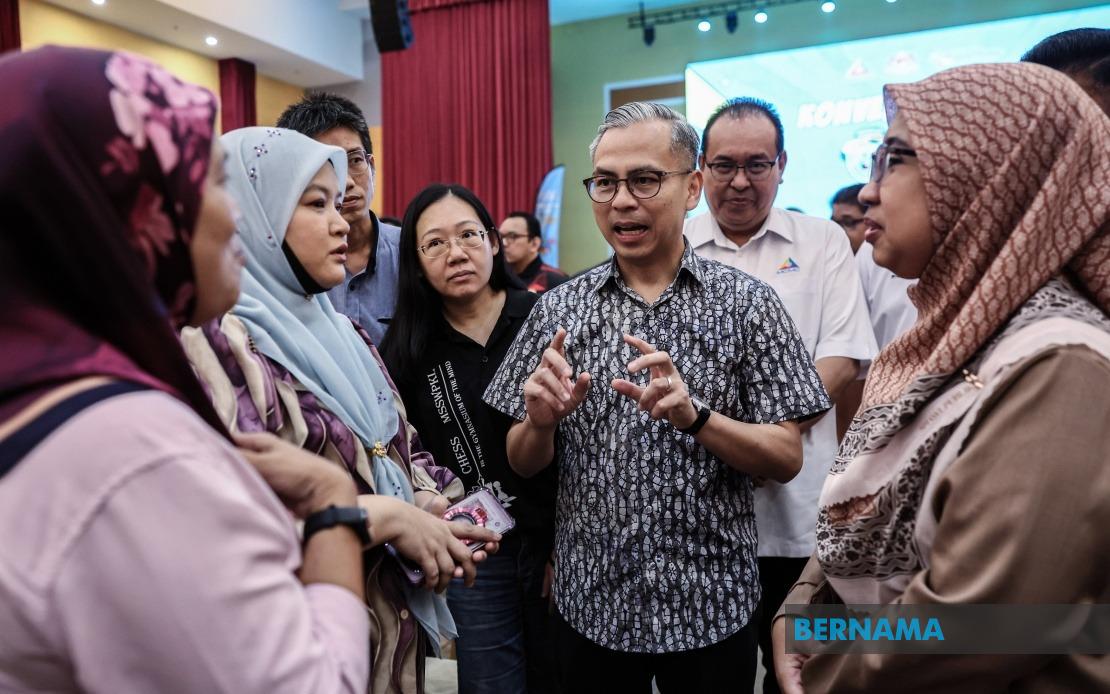
Fahmi delivered these remarks while officiating the 2026 Safe Internet PIBG Convention at the Imbi Convention Hall in Cheras, indicating that the government remains focused on addressing governance transparency and institutional accountability across multiple policy domains simultaneously. The timing suggests this represents part of a sustained effort to reshape public understanding of how state resources should be managed and distributed in a mature democracy.
For Malaysian voters and residents, this clarification carries practical implications for how they might access government assistance programs. Rather than approaching their MPs as gatekeepers of state resources, constituents should understand that MyKhas operates through formal channels within the Prime Minister's Department. This shift potentially democratises access by removing the intermediary role of individual politicians and creates a more transparent application process theoretically based on need assessment rather than political connections.
The governance structure underpinning MyKhas also reflects broader regional trends across Southeast Asia toward centralised oversight of constituency-level development spending. Several neighbouring countries have implemented similar mechanisms to combat patronage politics and ensure equitable resource distribution across diverse constituencies. Malaysia's formalisation of MyKhas within Malaysia Plan documentation suggests an institutional maturation aimed at institutionalising good governance standards beyond the tenure of any single administration.
However, the effectiveness of this framework ultimately depends on rigorous implementation and genuine adherence to the principle that need, not politics, determines allocation decisions. Constituents in both government and opposition-held areas will likely monitor closely whether MyKhas resources actually reach disadvantaged communities equitably, or whether the centralised control structure merely masks continued political favouritism exercised through the Prime Minister's office. The coming months will reveal whether this clarification represents genuine structural reform or primarily serves a communications purpose.

