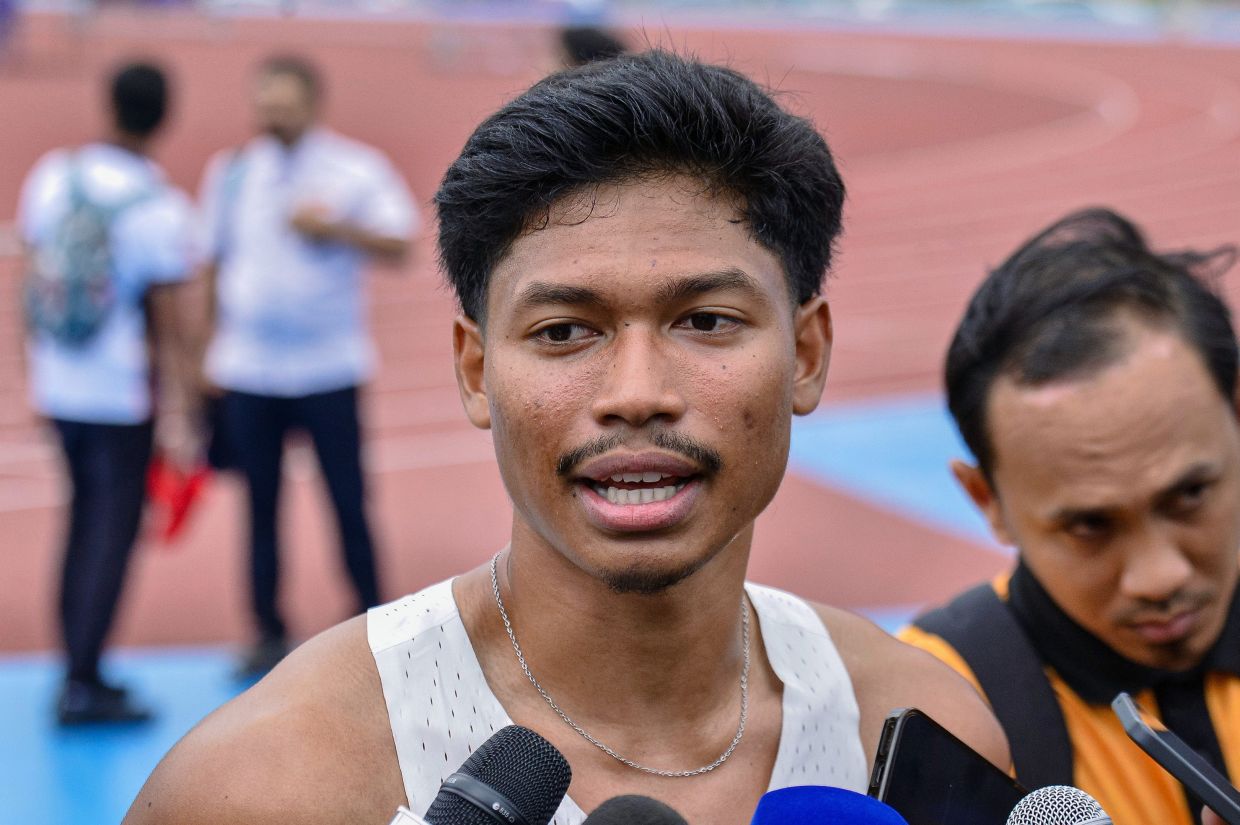
National sprinter Mohd Azeem Fahmi has embarked on the next chapter of his academic journey, enrolling in a master's programme at Universiti Malaya after completing his undergraduate studies abroad. The 21-year-old athlete, who spent nearly two years in the United States honing both his academic credentials and competitive skills, returned to Malaysia with the backing of the country's premier university, which has consolidated its reputation as an institution of choice for elite athletes seeking to balance sporting excellence with higher education.
Azeem's transition back to Malaysia marks a significant moment in his career trajectory, as he shifts from the rigorous training environment at Auburn University to pursue advanced studies in his field. During his time at the Alabama-based institution beginning in January 2023, he studied exercise physiology and kinesiology under the guidance of coach Ken Harnden, gaining exposure to world-class coaching methodologies and academic frameworks. This experience abroad has positioned him well to contribute meaningfully to Malaysia's athletic development landscape while continuing his scholarly pursuits.
The formality of his enrolment became official following a courtesy visit to Universiti Malaya's administration, where vice-chancellor Prof Datuk Seri Dr Noor Azuan Abu Osman received the sprinter at his office. The gathering underscored the institution's commitment to facilitating Azeem's postgraduate journey, with the vice-chancellor personally pledging institutional support to ensure optimal conditions for his master's studies. This level of administrative engagement reflects the university's strategic approach to nurturing athlete-scholars who can serve as bridges between competitive sports and academic excellence.
The delegation present during the meeting included Associate Prof Dr Zulkarnain Jaafar, dean of the Faculty of Sports and Exercise Sciences, and Afizal Abu Othman, director of the Sports Centre. Their participation signalled institutional readiness to provide specialised guidance suited to an athlete's unique scheduling and performance demands. For Malaysian readers familiar with the challenges of reconciling elite-level competition with rigorous academic coursework, such administrative coordination represents a crucial enabler of sustainable athletic development that extends beyond one's competitive years.
Universiti Malaya's track record of supporting world-class athletes lends considerable credibility to Azeem's choice. The institution counts among its alumni several Olympic medallists and internationally recognised competitors, most notably diving champions Datuk Pandelela Rinong and Ooi Tze Liang, whose career trajectories demonstrate the viability of the athlete-scholar model in Southeast Asia. Shuttler Vivian Hoo, who completed her Bachelor of Sports Science at UM in 2019, exemplifies how the university's specialised sports science curriculum attracts and develops national representatives seeking structured academic frameworks aligned with their athletic ambitions.
Azeem's recent achievements on the domestic track provide compelling evidence of his continued progression as a sprinter. At the Malaysian Open held at Universiti Putra Malaysia's Serdang campus last week, he secured gold medals in both the men's 100 metres and the 4x100 metres relay. The relay victory, achieved alongside Danish Iftikhar Mohd Roslee, Pengiran Aidil Auf Hajam, and Mohd Armin Zahryl, demonstrated the cohesion emerging within Malaysia's short-distance running cohort—a group increasingly competitive within Southeast Asian circuits. These victories arrive at a moment when Asian sprinting standards continue to improve, particularly among emerging talents who have benefited from international exposure and training.
The significance of Azeem's choice to pursue postgraduate studies in Malaysia extends beyond personal ambition. For a nation investing substantially in talent development infrastructure, having accomplished athletes choose to remain domestically for advanced study represents a small but meaningful victory in talent retention. Brain drain in sports science remains a real concern across Southeast Asia, as promising young professionals often migrate to Western institutions for postgraduate qualifications, subsequently seeking employment opportunities abroad. Azeem's decision to study at UM suggests confidence in Malaysian institutions' capacity to deliver rigorous, internationally-comparable academic programmes in sports science domains.
The master's pathway also positions Azeem strategically for potential involvement in athlete development and sports science coaching roles, should his competitive career trajectory eventually shift. His combined exposure—experience as a competitive athlete, training under international coaches, undergraduate education in kinesiology, and now postgraduate specialisation in Malaysia—creates a rare professional profile. Such credentials become increasingly valuable as national sporting bodies seek to professionalise coaching and sports science support systems, moving away from reliance on expatriate expertise toward building homegrown capacity.
For Malaysian sprinting more broadly, Azeem's continued presence and development carries implications beyond individual achievement. The visibility of successful athletes pursuing serious academic credentials—particularly in fields directly related to performance enhancement and athlete management—influences perceptions of professionalism within the sport. Young aspiring runners observing athletes like Azeem juggling competitive obligations with demanding postgraduate coursework encounter a compelling counternarrative to the false dichotomy often presented between athletic success and educational attainment. This normalisation of the scholar-athlete identity, particularly at the postgraduate level, strengthens the sport's institutional foundations across Southeast Asia.
As Azeem settles into his master's programme at Universiti Malaya, he joins an academic community with demonstrated expertise in supporting elite performers. The combination of institutional commitment from senior university leadership, specialised faculty in sports science disciplines, and proven alumni success creates conditions conducive to balancing continued competitive pursuit with serious scholarly development. His journey from Auburn back to Malaysia reflects broader regional trends of talented athletes seeking sophisticated educational opportunities at home, potentially signalling shifts in how Southeast Asian universities position themselves within the global landscape of sports science and athlete development.

