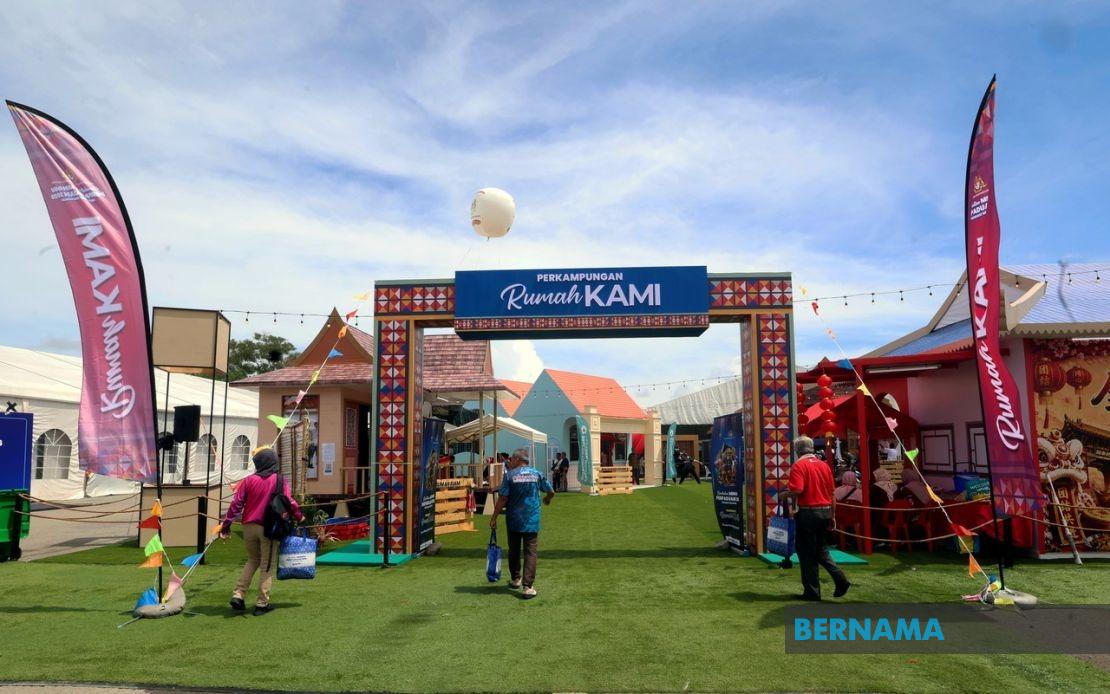
The National Unity Week 2026 celebration held in Kota Kinabalu from June 11 to 14 has established a new benchmark for public engagement, drawing 284,448 visitors throughout its four-day run. This figure represents a significant milestone for the programme, which was first introduced by the government in 2023 as part of broader efforts to strengthen social cohesion across the nation.
National Unity Minister Datuk Aaron Ago Dagang attributed the unprecedented turnout to growing recognition among Malaysians of the intrinsic value embedded in the country's cultural tapestry. He emphasised that the strong attendance demonstrates a deepening public consciousness regarding how Malaysia's diversity—encompassing multiple ethnic communities, religious traditions, and regional identities—forms the bedrock of national resilience. This understanding, he noted, is becoming increasingly important as the country navigates contemporary challenges that require citizens from all backgrounds to work collaboratively toward shared objectives.
Three exhibition zones emerged as particular drawcards for visitors attending the Kota Kinabalu event. The Ethnic Village proved especially popular, offering an immersive experience of daily life within Malaysia's major communities through authentic recreations and interactive displays. Complementing this offering was the Ethnic Houses exhibition, which provided detailed insights into the distinct architectural styles, crafts, and living practices of smaller and often less visible communities including the Bajau, Melanau, Banjar, Kedayan and Portuguese populations. These exhibitions served to broaden public appreciation for communities whose contributions to the national narrative are sometimes overlooked in mainstream discourse.
Particularly noteworthy was the strong engagement recorded at the Negara Bangsa and Raja Kita Exhibition, which succeeded in capturing the interest of younger attendees. The exhibition's ability to resonate with Malaysia's youth demographic holds significant implications, as generational transmission of national values and historical awareness represents a critical component of long-term unity efforts. By framing the nation's history and institutions in accessible and compelling ways, the exhibition appears to have successfully bridged the gap between formal civics education and experiential learning.
The Ministry of National Unity has responded to the event's success by committing to continue National Unity Week as an annual fixture on the national calendar. However, Minister Dagang's statement reflects a nuanced understanding of social cohesion that extends beyond episodic celebrations. He articulated the position that genuine unity cannot emerge from isolated programmes, no matter how well-attended or professionally executed. Rather, sustained advancement in this area demands consistent, multiyear engagement strategies that become embedded within the cultural consciousness of successive generations of Malaysians.
This perspective aligns with international best practices in nation-building and social integration. Countries that have successfully reduced ethnic tensions or religious polarisation have typically done so through long-term investments in cross-cultural education, institutional reform, and regular opportunities for inter-community contact. The Ministry's recognition of this principle suggests a maturation in policy thinking around national cohesion in Malaysia.
Minister Dagang further committed the Ministry to developing additional platforms and mechanisms that would facilitate regular interaction among Malaysians from different backgrounds. These initiatives are intended to move beyond the relatively passive experience of attending exhibitions and toward active participation in shared activities that require genuine communication and collaborative problem-solving. Such programmes might include joint community service projects, inter-school exchanges, or professional networking initiatives designed specifically to build cross-ethnic relationships in workplace and educational settings.
The government has positioned national unity efforts as integral to the MADANI administration's broader governance vision. The framework emphasises constructing a cohesive nation through inclusive messaging that transcends traditional divisions of race, faith, and geography. This represents a deliberate strategic choice to frame unity not as a limitation on individual or group identity, but as an expansion of collective capability and national competitiveness. The implication is that greater internal harmony directly translates to enhanced capacity to compete economically and diplomatically on the regional and global stage.
Minister Dagang's closing remarks underscore the distributed nature of responsibility for national unity. Rather than positioning the government as the sole actor capable of driving social cohesion, his statement explicitly identifies the private sector, civil society organisations, and individual citizens as essential partners in this endeavour. This framing encourages a whole-of-society approach that recognises how businesses can promote diversity through employment practices, how NGOs can facilitate grassroots dialogue, and how individual choices regarding language, community involvement, and inter-ethnic friendships collectively shape the national fabric.
For Malaysian businesses and international investors, the success of National Unity Week carries implications for social stability and consumer market confidence. Events that demonstrate public enthusiasm for national cohesion may be interpreted as indicators of reduced ethnic or religious tension, which in turn affects investment risk assessments and corporate decisions regarding long-term expansion. The Kota Kinabalu event's success thus carries significance beyond cultural programming, with potential effects on economic confidence and regional development priorities.
The record attendance in Kota Kinabalu also reflects the strategic importance of featuring such major national programmes in Sabah and Sarawak. These East Malaysian states have experienced distinct historical trajectories and possess their own rich cultural traditions. Hosting National Unity Week in the region ensures that Peninsular Malaysian narratives of diversity do not overshadow East Malaysian identities, and that East Malaysian communities feel ownership over national cohesion initiatives rather than experiencing them as impositions from the federal centre.
Moving forward, the Ministry faces the challenge of translating the enthusiasm captured during a four-day event into sustained behavioural and attitudinal change. The high attendance numbers represent a significant achievement, but the true measure of success will emerge over subsequent years through measurable improvements in inter-ethnic relations, reduced polarisation in public discourse, and increased social mixing in schools, workplaces and residential areas. The government's commitment to annual repetition of the event, combined with its pledge to develop additional integration platforms, suggests recognition that the work of building national unity is neither quick nor completed through any single initiative.