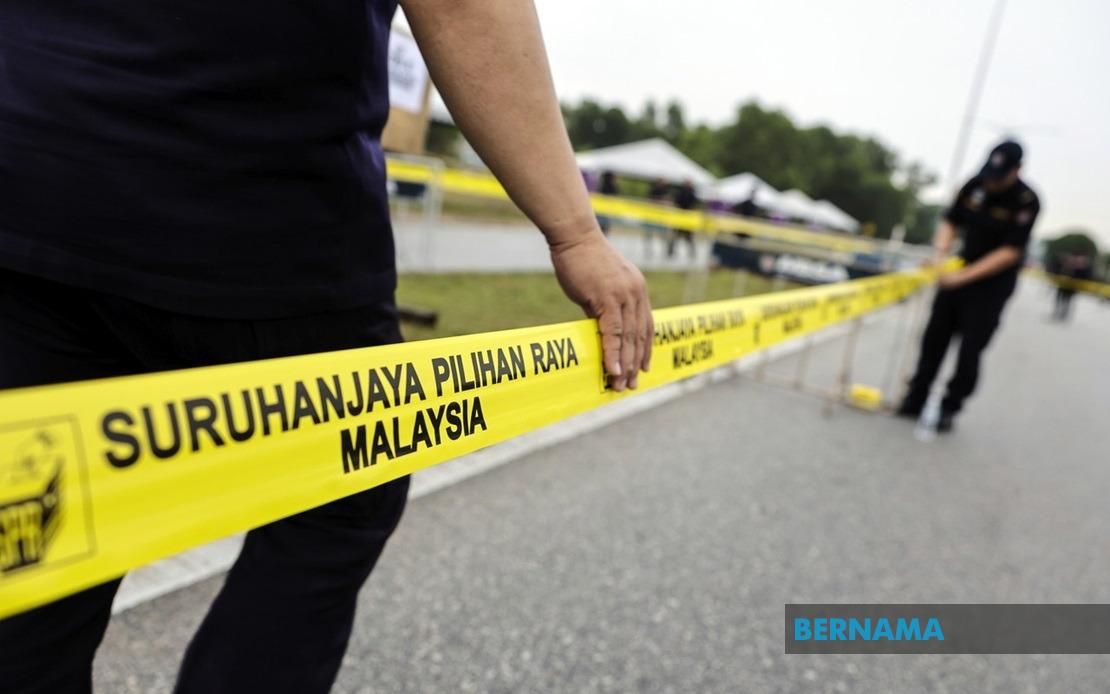
The Malaysian Meteorological Department has issued a cautiously optimistic forecast for tomorrow's nomination day in Negeri Sembilan's 16th state election, indicating that while most districts will experience favourable weather during the crucial morning hours, voters and election officials should prepare for scattered afternoon storms. Dr Mohd Hisham Mohd Anip, the department's director-general, outlined a mixed pattern that underscores the unpredictable nature of monsoon-season politics in Malaysia, where weather conditions can significantly impact voter turnout and the smooth execution of electoral procedures.
According to the meteorological forecast, the morning period should prove largely unproblematic for the nomination proceedings scheduled to run from 9 am to 10 am across eight designated nomination centres. Five districts—Jelebu, Jempol, Kuala Pilah, Rembau and Tampin—are expected to enjoy fair skies, creating optimal conditions for candidates to register their nominations without weather-related interruptions. However, the larger urban centres of Port Dickson and Seremban face a different outlook, as both areas are anticipated to receive rainfall during these critical morning hours, potentially complicating logistical arrangements for election officials and candidate representatives gathering at nomination centres.
The afternoon deterioration represents a more widespread concern, with Dr Mohd Hisham warning that thunderstorms will likely develop across most districts as the day progresses. This pattern is typical for the Malaysian peninsula during the southwest monsoon season and poses particular challenges for campaign rallies and public gatherings that candidates traditionally organize immediately following the nomination period. Election workers and supporters who may be conducting post-nomination activities throughout the state should factor in the possibility of sudden downpours and plan accordingly to ensure the safety and comfort of participants.
While the anticipated rainfall warrants attention, meteorological officials have emphasised that the precipitation is unlikely to reach problematic levels. Dr Mohd Hisham characterised the expected rain as transient and modest in quantity, describing it as brief showers rather than sustained, heavy downpours that might disrupt transport links or cause flooding in vulnerable areas. This measured assessment suggests that despite the adverse weather patterns, the nomination process and subsequent campaign activities should proceed without major disruptions, assuming standard precautions are observed.
Temperature conditions will remain typical for the region, with minimum readings hovering between 23 and 24 degrees Celsius during overnight hours, while daytime highs are expected to reach between 32 and 33 degrees Celsius. The combination of high heat and humidity, punctuated by afternoon thunderstorms, reflects the characteristic climate that defined the Malaysian electoral landscape during this season. Candidates, supporters and election personnel are advised to maintain adequate hydration and seek shelter when storms develop, as such weather transitions can pose health and safety risks, particularly for those engaged in extended outdoor activities.
The nomination day marks the formal commencement of Negeri Sembilan's state election campaign, with the Election Commission having set July 28 for early voting and August 1 as the general polling day. This compressed timeline reflects the state assembly's dissolution on June 5, creating a relatively brief window for parties to mobilise their campaigns and voters to deliberate on their choices. The weather conditions on nomination day therefore carry symbolic significance beyond mere meteorological interest, as the opening hours set the tone for campaign momentum and public engagement.
Three major political coalitions have declared their participation in the contest for the state's 36 legislative seats. Pakatan Harapan is fielding candidates for all 36 positions, with PKR contesting 16 seats, DAP 11 and Amanah nine, representing the broadest coverage among competing alliances. Barisan Nasional has adopted a more selective strategy, committing to 25 seats across its three component parties—UMNO's 16, MCA's seven and MIC's two—suggesting strategic territorial choices rather than comprehensive coverage. Perikatan Nasional rounds out the major contenders with 11 candidates drawn from PAS, Wawasan, Gerakan and MIPP, reflecting the coalition's efforts to present a diverse front despite its relative weakness in peninsular state politics.
Beyond the three dominant coalitions, several smaller parties have announced single-candidate participation, including ASLI, PSM and Berjasa, which collectively represent fringe political voices seeking to register their presence in state politics. Most significantly, Bersatu was expected to reveal its candidate slate later in the original reporting period, indicating that the full landscape of contenders remains subject to final announcements. This fragmented opposition and multiplicity of choices reflect broader patterns in Malaysian state elections, where even dominant coalitions face competition from smaller actors and must navigate complex seat-sharing arrangements with allies.
The electoral stakes are substantial given the size of the eligible voting population. According to the Election Commission's official roll, 889,490 voters are entitled to participate in the election, comprising 867,151 ordinary electors alongside 16,884 military personnel and their spouses, and 5,455 police officers eligible for early voting. This substantial electorate underscores the significance of Negeri Sembilan's state assembly in Malaysia's federal structure, and the turnout achieved on August 1 will carry implications not only for the state government's composition but also for broader national political dynamics given the state's swing-state characteristics.
For Malaysian observers and international commentators tracking regional political developments, Negeri Sembilan's election offers crucial insights into voter preferences following the various political realignments that have characterised Malaysian politics since the 2022 federal election. The relative performance of Pakatan Harapan's three component parties, the vitality of Barisan Nasional's recovery efforts, and the viability of Perikatan Nasional in urban and rural contexts will all receive concrete testing. The weather forecast for nomination day, while seemingly technical and mundane, thus forms part of the broader narrative of how electoral processes unfold in Malaysia's tropical political environment, where nature and democracy intersect in practical and sometimes unpredictable ways.

