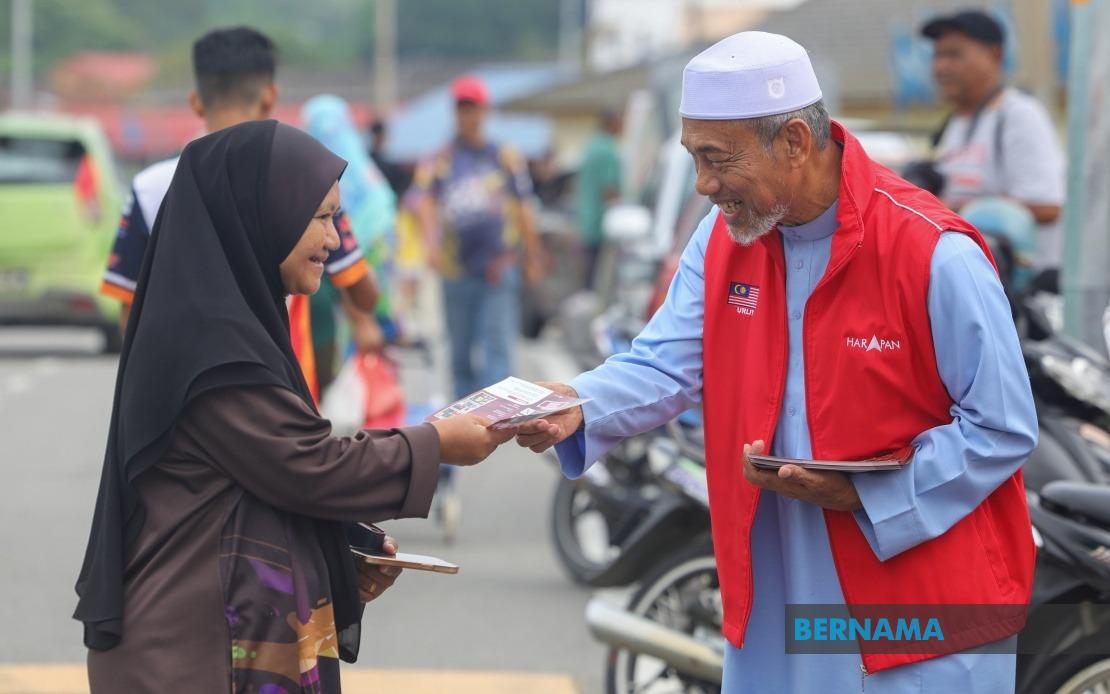
As the 16th Negeri Sembilan State Election enters its second week of campaigning, political candidates from all major coalitions have significantly ramped up their engagement with voters through a combination of early-morning mosque visits, market walkabouts, and community gatherings. The intensified push reflects the competitive nature of the race, with political operatives scheduling multiple daily events across constituencies to maximise their visibility and personal connection with the electorate ahead of the August 1 polling date. The strategy underscores how both Pakatan Harapan and Barisan Nasional aim to convert ground-level interactions into votes in a state where political fortunes can shift rapidly based on community sentiment and grassroots mobilisation.
Menteri Besar Datuk Seri Aminuddin Harun, the Negeri Sembilan Pakatan Harapan chairman defending the Linggi state seat, has become the public face of PH's campaign blitz in the state. Beginning his campaign day with dawn prayers at Masjid Jamek Pasir Panjang, Aminuddin subsequently conducted walkabouts across multiple residential areas including Pasir Panjang town, Taman Setia, Taman Kekatong, and several villages in the Telok Pelandok area. The Port Dickson Member of Parliament also prioritised community engagement by hosting breakfast sessions with residents and scheduling a dedicated meet-and-greet with members of the Indian community, reflecting the importance of ethnic coalition-building in Malaysian electoral politics. His public messaging emphasises the personal dimension of political service, framing his campaign not merely as a search for electoral support but as an extension of existing governance relationships. Aminuddin's packed schedule demonstrates how incumbents leverage their positional advantages to maintain visibility and reinforce their claims of developmental delivery to constituents.
DAP secretary-general Anthony Loke, who is defending his Chennah state seat, has similarly adopted the retail politics approach that characterises contemporary Malaysian campaigning. Loke's campaign itinerary combined strategic venue selection—beginning at Seremban Central Market, a high-foot-traffic location ideal for voter engagement—with evening dinner programmes designed to reach different demographic segments. This bifurcated approach allows candidates to engage economically active voters during daytime market visits while appealing to community leaders and opinion-shapers at evening functions. The versatility of such scheduling reflects the sophisticated understanding that different voter groups have different availability patterns and that maximising contact requires temporal flexibility alongside geographic coverage.
Other PH candidates have adopted similarly comprehensive engagement strategies. Kamarul Ariffin Wafa, contesting the Seri Menanti seat, structured his campaign around eight daily programmes, including specific outreach at the Pekan Ahad market and the Tanjong Ipoh area, locations likely selected based on demographic concentration and voter analysis. Yaacob Mahmood, the PH candidate for Serting, pursued a grassroots engagement model in the Felda areas and commercial zones of Bandar Seri Jempol, recognising that rural estates and small-town business communities represent distinct voter segments with particular local concerns. The deliberate emphasis on what candidates term "informal programmes" reveals an awareness that voters increasingly value perceived authenticity and personal accessibility over formal political theatre. By mingling with constituents during breakfast sessions and market visits, candidates attempt to project relatability and demonstrate responsive attentiveness to community preoccupations rather than top-down partisan messaging.
The Barisan Nasional coalition has matched these grassroots efforts with its own intensive campaign schedule. Datuk Seri Mohamad Hasan, the incumbent Rantau assemblyman and BN deputy chairman, conducted voter engagement at the BN Polling District Centre in Taman Kelab Tuanku, Mambau, maintaining his organisational presence while signalling continuity of existing political structures. Negeri Sembilan UMNO Liaison Committee chairman Datuk Seri Jalaluddin Alias employed a multifaceted approach, participating in youth sports activities at the Pertang constituency before conducting community outreach among the Orang Asli population in Kampung Utara Putra. This strategy of combining youth engagement, traditional sports promotion, and minority community relations suggests BN's effort to construct a broad coalition appeal across age groups and ethnic communities. The inclusion of indigenous community engagement underscores the particular political significance of Orang Asli constituencies in Negeri Sembilan electoral mathematics.
The electoral calendar surrounding the Negeri Sembilan election has created specific temporal pressures influencing campaign intensity. With 12 days remaining between the second day of campaigning and the August 1 polling date, candidates face a relatively compressed timeframe for reaching all registered voters. The Election Commission's designation of July 28 for early voting further concentrates the campaign period, as early voters must be targeted before that date. Against this backdrop, the decision by several candidates to schedule up to nine daily programmes reflects a mathematical calculation that coverage requires maximised frequency and geographic dispersion of campaign activities. This tempo of campaigning places substantial physical and logistical demands on candidates and their support teams, requiring careful scheduling to ensure both candidate presence and resource deployment across constituencies.
The voter base these candidates seek to mobilise comprises 889,490 registered voters distributed across electoral constituencies and demographic categories. This figure encompasses 867,151 ordinary voters, 16,884 military personnel and spouses eligible for early voting, and 5,455 police personnel voting before polling day. The significant military and police early-voting contingent, representing approximately two percent of the total electorate, creates a distinct voting bloc that merits targeted campaign outreach. Candidates and party organisers must ensure their campaign messages reach these uniformed personnel before their designated voting dates, necessitating specific engagement strategies with defence and security force communities. The geographic dispersion of ordinary voters across rural, semi-urban, and urban constituencies requires tailored messaging addressing locality-specific concerns ranging from agricultural policy in FELDA areas to urban infrastructure in Seremban and surrounding towns.
The campaign strategies observed across Negeri Sembilan reflect broader trends in Malaysian electoral politics that extend beyond this state election. The shift towards intensive grassroots engagement represents a response to several converging factors: digital platforms' increasing fragmentation of the media landscape, voter scepticism towards formal political rhetoric, and demonstrated effectiveness of personal candidate visibility in driving voter sentiment. Malaysian parties across the ideological spectrum have increasingly recognised that media coverage, whether traditional or digital, cannot substitute for direct voter contact. The breakfast sessions, market walkabouts, and community gatherings documented across the Negeri Sembilan campaign serve multiple functions simultaneously: they generate visual content for social media distribution, demonstrate candidate presence and energy, provide opportunities for authentic unscripted interaction, and create localised word-of-mouth political discourse. This multi-layered approach to campaigning reflects the sophistication of contemporary Malaysian political operations.
For Malaysian political observers and regional analysts monitoring the Negeri Sembilan election, the intensity of grassroots campaigning carries implications beyond this single state contest. Negeri Sembilan has historically served as a bellwether for broader Malaysian electoral trends, and the engagement levels demonstrated here may foreshadow the campaign tempo likely to characterise future national elections. The willingness of both PH and BN to commit substantial organisational and candidate resources to intensive ground campaigning suggests confidence in this approach's electoral effectiveness. Additionally, the particular constituencies receiving candidate focus—such as Linggi, Chennah, Seri Menanti, Serting, and Rantau—may indicate where coalition strategists believe the most competitive contests and persuadable voter populations exist. Understanding these campaign choices provides insight into how major Malaysian political coalitions assess electoral vulnerability and opportunity in contested constituencies.

