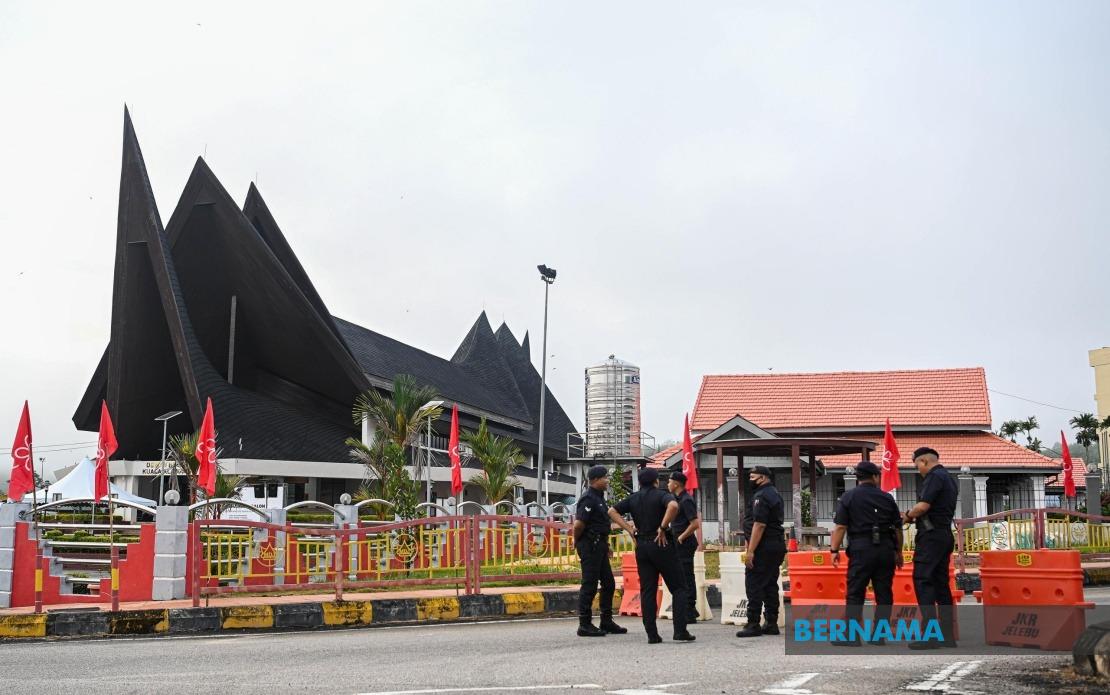
The nomination process for Negeri Sembilan's 16th state election unfolded on schedule across eight designated centres throughout the state as favourable weather conditions supported the day's proceedings. Election Commission officials moved methodically through their pre-nomination checklist, ensuring machinery and documentation were properly arranged before the nine o'clock start time. By early morning, the atmosphere at nomination compounds had already grown animated with media representatives staking out positions from seven o'clock onwards, while party supporters and campaign personnel assembled in anticipation of the day ahead.
The state assembly was returned to the voters after the sitting body's dissolution on June 5, triggering the electoral timetable that will culminate on August 1 with general polling day. Early voting has been scheduled for July 28, providing flexibility for those unable to cast ballots on the main election date. This timeline marks a significant political moment for the state, which has not held elections for its 36-seat chamber since 2023.
The electoral rollfor this contest encompasses nearly 890,000 potential voters drawn from three constituent groups. Ordinary voters dominate the register at 867,151 individuals, while military personnel and their spouses account for 16,884 registered electors. Police officers and their families round out the total, adding 5,455 names to the rolls. This distribution of voters across the state's various constituencies will shape campaign strategies and resource allocation for competing parties in the weeks ahead.
Pakatan Harapan has signalled its ambition by fielding a complete slate of candidates across all 36 available seats, demonstrating confidence in its organizational capacity and popular support within the state. Barisan Nasional, meanwhile, has chosen a more selective approach by contesting 25 seats, leaving eleven constituencies uncontested by the coalition. This narrower footprint suggests either strategic calculations about competitive viability in certain areas or deliberate space-making for potential allies.
Perikatan Nasional's decision to field eleven candidates positions the bloc as a significant challenger to the two dominant coalitions, though still commanding a comparatively smaller presence on the ballot. Parti Pribumi Bersatu Malaysia has chosen to contest as an independent force, putting forward 24 candidates for the election. Notably, Parti Bersepakat Hak Rakyat Malaysia, another smaller party, will contest two seats under the Bersatu banner, effectively expanding that party's representation on the ballot paper. Three additional smaller parties—Parti Orang Asli Malaysia, Parti Sosialis Malaysia, and Parti Barisan Jemaah Islamiah Se-Malaysia—have each nominated candidates in single constituencies, adding diversity to the electoral menu.
The 2023 election in Negeri Sembilan provided a useful benchmark for assessing shifting political fortunes. Pakatan Harapan emerged as the largest bloc in that contest, securing seventeen seats and establishing its position as the state government. Barisan Nasional captured fourteen seats, maintaining substantial presence in the state assembly despite losing the overall majority. Perikatan Nasional proved more marginal in that cycle, winning only five seats and establishing itself as a tertiary player in state politics. The extent to which these formations can replicate, improve upon, or lose ground in the 2024 election will define the state's political trajectory for the next electoral cycle.
For Malaysian observers and regional analysts, Negeri Sembilan's election carries implications beyond the state's borders. As a relatively affluent state with a stable voter base and diverse constituencies, electoral movements here often signal broader trends in peninsular Malaysian politics. The state's performance will offer insights into whether recent national political developments have shifted voter sentiment, and whether the coalitions have effectively mobilized supporters since the previous election. The contest also provides an early test of party machinery and campaign effectiveness in the post-restructuring political environment.
The presence of Bersatu as a solo contestant—rather than operating within the Perikatan Nasional framework—adds an intriguing variable to the Negeri Sembilan dynamics. The party's decision to field 24 candidates suggests either confidence in its independent viability or strategic positioning ahead of potential future realignments. The outcome here may influence its calculations for federal-level politics and coalition negotiations. Similarly, smaller parties using this election as a platform to build momentum and establish their credentials in state politics could affect the broader political landscape if they achieve breakthrough performances.
For supporters and the voting public, the nomination process represents the formal crystallization of electoral choice. Over the coming weeks, candidates will campaign across the state's diverse constituencies, articulating policy platforms and seeking to persuade voters that their party commands the best vision for Negeri Sembilan's future. Issues of economic development, education, healthcare infrastructure, and local governance will likely dominate campaign discourse as parties seek to connect with voters on matters affecting daily life.

