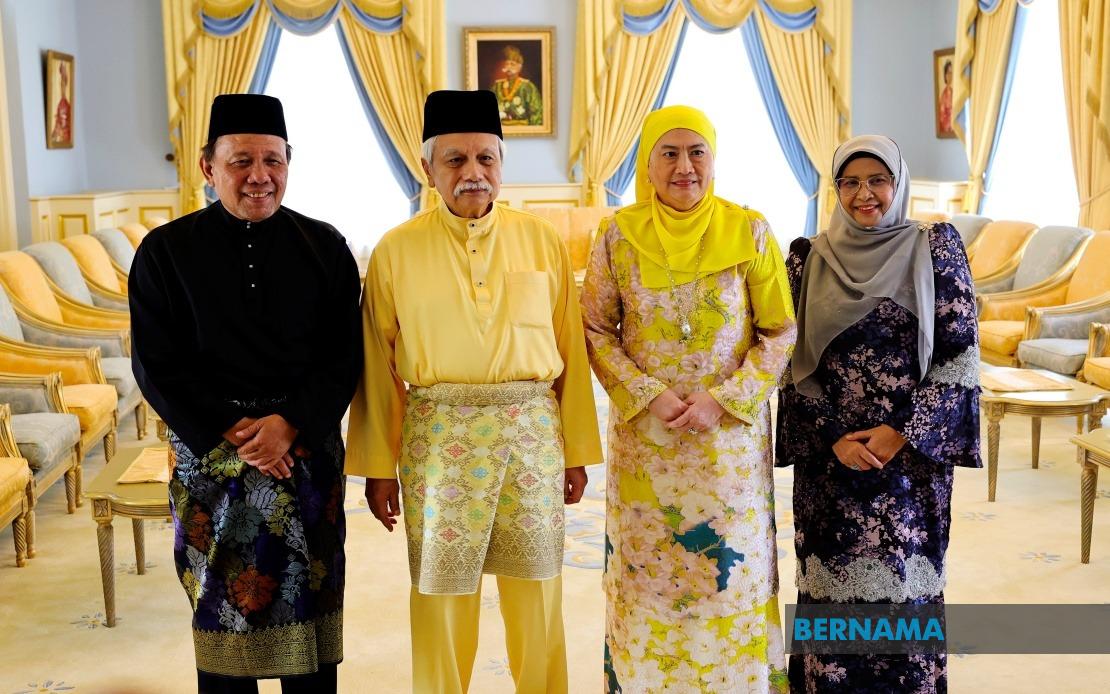
Datuk Ismail Lasim took the oath of office as Negeri Sembilan Menteri Besar on August 2 following his appointment by Tuanku Muhriz Tuanku Munawir at Istana Besar Seri Menanti, signalling the beginning of a new administrative chapter for the state. At a press conference held immediately after his swearing-in ceremony in Kuala Pilah, the newly installed leader outlined his vision for governance, placing particular emphasis on the preservation of institutional and cultural values that he regards as foundational to Negeri Sembilan's identity and stability.
The commitment to safeguarding the royal institution represents a central pillar of Lasim's administrative philosophy. Speaking to journalists, he stressed that this responsibility extends beyond the government itself, encompassing all citizens of Negeri Sembilan as stakeholders in the preservation of monarchical traditions. For a state with a unique constitutional arrangement centred on the collective Yang Dipertuan Besar system, maintaining strong institutional relations with the throne carries particular significance. Lasim articulated this as a dual obligation: citizens must both comprehend the historical and cultural foundations of Negeri Sembilan's customs and actively demonstrate respect and support for the royal establishment.
The Juasseh assemblyman elaborated on how institutional respect translates into practical governance. He identified conflict minimisation and proactive relationship management as integral components of his administration's approach to managing state-ruler dynamics. Rather than viewing these as separate concerns, Lasim positioned them as interconnected aspects of a unified commitment to harmony, suggesting that administrative competence and institutional deference are mutually reinforcing rather than competing priorities. This framing reflects an understanding that the stability required for effective governance depends partly on maintaining constructive ties between executive and monarchical institutions.
Beyond the royal institution, Lasim's remarks underscored the preservation of Negeri Sembilan's distinctive customs and traditions as equally vital to the state's identity. The emphasis on these cultural and historical elements suggests recognition that governance legitimacy in Malaysian states often draws from sources beyond electoral mandates alone. For Negeri Sembilan, with its matrilineal inheritance customs and unique constitutional position among Malaysian states, the maintenance of these distinguishing features carries both symbolic and practical weight. The new leadership appears committed to ensuring that modernisation and administrative efficiency do not come at the expense of the state's inherited identity.
On the question of federal relations, Lasim addressed the role of Barisan Nasional within Negeri Sembilan's administration and its participation in the Unity Government framework at the national level. He portrayed ongoing cooperation with the Federal Government as a natural extension of BN's broader positioning within the national coalition rather than as a matter requiring special justification. This statement carries significance given the complex political environment in which the state operates, with various coalition arrangements shaping governance possibilities. By framing cooperation as straightforward and uncontroversial, Lasim attempted to project a sense of political stability and predictability that could benefit state development initiatives requiring federal support or coordination.
The Menteri Besar's pragmatic approach to inherited policies from the previous administration reveals a governance philosophy centred on continuity where programmes demonstrate measurable public benefit. Rather than implementing wholesale changes to inherited frameworks, Lasim suggested that proven initiatives warrant continuation and refinement. This stance reflects a pragmatic recognition that administrative disruption can create costs for citizens while the benefits of policy experimentation remain uncertain. Simultaneously, the qualification that improvements should remain focused on public benefit rather than narrower political objectives suggests an attempt to distinguish between good governance and partisan advancement.
This continuity-focused approach has implications for how Negeri Sembilan navigates the broader Malaysian political landscape. State administrations that maintain effective programmes from predecessors often earn cross-partisan credibility, potentially enabling smoother collaboration on non-contentious state matters regardless of national-level political fluctuations. For Negeri Sembilan, such an approach could enhance the state's ability to attract federal support and private investment by projecting a sense of institutional reliability.
Lasim's inaugural statements also implicitly acknowledge the interconnection between royal institutional respect and effective governance. In Malaysian constitutional arrangements, the partnership between elected administrations and state rulers represents a fundamental feature rather than a vestigial ceremonial element. The Yang Dipertuan Besar of Negeri Sembilan, as the collective institution embodying the state's sovereignty, retains constitutionally significant functions that extend beyond purely symbolic domains. The new Menteri Besar's emphasis on cooperation and conflict minimisation reflects awareness that governance effectiveness depends partly on this institutional relationship functioning smoothly.
The timing of these commitments—articulated in the immediate aftermath of taking office—suggests Lasim recognises the importance of establishing clear parameters for his administration from the outset. By publicly affirming his dedication to the royal institution and established customs, he signals both to the Ruler and to the broader Negeri Sembilan public that his leadership will operate within established frameworks rather than attempting to reshape fundamental institutional relationships. For a state administration, such clarity can facilitate faster development of working relationships with state institutions that might otherwise approach a new Menteri Besar with caution.
The emphasis on people-centred governance and stability aligns Lasim's vision with broader Malaysian administrative trends favouring inclusive governance approaches. His suggestions that good policies transcend political cycles and that institutional harmony serves public interests frame governance not as a competitive zero-sum domain but as a collaborative space where multiple institutions—royal, administrative, and civic—contribute to state wellbeing. Whether this philosophy translates into substantive policy outcomes and measurable improvements in Negeri Sembilan's development will become apparent in the coming months as his administration implements its programmes and approaches its first budgetary decisions.

