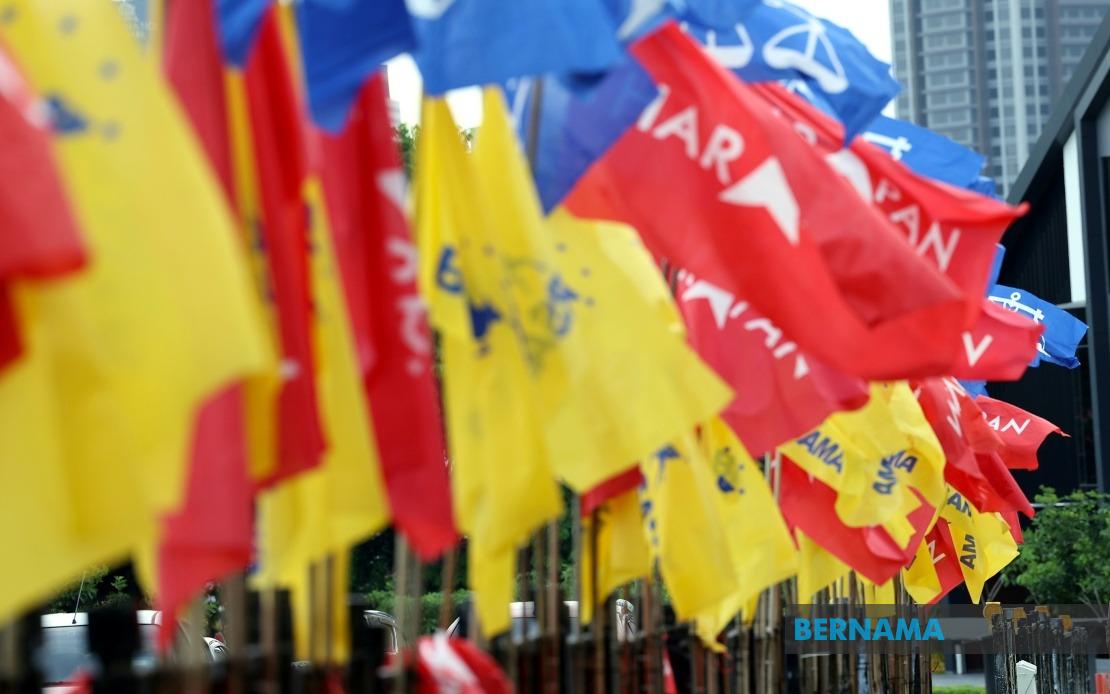
The Negeri Sembilan Palace has issued a significant directive ahead of the state election, cautioning all competing political parties to keep the royal institution entirely separate from their campaign strategies and messaging. The warning comes as candidates prepare for polling day on August 1, with early voting commencing the following day, after the state legislative assembly was dissolved on June 5 to facilitate the electoral process.
Datuk Azizi Mohamad Ali, who serves as Comptroller of the Negeri Sembilan Royal Household, articulated the palace's position with clarity and firmness. He stressed that the royal institution operates on a foundation of strict political neutrality, deliberately avoiding any alignment with individual political parties or their activities. This stance reflects a long-standing constitutional principle in Malaysia, where the monarchy is designed to transcend partisan divisions and remain above the political fray, serving instead as a unifying national symbol.
The palace's statement emphasises the monarch's fundamental role in representing the collective interests of the state and its population. Beyond ceremonial functions, the ruling institution actively works to protect Negeri Sembilan's social cohesion, political stability, and overall welfare. This positioning as a custodian of harmony means that any attempt to weaponise royal symbols or associations for electoral advantage fundamentally undermines the institution's legitimacy and the broader health of the democratic system.
Azizi directly countered what he characterised as false narratives, explicitly denying any connection between the Negeri Sembilan Palace, His Royal Highness the Ruler, or members of the royal family and any political contestant or party. The specificity of this denial suggests that palace officials may have observed attempts to invoke royal endorsements or to create misleading associations during the campaign period. Such misrepresentation, whether deliberate or accidental, carries serious consequences for public trust and institutional integrity.
The palace has issued specific guidance applicable to all candidates participating in the election. They are advised to exercise particular caution regarding campaign rhetoric and imagery involving what Malaysian discourse refers to as the 3R framework—religion, royalty, and race. These three domains have historically proven sensitive in Malaysian politics, capable of inflaming communal tensions if deployed as electoral tools. The directive calls for candidates to conduct their campaigns with both prudence and ethical rigour, ensuring full compliance with electoral law while preserving the delicate social equilibrium that Negeri Sembilan has cultivated.
This warning carries heightened relevance for Southeast Asia's broader democratic landscape. Malaysia's constitutional monarchy represents a particular model of governance combining democratic contestation with institutional checks provided by the crown. The palace's assertion of neutrality is not merely ceremonial; it reflects the practical operation of constitutional conventions that have evolved over decades. When political actors respect these boundaries, the system functions as intended. When they test or breach them, they risk destabilising the institutional frameworks that underpin democratic legitimacy.
The palace has acknowledged the cooperation it has received from political stakeholders in maintaining the separation of the royal institution from electoral competition. This recognition suggests a collaborative approach rather than a purely regulatory one, indicating that most parties have generally respected these boundaries in past elections. However, the issuance of this fresh directive suggests that palace officials have identified sufficient instances of concern to warrant a public clarification and renewed emphasis.
Furthermore, the statement addresses the broader information ecosystem surrounding the election. The palace has appealed to members of the public to exercise discernment when encountering claims, allegations, images, or videos purporting to link the monarchy to political contestants or movements. This guidance reflects contemporary concerns about misinformation and the rapid spread of unverified content through social media platforms. The palace has directed citizens to rely exclusively on official palace communications channels for authoritative information, thereby establishing a clear standard for identifying credible sources.
The timing of this statement, issued during the final stretch before early voting, appears strategically chosen to ensure maximum visibility and impact. With campaign activities at their peak intensity, the palace's intervention serves as a public reminder to candidates, party operatives, and supporters of the boundaries that must be respected. The statement's tone—formal yet not accusatory—suggests an effort to guide without inflaming political tensions, maintaining the palace's position as an institution above the partisan fray.
For Malaysia's political actors and observers, the palace's intervention underscores a fundamental principle of constitutional monarchy: the institution must be protected from politicisation if it is to fulfil its unifying function. In Negeri Sembilan specifically, where the monarchy remains a central institution in state governance and identity, this protection takes on particular importance. The warning demonstrates that palace officials are actively monitoring campaign conduct and are prepared to defend the institution's integrity through direct public communication.
The broader implications extend to how Southeast Asian democracies navigate the relationship between electoral politics and traditional institutions. Malaysia's approach—maintaining strict neutrality while issuing public guidance—represents a middle path between allowing unchecked politicisation and imposing restrictions on campaign speech. This balance reflects the constitutional settlement unique to Malaysia's Westminster-derived system combined with Islamic monarchy.
Candidates and their teams contesting the Negeri Sembilan election must now navigate their campaigns with heightened awareness of these boundaries. While the palace's statement does not impose formal sanctions, the reputational consequences of violating these boundaries can be substantial. Electoral success ultimately depends on public acceptance, and associations with breaching established constitutional conventions can undermine a candidate's broader appeal, particularly among voters who value institutional respect and social stability.

