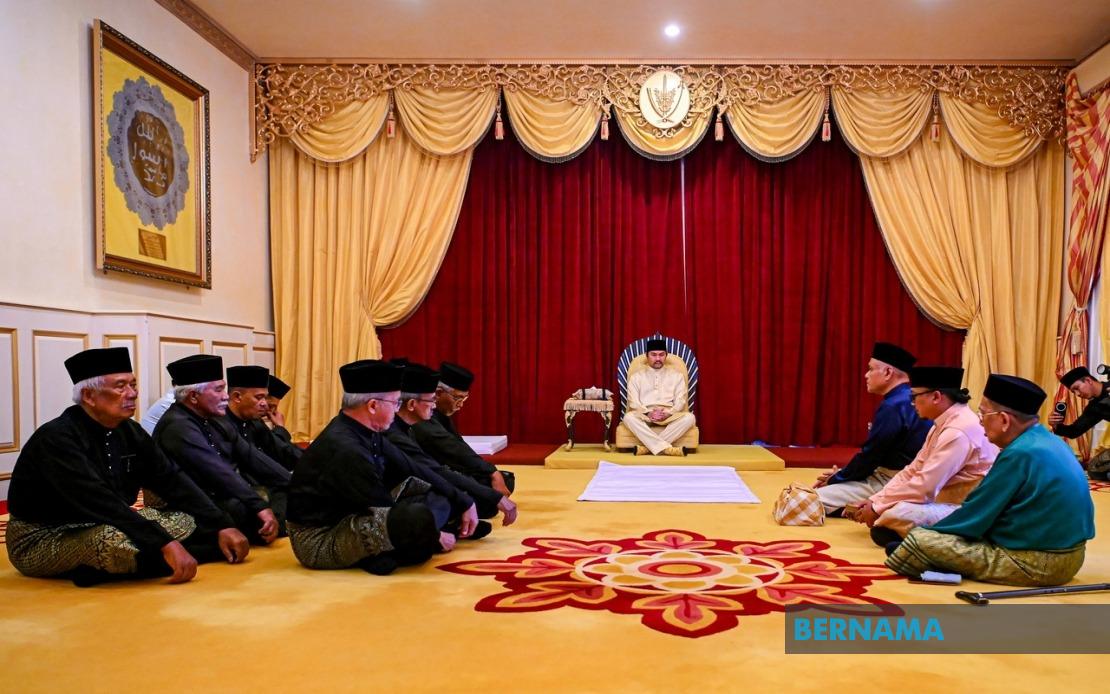
The installation of Muhammad Faris Johari as the 11th Undang of Luak Sungei Ujong will receive formal royal recognition when Tuanku Muhriz Tuanku Munawir, the Yang Dipertuan Besar of Negeri Sembilan, presides over a ceremonial audience at Istana Besar Seri Menanti in Kuala Pilah this Saturday. The sovereign's consent was formally announced through his representative, Tunku Besar Seri Menanti Tunku Ali Redhauddin Tuanku Muhriz, during proceedings at the palace on Wednesday.
The traditional appointment follows the established customs governing the selection of district leaders in Negeri Sembilan's constitutional framework. Datuk Sinda Maharaja Razlan Hamid, representing Luak Sungei Ujong in his capacity as Waris Negeri, informed palace officials that the entire selection procedure adhered to adat—the time-honoured customary practices unique to the Sungei Ujong district. This careful observance of tradition underscores how Negeri Sembilan maintains its distinctive governance structure, where hereditary district rulers operate alongside elected state representatives, a model increasingly scrutinized in Malaysia's evolving political landscape.
Johari's appointment represents a generational transition within the traditional leadership hierarchy. At 29 years old, he assumes the mantle from Datuk Klana Petra Datuk Mubarak Dohak, whose tenure as the 10th Undang ended following formal dismissal proceedings. The Dewan Keadilan dan Undang—the state justice and governance council—approved this removal during a special sitting chaired by Tuanku Muhriz at the palace, a constitutional process that demonstrates how traditional institutions in Negeri Sembilan incorporate formal adjudication mechanisms alongside customary practice.
Menteri Besar Datuk Seri Aminuddin Harun confirmed that the removal decision emerged from this specially convened assembly, highlighting the intricate relationship between state executive authority and palace-based ceremonial governance. In Negeri Sembilan, unlike Malaysia's other states, the balance between executive government and traditional rulers operates through multiple institutional channels, requiring coordination across elected and hereditary spheres of authority. The simultaneous handling of leadership transitions in multiple districts reflects this complexity.
The Saturday ceremony carries ceremonial significance extending beyond the Sungei Ujong district. Concurrent with Johari's installation formalization, a parallel royal audience will consecrate the 22nd Undang of Luak Rembau, another district within Negeri Sembilan's administrative structure. Tuanku Muhriz has approved both installations, scheduling them for the same morning session. This dual ceremony highlights how district-level successions in Negeri Sembilan follow synchronized constitutional rhythms, with palace protocol managing multiple traditional transitions simultaneously.
The Istiadat Menghadap Menjunjung Duli Bagi Menyempurnakan Kejadian Undang Luak Sungei Ujong—the formal title for Saturday's installation ceremony—represents a ceremonial anchor point in Negeri Sembilan's constitutional calendar. These palace audiences serve not merely as symbolic events but as formal constitutional acts, with the Buapak customary council assembly's selection receiving the Yang Dipertuan Besar's explicit validation. For Malaysian observers tracking how traditional governance persists within the federation's constitutional framework, such ceremonies demonstrate the enduring parallel authority structures that coexist with modern representative institutions.
Tunku Ali Redhauddin's public statement during the palace audience reflected the measured tone characteristic of official announcements regarding adat matters in Negeri Sembilan. His delegation of ceremonial coordination to the Orang Empat Istana—the palace's four principal officers—indicates how technical arrangements proceed through specialized administrative channels while symbolic validation remains concentrated at the ruler's level. This division of labour ensures that elaborate customary protocols function smoothly without overwhelming the sovereign's schedule.
The selection of Johari through the Buapak council assembly represents continuity in how Luak Sungei Ujong manages its hereditary succession within constitutional parameters. The Waris system, whereby designated individuals hold custodial authority over district-level decision-making, channels leadership selection through established familial and customary networks. For Southeast Asian observers interested in how traditional governance adapts within modern nation-states, Negeri Sembilan's mechanisms exemplify how Malaysia has maintained hereditary district systems alongside democratic institutions without fundamental constitutional conflict.
Saturday's ceremony will formalize processes already completed through customary and judicial channels. The Dewan Keadilan dan Undang's prior approval of Dohak's removal, combined with the Buapak assembly's selection of Johari, means the royal audience functions as constitutional ratification rather than substantive decision-making. This sequential structure—customary selection, judicial validation, then royal formalization—creates institutional redundancy that protects the legitimacy of transitions while preventing unilateral assertions of authority at any single institutional level.
For Negeri Sembilan's administration, the formalization of district leadership has practical implications extending beyond ceremony. The Undang position carries responsibilities in local governance, customary dispute resolution, and cultural stewardship within their respective luaks. Johari's installation therefore concludes a leadership transition affecting the Sungei Ujong district's operational governance. With two district-level installations occurring simultaneously, Negeri Sembilan addresses significant institutional continuity questions affecting the state's traditional-administrative nexus during a single palace session.
The parallel installment of Rembau's 22nd Undang signals that district-level transitions in Negeri Sembilan cluster around formal palace sessions. Rather than staggered individual ceremonies, this batching approach optimizes palace resources while maintaining ceremonial dignity for each installation. For historians and constitutional scholars examining Malaysia's federal system, such administrative efficiencies reveal how traditional governance adapts to practical constraints while preserving formal protocols essential for legitimacy maintenance.
Moving forward, Johari's tenure as Sungei Ujong's Undang will operate within Negeri Sembilan's distinctive constitutional environment, where district rulers maintain customary authority while state elected officials exercise executive functions. This arrangement, unique among Malaysia's thirteen states, continues evolving as contemporary expectations intersect with hereditary practices. Saturday's ceremony marks the formal beginning of his stewardship, completed through procedures that validate both tradition and constitutional propriety.

