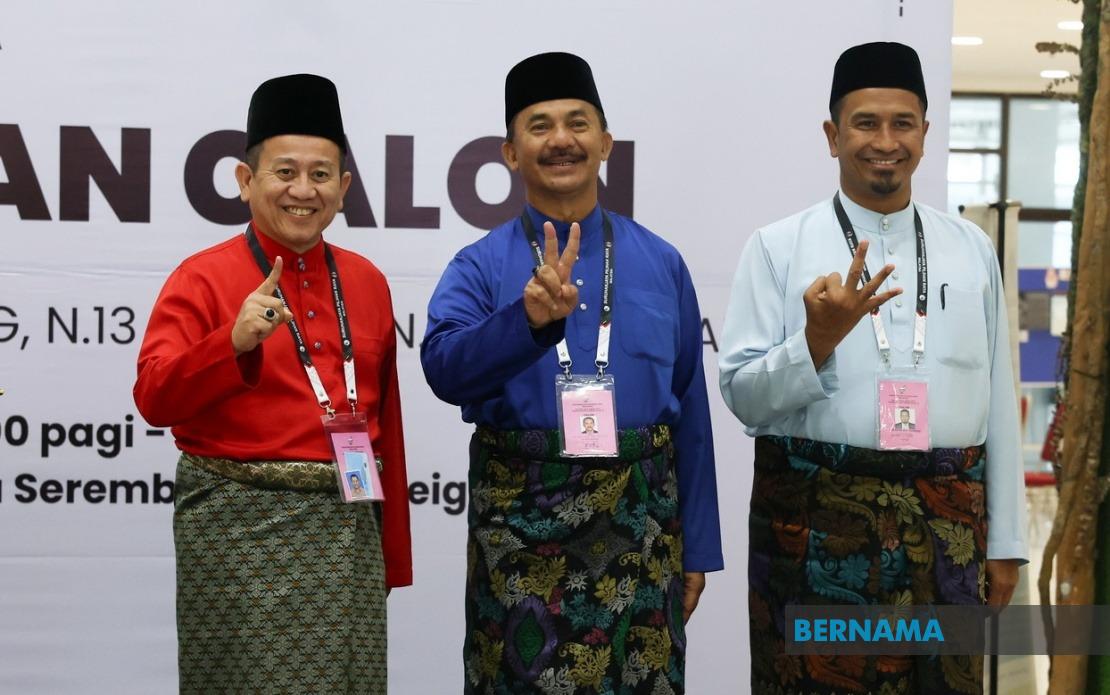
The 16th Negeri Sembilan State Election is shaping up to be a contest where fresh blood meets political experience, with political coalitions deploying a deliberate mix of seasoned campaigners and previously unknown candidates to appeal to voters seeking both continuity and change. Following the close of nominations on July 18, the Election Commission confirmed a total of 103 candidates representing various parties and individuals would contest the 36 State Legislative Assembly seats, a composition that reflects broader strategic calculations within Malaysia's ruling and opposition camps.
Pakatan Harapan, which has committed to contesting every available seat, is projecting confidence by introducing 24 new faces alongside established figures. The coalition's decision to blend newcomers with recognizable names suggests an effort to energize grassroots support while retaining credibility through incumbents. Among the familiar figures representing PH is DAP Secretary-General and Transport Minister Anthony Loke, who will campaign to retain the Chennah seat, providing the coalition with a high-profile ministerial presence in the campaign. This layering of experience with novelty is particularly pronounced in PH's approach to state-level politics, where introducing untested candidates without completely displacing established representatives allows the coalition to maintain organizational stability.
Notable repositioning within PH's ranks also demonstrates the coalition's adaptive electoral strategy. Datuk Seri Aminuddin Harun, the Negeri Sembilan PH Chairman, declined to seek re-election in the Sekamat seat but instead chose to contest Linggi, a tactical shift that likely reflects either boundary considerations or strategic assessment of seat viability. Such maneuvers, while routine in electoral politics, signal that even experienced party leadership recognizes the need to respond to shifting ground conditions in their state fiefdoms. The decision to field largely different candidates in some areas while retaining senior leaders in others suggests PH is calibrating its resources based on careful constituency analysis.
Barisan Nasional is adopting a less aggressive renewal strategy, introducing 13 new candidates from its 25-candidate roster while retaining 12 incumbents and established figures. This conservative approach reflects BN's positioning as the establishment force seeking to maintain its stronghold. Datuk Seri Mohamad Hasan, UMNO Deputy President and Foreign Minister, will defend the Rantau seat, underscoring the federal government's investment in retaining control of the state apparatus. Similarly, Negeri Sembilan BN Chairman Datuk Seri Jalaluddin Alias, who successfully contested Pertang in the previous 2023 state election, will again carry his party's standard in that constituency. UMNO's strategy of retaining experienced campaigners while selectively introducing newcomers suggests the party views Negeri Sembilan as relatively secure territory.
The tactical reshuffling within BN's ranks is evident in decisions such as Datuk Ismail Lasim's shift from defending the Senaling seat to contesting Juasseh, indicating that state leadership assesses certain constituencies through a different lens than their previous representation. These internal reallocations are typically not random; they suggest BN's strategists have identified specific seats as more defensible or winnable with particular candidates, reflecting the granular nature of modern electoral competition in Malaysia.
Perikatan Nasional's participation through its 11 contested seats provides a potentially significant wild card in the election dynamics. Drawing candidates from its component parties—PAS, Gerakan, Wawasan, and MIPP—PN presents voters with an alternative to both PH and BN. The coalition's modest seat count relative to its competitors suggests either limited organizational presence in Negeri Sembilan or a deliberate decision to focus resources elsewhere, but its presence nevertheless fragments the opposition vote and complicates seat projections for both larger coalitions.
Bersatu's independent participation represents a notable shift in coalition dynamics. The party fielded 24 candidates under its own logo rather than under the PN banner, a departure from its 2023 strategy that signals either internal repositioning within Malaysia's political architecture or disagreement over broader PN direction. Bersatu Information Chief Datuk Tun Faisal Ismail Aziz is among the new faces introduced by the party, while Negeri Sembilan Bersatu Chairman Hanifah Abu Bakar represents continuity through her defense of the Labu seat. This bifurcation of Bersatu's strategy—fielding newcomers while maintaining selected incumbents—mirrors the broader pattern evident across all major coalitions.
The demographic composition of candidates reveals important generational dimensions. The eldest candidate is 70-year-old Datuk Abd Latiff A Tambi, PH's representative in Gemencheh, while the youngest is 23-year-old Leevineshwaraan Murugan, contesting the Sri Tanjung seat for Bersatu. This age spread underscores how political parties are deliberately recruiting across generational lines, potentially appealing to different voter segments while ensuring organizational continuity across time. Younger candidates may resonate with voters seeking fresh perspectives, while older candidates provide reassurance through accumulated political capital and networks.
The proliferation of new candidates also reflects broader changes in Malaysian politics following the 2023 general election. Parties have spent the intervening year and a half assessing performance, reallocating resources, and identifying emerging talent. Negeri Sembilan, while not among Malaysia's largest states by population, occupies significant strategic importance as a swing territory and as part of the Klang Valley's political sphere of influence. The state's electoral dynamics thus carry implications extending beyond its borders, potentially signaling trajectories within the broader Selangor-Kuala Lumpur region.
The presence of smaller parties fielding candidates—Parti Berjasa, ASLI, and PSM each contributing one candidate—alongside four independent candidates demonstrates that despite dominance by three major coalitions, electoral competition remains genuinely open at the margins. These fringe options, while unlikely to significantly alter seat distribution, reflect the fragmented nature of contemporary Malaysian politics and provide voters with choices beyond the mainstream alternatives.
Voting logistics established by the Election Commission specify July 28 as the early voting date and August 1 as polling day, compressing the campaign timeline into approximately two weeks. This compressed schedule privileges candidates and parties with existing organizational infrastructure and brand recognition, potentially working in favor of established figures and against newcomers who lack recognition. The rapid campaign pace may therefore paradoxically reinforce advantages held by incumbent parties and experienced politicians despite the influx of new faces, creating an interesting tension between electoral novelty and electoral advantage.
For Malaysian voters in Negeri Sembilan, the election presents a genuine choice architecture shaped by strategic coalition decisions to combine new and established candidates. The outcome will partly reflect whether voters prioritize continuity and experience or seek the refreshment that newcomers potentially offer. The election result will provide insights into whether Malaysian voters view new candidates as genuine agents of change or as untested alternatives to proven leadership, a question extending well beyond Negeri Sembilan's borders.

