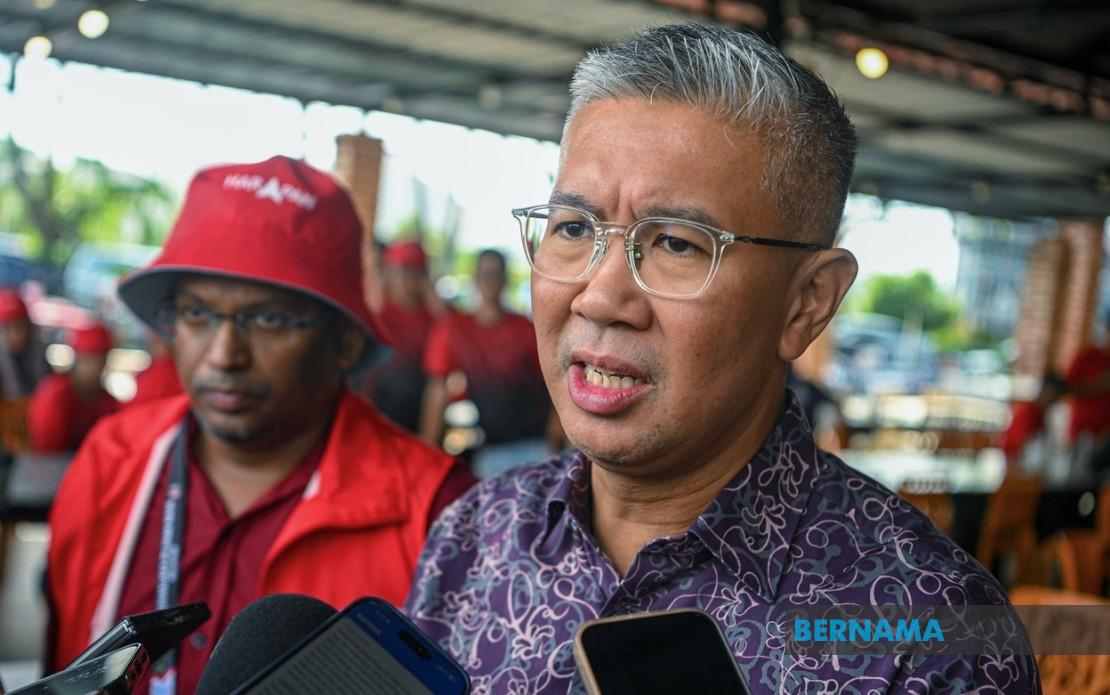
As Negeri Sembilan gears up for its 16th state election, Prime Minister Tengku Datuk Seri Zafrul Tengku Abdul Aziz has injected a note of pragmatism into the electoral debate, urging voters to look beyond campaign promises and assess parties based on their demonstrated capacity to translate pledges into tangible outcomes. Speaking in Port Dickson on July 26, the senior political advisor stressed that manifestos should be evaluated not on their ambitions alone, but on whether the parties proposing them possess the institutional capability and political will to execute their commitments once granted a mandate by the electorate.
This framing represents a subtle but significant shift in how Malaysian state elections are being pitched. Rather than engaging solely in the traditional parade of promises that characterises campaign season, Tengku Zafrul's intervention suggests a broader push among governing coalition politicians to redirect voter attention towards verifiable implementation records. The emphasis on delivery over rhetoric carries particular weight in Negeri Sembilan, where the Pakatan Harapan administration has had more than two years to demonstrate its ability to govern and fulfil electoral pledges. For a coalition that has experienced significant electoral turbulence nationally, focusing scrutiny on local governance achievements offers a potentially more defensible position than engaging in promise-making contests.
The political landscape in Negeri Sembilan presents a three-cornered contest at the state level, with Pakatan Harapan, Barisan Nasional, and Perikatan Nasional each presenting distinct manifestos reflecting their respective political philosophies and priorities. Tengku Zafrul acknowledged that each coalition articulates its own focus areas and commitments, but he positioned the Pakatan Harapan government's record as evidence that it possesses the capability to implement what it promises. This argument hinges on the notion that voters should extrapolate from past performance to predict future delivery, a logic that works favourably for an incumbent administration but may hold less resonance for voters seeking change or dissatisfied with existing governance.
The Pakatan Harapan government in Negeri Sembilan has had approximately two years and eight months to implement its initial campaign commitments. According to Tengku Zafrul's assessment, many of the promises outlined in the coalition's manifesto have already been realised in concrete form. However, the specifics of which commitments have been fulfilled and which remain outstanding remain somewhat opaque in the public discourse, suggesting an opportunity for more granular public reporting on state-level achievements. Such transparency would strengthen the incumbent's electoral position by providing voters with verifiable evidence rather than relying on political assertions about performance.
In the closely watched Sri Tanjung constituency, Pakatan Harapan candidate Datuk Dr G. Rajasekaran is contesting against four opponents: A. Achuthan representing Barisan Nasional, M. Leevineshwaraan from Bersatu, and two independent candidates, Datuk A. Saravanan and Islah Wahyudi. This five-way contest exemplifies the fragmented political environment in parts of Negeri Sembilan, where voters face a genuinely complex choice among multiple serious contenders. Rajasekaran's confidence in retaining the seat, which he attributed to positive voter responses during campaigning, reflects the incumbent's typical advantages in name recognition and the machinery of an established political organisation.
Tengku Zafrul's comments also addressed concerns about internal strife within Pakatan Harapan, specifically reports of divisions within the Negeri Sembilan PKR and alleged sabotage attempts against party candidates. These allegations, if substantiated, would represent a significant liability for the coalition, suggesting internal dysfunction that could impair its ability to govern effectively. However, Tengku Zafrul dismissed these claims, stating that his observations across multiple constituencies indicated no such problems existed within the party machinery. His characterisation warrants scrutiny, as internal party tensions in Malaysian politics rarely disappear entirely; rather, they often operate beneath the surface before erupting visibly during critical moments.
The timing of these electoral contests carries broader implications for Malaysian politics beyond Negeri Sembilan's borders. State elections serve as crucial indicators of national political sentiment, testing the durability of coalition arrangements and providing early warnings of potential electoral shifts. The Negeri Sembilan polls will be scrutinised for signs of whether the Pakatan Harapan coalition can stabilise its political position or whether Perikatan Nasional's recent electoral gains will continue accumulating at the expense of established parties. For Barisan Nasional, these elections represent an opportunity to demonstrate relevance in a political landscape that has shifted dramatically since 2018.
The electoral calendar shows early voting scheduled for Tuesday, July 28, with main polling day set for August 1. This compressed timeframe means campaigns must achieve maximum impact in a relatively short window. Voters will cast ballots amid ongoing discussions about inflation, economic management, and state-level service delivery—issues that resonate across Malaysian electoral politics but manifest distinctly in individual states based on local conditions and priorities. The manifestos' treatment of these bread-and-butter issues, and the credibility of parties' claims to address them, should feature prominently in voter deliberations.
Tengku Zafrul's emphasis on implementation capacity rather than mere promise-making reflects a maturation in electoral discourse that could benefit Malaysian democracy if it takes deeper root. Voters armed with accurate information about what each party has actually achieved in comparable situations gain the ability to make more informed decisions. However, this framework also places incumbent administrators in a privileged position, as they can point to concrete achievements whereas opposition parties can only offer theoretical plans. Opposition parties must therefore focus on explaining why their proposed alternative approaches would yield better outcomes than continuation of present arrangements, a more challenging rhetorical task than simply offering new promises.
The underlying tension in Negeri Sembilan's election centres on whether voters prioritise continuity or change, demonstrated competence or new vision. Tengku Zafrul's messaging implicitly argues for continuity based on demonstrable achievement, but this argument succeeds only if voters perceive the incumbent government as genuinely delivering on multiple fronts rather than merely managing crises. For many Malaysian voters, particularly those experiencing economic pressures or service deficiencies, even a government with a reasonable track record may face electoral difficulties if it has not tangibly improved their daily lives. The Negeri Sembilan result will provide insights into whether Pakatan Harapan's national coalition partners can anchor their political recovery in demonstrable state-level governance successes.

