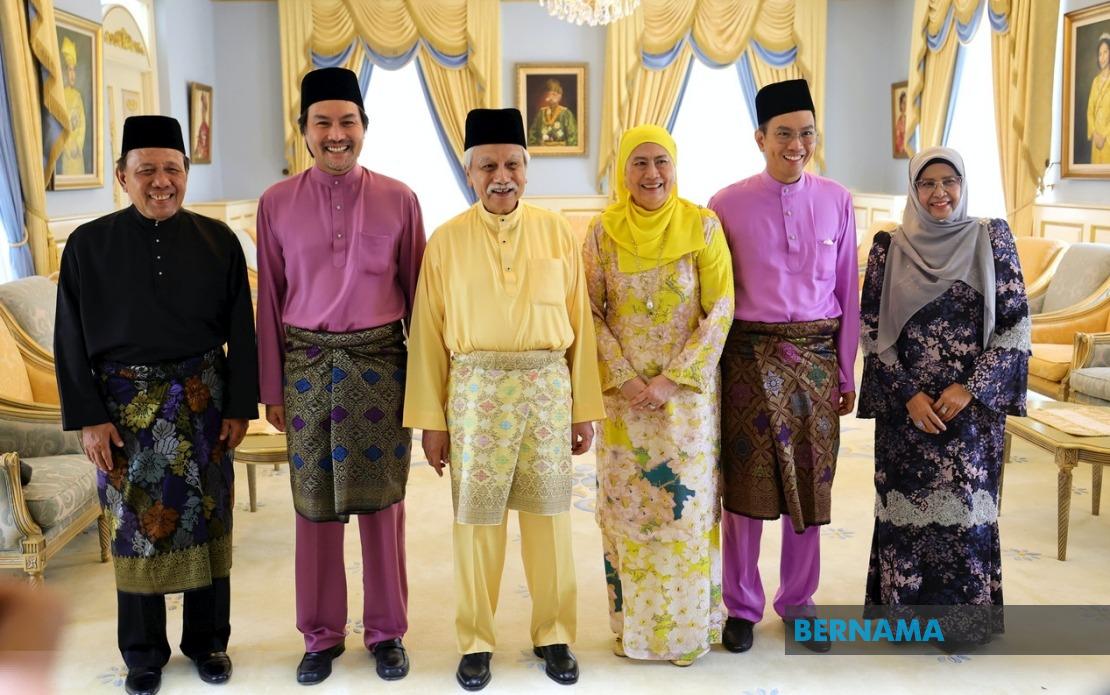
Datuk Ismail Lasim has committed to completing Negeri Sembilan's state cabinet formation by the end of this week, signalling a swift transition following his swearing-in as Menteri Besar. Speaking at his inaugural press conference in Kuala Pilah, the Juasseh assemblyman outlined a structured approach to assembling the executive council, emphasising the need for internal party discussions before formal approval from Tuanku Muhriz Tuanku Munawir, the state ruler.
The timeline reflects pressure from the palace for expedited governance arrangements. Ismail acknowledged that Tuanku Muhriz has expressed preference for swift resolution of the cabinet composition, a signal of the crown's desire for stable administration following the recent state election. This urgency is not unusual in Malaysian politics, where rulers typically expect governments to be fully operational shortly after their electoral mandates are clear.
Ismail's approach involves multiple layers of consultation that will unfold concurrently rather than sequentially. He intends to engage with Barisan Nasional leadership to develop the proposed lineup, then seek counsel from UMNO president Datuk Seri Dr Ahmad Zahid Hamidi regarding the broader coalition structure. This hierarchical consultation process reflects the intricate power dynamics within Malaysia's major political coalitions, where state-level appointments often require approval from national party headquarters.
The potential inclusion of Perikatan Nasional representatives in the executive council represents a significant development in the state's political landscape. Unlike some state administrations where one coalition dominates all executive positions, Negeri Sembilan's electoral outcome—with Barisan Nasional securing 18 of 36 seats and Perikatan Nasional winning seven—creates genuine grounds for meaningful power-sharing. Ismail has indicated this possibility requires explicit sign-off from Ahmad Zahid, underscoring UMNO's controlling interest in the arrangement.
The composition of the state assembly reflects a comfortable governing majority for the two coalitions combined. The 25-seat combined advantage of BN and PN far exceeds the 19 seats required for a simple majority in the 36-seat chamber, providing the government substantial legislative flexibility. This commanding position allows for policy experimentation and reduces dependency on independent assemblymen or defections, at least in the short term.
On the structural question of cabinet size, Ismail favours maintaining Negeri Sembilan's traditional ten-member executive council. This represents neither expansion nor contraction from previous administrations, suggesting continuity in governance capacity. The decision to preserve existing structures reflects pragmatism—administrative familiarity and established ministry portfolios provide institutional stability during transitions. However, the final size remains subject to broader coalition negotiations, particularly if Perikatan Nasional's representation necessitates additional positions.
The distribution of portfolios presents the most delicate aspect of cabinet formation in coalition governments. Ismail has deferred detailed discussions until after national-level consultations conclude, a sensible approach that prevents premature commitments or public disagreements. In Malaysian practice, particularly in BN coalitions involving UMNO, MCA, and MIC, portfolio allocation traditionally reflects both party strength and ethnic community representation, with senior economic and security posts typically reserved for UMNO and secondary posts distributed to coalition partners.
For Malaysian observers, this cabinet formation process illustrates broader patterns in contemporary Malaysian politics. The involvement of Perikatan Nasional represents a significant shift from pre-2020 norms, when Perikatan was either non-existent or in opposition. The normalisation of BN-PN cooperation at state level, previously rare outside Sabah and Sarawak, reflects the fragmentation of Malaysia's party system and the practical necessity of coalition-building to achieve legislative majorities.
The timing of Ismail's appointment itself merits consideration. The swift transition from electoral results to government formation, with cabinet details to follow within days, demonstrates how Malaysian states can move with greater speed than the federal government often manages. This efficiency partly reflects smaller assembly sizes, fewer stakeholders, and reduced media scrutiny compared to national politics, though state-level appointments remain consequential for local policy implementation.
For Negeri Sembilan residents, the cabinet formation carries practical significance regarding healthcare, education, infrastructure, and economic development—portfolios typically controlled at state level. The choice between continuity and reform in ministerial assignments will shape the state government's capacity to implement new initiatives or maintain existing programmes. The inclusion of Perikatan representatives, should that proceed, may introduce different policy priorities or approaches compared to previous administrations.
The consultation with Ahmad Zahid also signals ongoing federal oversight of state arrangements. UMNO's national leadership maintains significant influence over state-level cadre and policy direction, a reality that shapes what appears to be state autonomy. This hierarchy reflects Malaysia's dominant-party system, where national party structures exercise substantial control over constituent state organisations, particularly within Barisan Nasional.
As Negeri Sembilan moves toward its new administration, the cabinet formation process will establish the government's functional capacity. The ability of Ismail and his executive council to work cohesively will determine whether the two-thirds majority translates into effective governance or becomes a source of internal friction. The coming weeks will reveal whether this coalition arrangement, novel at state level, can develop into a stable governing partnership or faces strains typical of multi-coalition governments in Malaysia.

