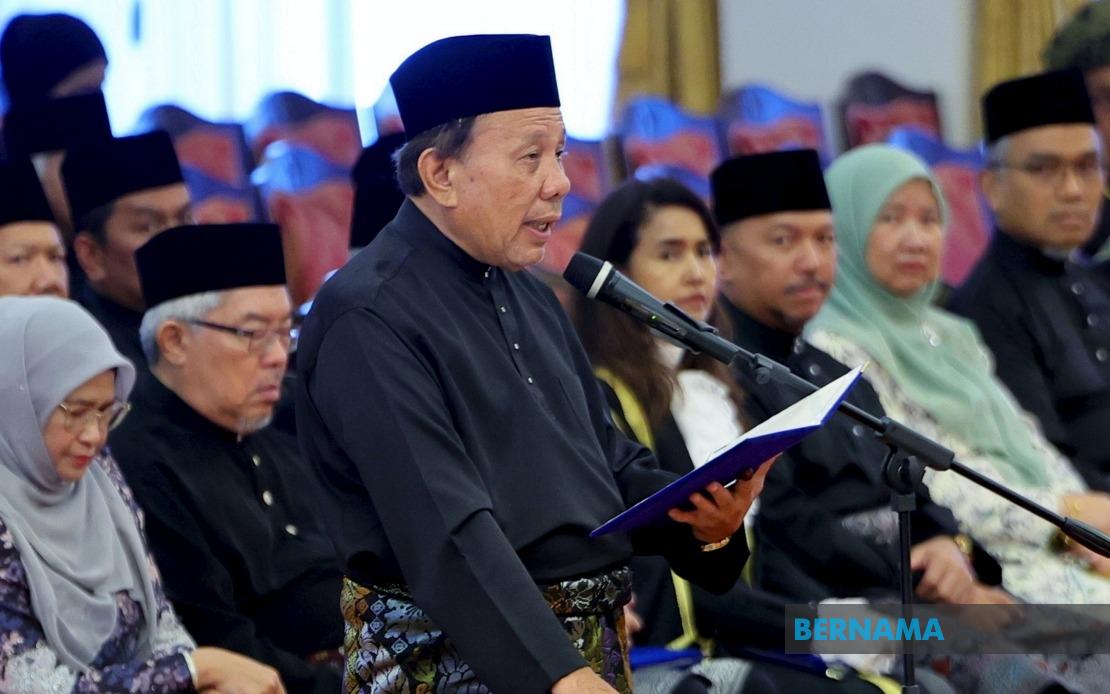
Datuk Ismail Lasim took the oath of office as Negeri Sembilan's latest Menteri Besar in a ceremony at Istana Besar Seri Menanti in Kuala Pilah, reaffirming his commitment to wielding executive power in service of the people. During his address before Yang Dipertuan Besar Tuanku Muhriz Tuanku Munawir, the newly installed leader outlined a vision centred on transparent administration, responsive governance and measured economic progress that acknowledges both urban and rural needs.
The electoral mandate delivered in the 16th Negeri Sembilan State Election represents both privilege and responsibility, according to Ismail's perspective. Rather than viewing the election result as mere political victory, he characterised the public's confidence as a solemn obligation to demonstrate that governmental authority serves collective interests. This framing positions the incoming administration against transactional politics, instead emphasising accountability to constituents who granted the mandate through their ballots.
Ismail signalled his intention to preserve Negeri Sembilan's constitutional and customary traditions as governing foundations. The state's application of Adat Perpatih—a matrilineal customary system grounded in consensus-building, equitable resource distribution and collective wisdom—distinguishes Negeri Sembilan from other Malaysian states. By pledging to maintain and transmit these values to future generations, Ismail anchored his administration within the state's distinctive cultural and legal heritage rather than imposing external governance models.
Economic revitalisation emerged as a central pillar of his stated agenda. The incoming Menteri Besar committed to strengthening Negeri Sembilan's commercial foundations through targeted foreign investment attraction, employment expansion, and living standards improvement. Complementing these conventional development metrics, he identified healthcare, education, housing and agricultural productivity as interconnected priorities requiring coordinated policy interventions. This comprehensive approach acknowledges that sustainable prosperity extends beyond gross domestic product figures to encompass human capital development and social infrastructure.
Ismail's definition of progress diverges notably from infrastructure-centric development narratives that have historically dominated Malaysian state governance. He insisted that meaningful advancement must incorporate social cohesion, institutional robustness and public trust in administrative systems alongside physical infrastructure and economic growth. This perspective carries particular significance for Negeri Sembilan, a state balancing industrial expansion with preservation of its rural communities and distinctive cultural identity.
The role of the royal institution in state governance received explicit acknowledgement, with Ismail pledging unwavering respect for Tuanku Muhriz's authority and constitutional prerogatives. He committed to upholding Federal and State constitutions while soliciting royal counsel on substantive governance matters. This deference to constitutional monarchy principles represents a deliberate alignment with Malaysia's fundamental law and existing power-sharing arrangements between elected and hereditary leadership.
Transparency and integrity were positioned as operational foundations rather than aspirational rhetoric. Ismail pledged that state civil servants would maintain elevated standards of professionalism and accountability, suggesting that administrative effectiveness depends substantially on bureaucratic conduct. For Malaysian readers observing state governance across the federation, such commitments address persistent concerns about service delivery inconsistency and perceived bureaucratic inefficiency that frustrate citizens accessing government benefits and permits.
Consultative governance and openness to constructive criticism formed another declared commitment. By emphasising consensus-building and receptiveness to alternative viewpoints, Ismail suggested a collaborative rather than authoritarian administrative style. This approach carries practical implications for stakeholder engagement, suggesting civil society, opposition figures and affected communities would receive genuine consideration rather than perfunctory acknowledgement in policy formulation.
Recognising his predecessor Datuk Seri Aminuddin Harun's contributions positioned continuity within Negeri Sembilan's development trajectory. Rather than repudiating prior administration achievements, Ismail framed existing infrastructure and policy foundations as platforms enabling accelerated progress. This continuity perspective proves significant in Malaysian state politics, where transitions between administrations occasionally precipitate policy reversals that disrupt ongoing projects and confuse stakeholders regarding consistent governmental direction.
The emphasis on federal-state coordination and partnerships across governmental, private and community sectors reflects contemporary governance realities in Malaysia's federalised system. Negeri Sembilan's economic development depends substantially on federal resource allocation, coordination with federal agencies managing critical infrastructure, and cooperation between state and federal authorities. Ismail's explicit commitment to strengthening these relationships signals pragmatic recognition that state-level ambitions require alignment with national priorities and federal support mechanisms.
For investors and businesses considering Negeri Sembilan expansion, Ismail's investment attraction pledge carries tangible implications. The state has historically competed with Selangor and Kuala Lumpur for manufacturing and service sector development, requiring deliberate policy frameworks addressing investor concerns. Transparency commitments and promised economic strengthening may signal an administration willing to streamline approval processes and provide regulatory predictability—factors substantially influencing commercial location decisions.
The new Menteri Besar's approach to social welfare, education and healthcare improvement reflects broader Malaysian expectations that state governments address quality-of-life concerns alongside conventional economic metrics. As federal social programmes often remain inadequate, state-level supplementary initiatives gain importance. Ismail's specific mentions of these sectors suggest targeted resource allocation and policy attention rather than peripheral consideration.
Ultimately, Ismail's inaugural address outlined an administrative philosophy balancing modernisation with cultural preservation, economic expansion with social inclusivity, and centralised leadership with consultative decision-making. Whether this framework translates into effective implementation will determine Negeri Sembilan's trajectory and establish precedents for evaluating comparable claims made during subsequent state government transitions across Malaysia.

