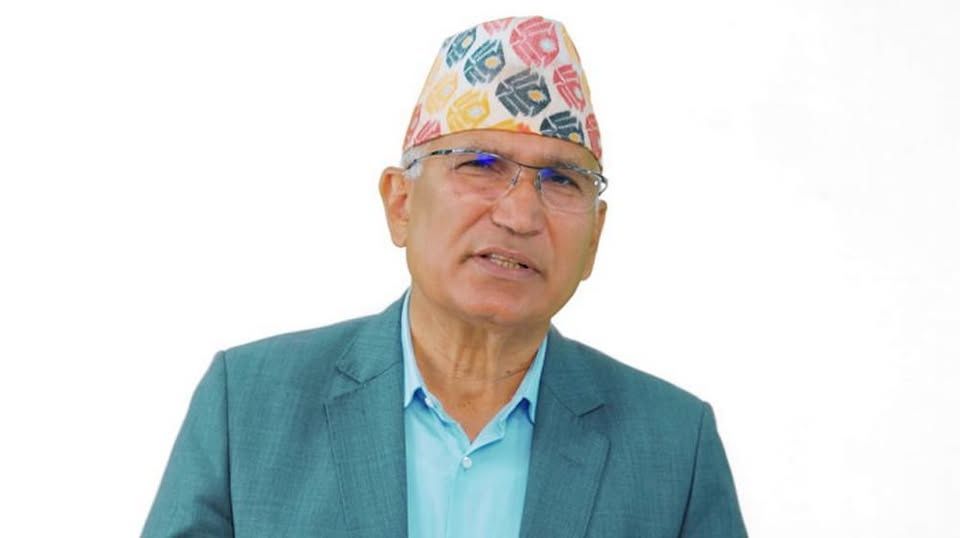
Nepal's police arrested former finance minister Bishnu Paudel on Monday on suspicion of involvement in money-laundering, marking another significant development in the country's intensifying anti-corruption drive. The arrest, announced by Nepal Police spokesman Abhi Narayan Kafle on Tuesday, represents a continuation of the government's stated commitment to tackling graft following the tumultuous 2025 political upheaval that brought Prime Minister Balendra Shah, a former rapper-turned-politician, to power.
Paudel holds the position of vice-chair within the Communist CPN-UML party, the political vehicle of ex-prime minister KP Sharma Oli whose administration was dismantled during the September 2025 uprising. The case carries significant political weight given Paudel's prominent role within a major opposition faction. His detention signals that the anti-corruption campaign extends beyond individual officials to encompass the previous regime's wider leadership structure, a development that underscores the profound political realignment that followed the street protests.
The former finance minister's arrest comes amid a broader pattern of legal action targeting individuals associated with Oli's government. In March, just one day after Shah assumed office, police arrested Oli himself alongside former interior minister Ramesh Lekhak for alleged involvement in the deadly security response to the 2025 demonstrations. Both men were released after approximately two weeks in custody without formal charges being lodged, and each has consistently denied responsibility for the violence that claimed at least 76 lives and injured more than 2,500 people.
The political opposition has been swift and pointed. Oli characterised Paudel's detention as a "political stunt" designed to weaponise the judicial system, levelling accusations that Shah's administration is adopting authoritarian tactics. Such claims reflect deep-seated tensions between the ruling coalition and the CPN-UML as they compete for political legitimacy and public support in post-crisis Nepal. This polarisation carries implications for regional stability, as Nepal's domestic political divisions can influence its broader relationships with neighbouring India and China.
CPN-UML party officials have adopted a measured public stance, with publicity head Niraj Acharya pledging respect for legal processes while simultaneously criticising what the party characterises as discriminatory enforcement. This balancing act reflects the delicate position opposition parties occupy when contesting cases that ostensibly serve anti-corruption objectives. The party's strategy suggests it intends to contest the charges through procedural and political means rather than simply accepting judicial outcomes.
Shah's election in March represented a mandate for decisive action against systemic corruption that had become a defining grievance fuelling the 2025 protests. The initial demonstrations emerged around a temporary social media prohibition but rapidly evolved into broader expressions of public discontent regarding official malfeasance and economic stagnation. This trajectory mirrors patterns seen across South Asia, where anti-corruption sentiment frequently intersects with demands for fundamental governance reform and economic redress.
Beyond Paudel's case, Nepal's anti-corruption mechanisms are pursuing multiple high-profile investigations. The Commission for Investigation of Abuse of Authority has filed charges against sixteen individuals, including the passport department's chief, in connection with an alleged $66 million procurement fraud centring on electronic passport systems. According to spokesperson Suresh Neupane, the investigation focuses specifically on embezzlement within the e-passport procurement process, suggesting institutional vulnerabilities that extend across Nepal's bureaucratic apparatus.
The convergence of these investigations reveals a governance landscape marked by pervasive financial irregularities and institutional weaknesses. For Malaysian observers, Nepal's experience offers instructive parallels regarding the challenges of pursuing comprehensive anti-corruption campaigns without allowing political rivalries to compromise judicial independence. The risk that legitimately targeting official malfeasance becomes instrumentalised for partisan advantage remains a persistent concern in post-protest transitions across the region.
Nepal's new government faces the demanding task of rebuilding public confidence in institutions while simultaneously pursuing accountability for past wrongdoing. The stakes extend beyond immediate political considerations to encompass the country's economic recovery and social cohesion. International observers, including potential development partners, are closely monitoring whether the anti-corruption drive proceeds through impartial legal channels or becomes subverted by factional interests seeking to consolidate power through judicial means.

