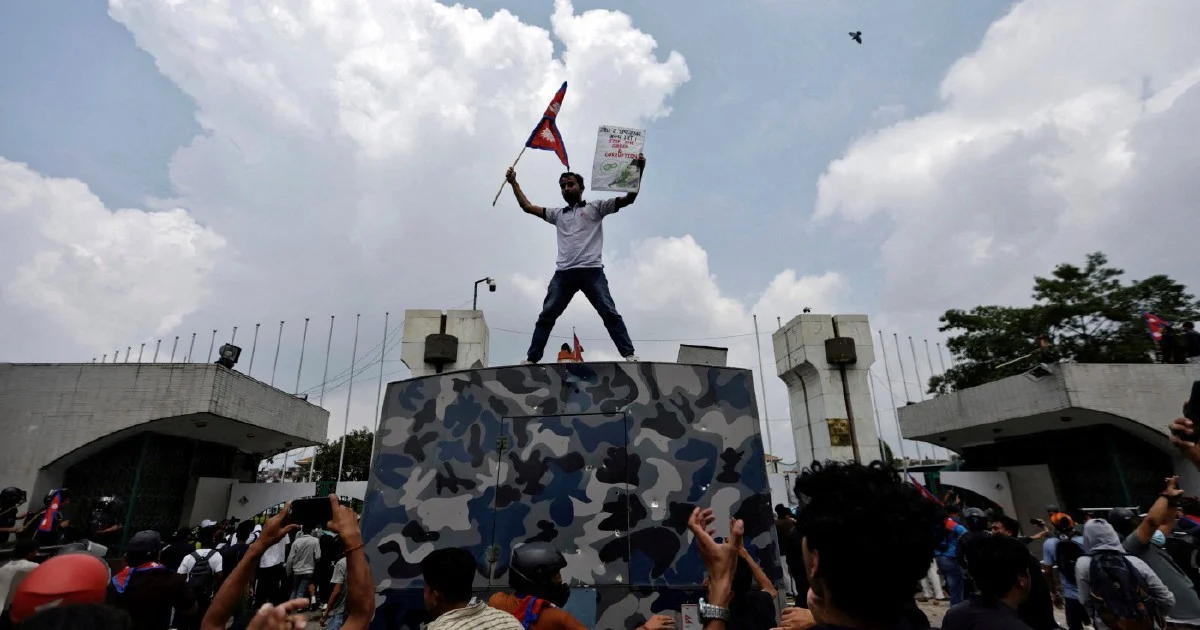
Bishnu Prasad Paudel, who previously served as Nepal's finance minister, was taken into custody late Monday following allegations of money laundering, according to statements issued by police authorities in Kathmandu. The arrest marks a significant development in what has become an increasingly aggressive investigation into financial misconduct allegedly perpetrated during earlier administrations.
The detention of Paudel comes as Nepal's current government, which draws substantial support from younger voters, continues to expand its focus on rooting out what it characterises as systemic corruption from previous political periods. This enforcement action reflects a broader strategy of accountability that has become a defining feature of the present administration's governance agenda, demonstrating a determination to pursue high-level officials regardless of their former positions or political standing.
Money laundering investigations in Nepal have historically been complicated by challenges within the country's financial regulatory framework and the cross-border nature of many suspected violations. The case against Paudel may involve allegations that funds from illicit sources were channelled through legitimate financial institutions or business operations to obscure their origins—a common pattern in such investigations across South Asia.
For Malaysian observers, the Nepali government's enforcement approach offers important lessons about the political dynamics surrounding anti-corruption campaigns in developing democracies. While high-profile arrests generate public confidence in accountability efforts, sustaining credible prosecutions requires robust evidence collection and transparent judicial processes. Nepal's experience demonstrates the tension between political momentum for reform and the institutional capacity required to convert arrests into convictions.
The timing of Paudel's arrest reflects how Nepal's political landscape has shifted with generational change. Unlike previous administrations that were often characterised by accommodation among elite groups, the current government appears willing to pursue cases against former officials with greater vigour. This represents a notable departure from patterns of mutual protection that have historically allowed alleged corruption to proceed with minimal consequence in Nepali politics.
Regional analysts note that money laundering crackdowns in South and Southeast Asia have intensified as countries seek to comply with international financial standards and combat the movement of illicit capital across borders. Nepal's actions align with broader regional efforts to strengthen anti-money laundering frameworks, though questions remain about whether enforcement will be applied uniformly or selectively based on political considerations.
The case carries implications for Nepal's international standing and financial relationships. Demonstrating credible action against high-level financial crimes can enhance a country's reputation with foreign investors and international financial institutions. Conversely, if prosecutions appear politically motivated rather than evidence-based, they may undermine confidence in Nepal's judicial system and economic governance at a critical moment when the country seeks to attract investment and international engagement.
Paudel's detention also raises questions about potential asset recovery and whether investigations will extend beyond the individual former minister to examine networks and institutions allegedly involved in transferring questionable funds. The scope of such investigations often determines whether anti-corruption efforts produce meaningful reform or serve primarily symbolic purposes.
For Malaysia's policy circles, Nepal's case underscores the importance of institutional independence in handling corruption investigations. While the political determination to address past misconduct is commendable, sustained public trust depends on evidence-based proceedings conducted through impartial courts rather than enforcement driven by electoral cycles or factional competition. The challenge facing Nepal—as it faces many emerging markets—is converting political will into institutional mechanisms that can ensure fairness and effectiveness.
The arrest also highlights regional vulnerabilities to financial crime. Money laundering networks often exploit inconsistencies across South Asian regulatory systems and benefit from limited cross-border cooperation. Nepal's decision to pursue this case independently, without apparent international component initially reported, suggests that investigations may be focusing on domestic fund movements rather than transnational financial flows—potentially limiting their ultimate effectiveness in disrupting organised crime or corruption networks.
Observers anticipate that coming weeks will reveal more details about the specific allegations against Paudel, the evidence authorities have compiled, and whether additional figures from previous administrations will face similar scrutiny. The manner in which Nepal's judicial system handles this case will significantly influence perceptions about whether the country is establishing credible long-term mechanisms for accountability or pursuing episodic enforcement shaped by political convenience.

