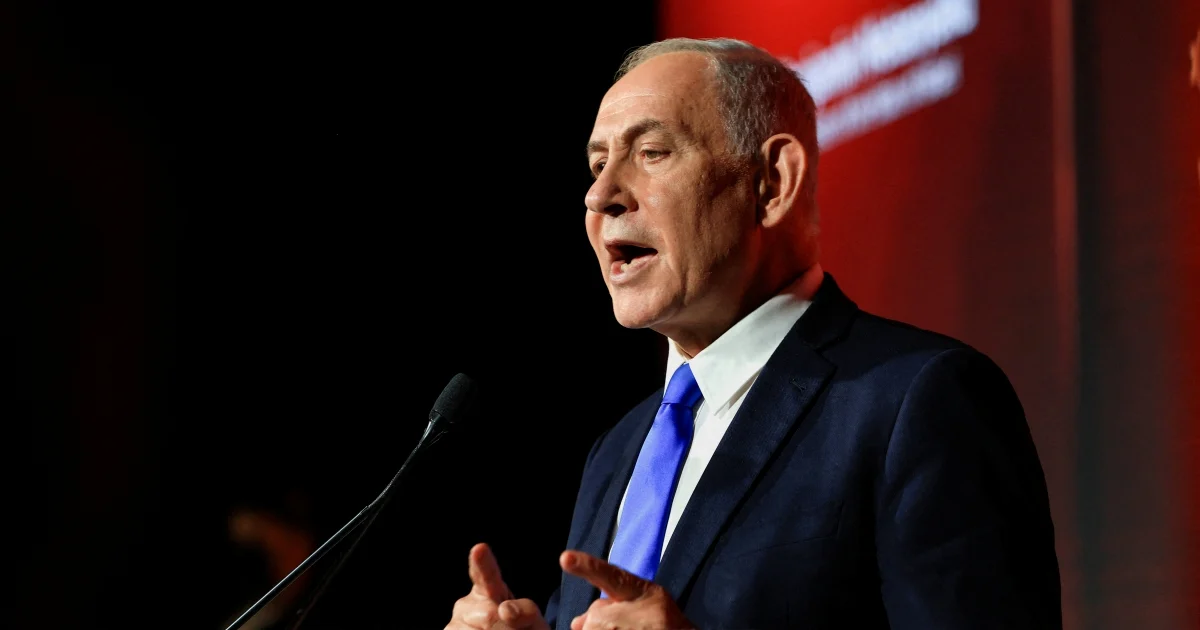
Israeli Prime Minister Benjamin Netanyahu announced on Sunday that his country's military forces will sustain their deployment in southern Lebanon without a fixed timeline, contingent on what Israeli leadership deems necessary for regional security objectives. The statement represents a significant commitment to an extended military footprint in Lebanese territory and signals the Israeli government's willingness to pursue long-term strategic positioning in the area, despite potential diplomatic repercussions and the humanitarian toll of sustained military operations.
The assertion comes amid heightened regional tensions and reflects Israel's broader security calculus regarding Lebanon, where Hezbollah maintains considerable influence and military capacity. Netanyahu's remarks underscore the complexity of Israel's security challenge along its northern frontier, where the militant organisation has accumulated an arsenal of rockets and missiles that Israeli planners view as a persistent existential threat. The positioning of Israeli troops in southern Lebanon represents a defensive strategy intended to establish a buffer zone and prevent cross-border attacks that have periodically escalated into major conflicts.
For Malaysian policymakers and regional observers, Netanyahu's commitment to an indefinite military presence carries implications for broader Middle Eastern stability and the international legal framework governing armed conflict. The statement raises questions about the duration and scope of Israeli military operations, particularly given that such prolonged occupations typically invite scrutiny from the United Nations, human rights organisations, and the international community more broadly. Malaysia, as a vocal proponent of Palestinian rights and a nation with considerable diplomatic influence in non-aligned circles, may view such declarations as indicative of Israeli security strategies that prioritise military solutions over diplomatic engagement.
Simultaneously, Netanyahu reinforced Israel's unwavering opposition to Iranian nuclear advancement, a cornerstone of Israeli foreign policy that has shaped regional military calculations for decades. The Prime Minister's dual emphasis on both the Lebanese deployment and the Iranian nuclear dimension reveals how Israeli security doctrine integrates multiple threat assessments across the Middle East, treating them as interconnected challenges requiring sustained military vigilance and diplomatic pressure. This integrated approach reflects Israel's view that containing Iranian influence in the Levantine region, including through Hezbollah proxies in Lebanon, remains inseparable from broader nuclear non-proliferation concerns.
The Iranian nuclear question has reverberated through regional diplomacy and international relations since the 2015 Joint Comprehensive Plan of Action, which Israel opposed and from which the United States withdrew in 2018. Netanyahu's rhetorical emphasis on preventing Iranian nuclear weapons development serves multiple audiences: it reassures Israeli domestic constituencies, signals resolve to Western allies, and communicates deterrent messaging to Iran. For Southeast Asian nations that have navigated complex relationships with both Iran and Israel, such statements complicate efforts to maintain balanced regional diplomacy and undermine initiatives promoting broader Middle Eastern dialogue.
The timing of Netanyahu's remarks coincides with ongoing security developments in the eastern Mediterranean and Middle East, where Israeli military capabilities have increasingly extended across air and naval dimensions. The Israeli government's confidence in articulating indefinite military commitments reflects both the military superiority Israel maintains over its immediate adversaries and the domestic political support Netanyahu commands for assertive security policies. However, such declarations also risk prolonging conflicts and reducing incentives for negotiated settlements, dynamics that Southeast Asian nations with interests in conflict resolution and international law generally seek to discourage.
From a Lebanese perspective, Netanyahu's announcement represents a continuation of Israeli military intervention that complicates the country's already fragile political situation and stymies reconstruction efforts in the south. Lebanon's government, already burdened by economic collapse and institutional weakness, finds itself unable to enforce Lebanese sovereignty over its southern territories, effectively ceding control to Israeli military forces. This situation creates a governance vacuum that could be exploited by various armed groups and undermines Lebanon's capacity to rebuild and stabilise its society.
The international legal dimensions of Netanyahu's statement warrant consideration by Malaysia and other nations committed to the rules-based international order. Occupations and military deployments in foreign territory typically require consent from the host government or mandate from international bodies such as the United Nations Security Council. Israeli military operations in Lebanon operate in a grey zone, neither formally concluded through peace treaties nor explicitly authorised by the Security Council under current circumstances. This ambiguity creates precedent risks for other nations and potentially weakens the international legal framework that developing countries rely upon for protection against more powerful neighbours.
Malaysia's maritime interests and trading relationships require stability throughout the Middle East and Mediterranean regions. Prolonged Israeli military operations in Lebanon, especially if they escalate into wider conflicts involving Hezbollah or Iranian proxies, could disrupt shipping lanes, increase insurance costs, and create humanitarian refugee flows that regional nations must accommodate. The economic interdependencies created by global trade mean that security deterioration in the eastern Mediterranean directly affects Malaysian commerce and the broader Southeast Asian economy.
Israeli domestic politics also shape Netanyahu's assertive language regarding military commitments. His coalition government comprises parties with strong ideological commitments to security maximalism, and maintaining hardline rhetoric on both Lebanese security and Iranian nuclear threats helps consolidate political support among right-wing constituencies. The perpetuation of security threats, whether real or rhetorically amplified, serves political functions within Israeli governance and may influence the trajectory of Middle Eastern conflicts independently of immediate military necessities.
Regional powers including Saudi Arabia, the United Arab Emirates, and Egypt have demonstrated varying willingness to engage with Israeli security initiatives, reflecting the complex diplomatic landscape shaped by normalisation agreements and shared concerns about Iranian regional activities. However, Israel's indefinite military commitment in Lebanon may complicate these diplomatic balancing acts and create friction with nations attempting to broker regional stability. For Malaysia, which maintains principled positions on Palestinian rights while recognising legitimate Israeli security concerns, navigating these shifting dynamics requires careful diplomatic calibration.
The prospects for resolution of Israeli-Lebanese security issues depend ultimately on addressing the underlying political and military dynamics that sustain regional tensions. Netanyahu's commitment to indefinite military presence, while reflecting genuine Israeli security assessments, simultaneously removes incentives for political solutions that might transform the calculus for all parties involved. Southeast Asian observers should recognise that sustained military deployments without clear diplomatic pathways typically entrench conflicts rather than resolve them, with consequences extending far beyond the immediate region affected.

