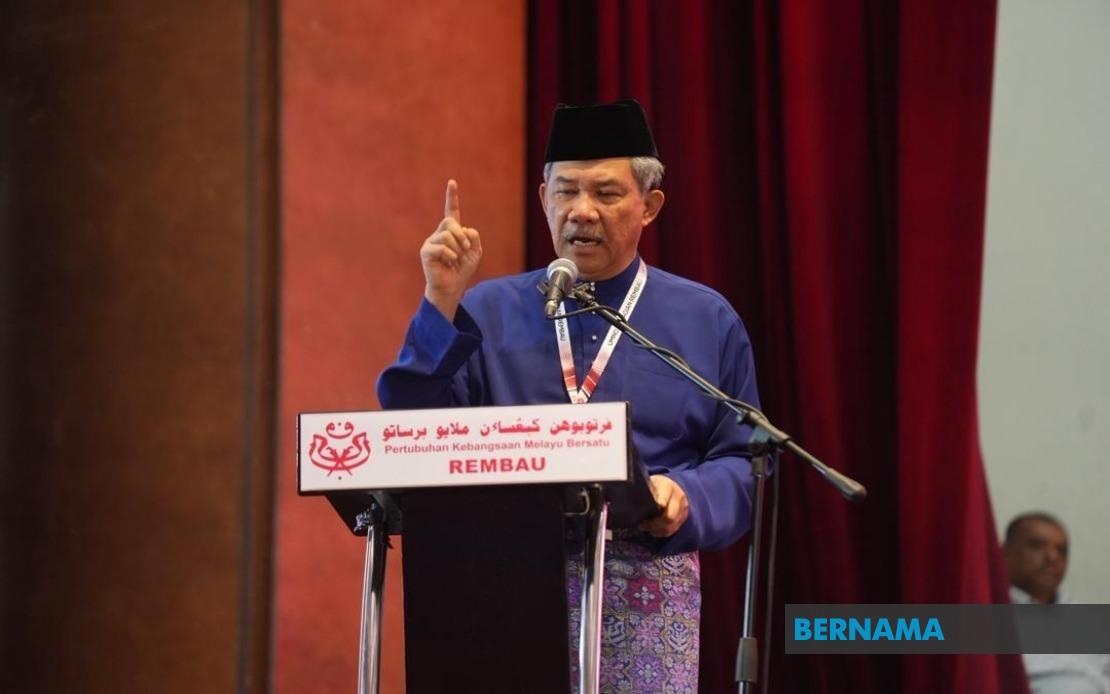
The Barisan Nasional (BN) deputy chairman Datuk Seri Mohamad Hasan has thrown his support behind the 10 freshly appointed members of the Negeri Sembilan State Executive Council, asserting that they possess the capacity to deliver quality assistance to the Menteri Besar and discharge their portfolio responsibilities in service of the state's populace. The formal ceremony took place at Istana Besar Seri Menanti, where all exco members completed their oath-taking before Tuanku Muhriz Tuanku Munawir, the Yang Dipertuan Besar of Negeri Sembilan.
As the Rantau State Assemblyman and a prominent figure within the federal-level BN leadership, Mohamad offered his perspective on the role and significance of state exco members within Malaysia's governance structure. He characterised the position as fundamentally intermediary in nature, functioning as a critical liaison point where government administration meets grassroots society. This bridging function, he suggested, demands both clarity in communicating state policies downwards to communities and attentiveness in collecting feedback, concerns, and suggestions upwards to inform decision-making.
The responsibilities shouldered by exco members extend well beyond ceremonial office. Mohamad emphasised that transparent communication of government initiatives forms an essential component of their work, particularly ensuring that constituents understand the rationale and intended benefits of policies affecting their daily lives. Without such explanation, he implied, even well-intentioned programmes risk misinterpretation or public resistance. Simultaneously, exco members must actively solicit input from the communities within their respective jurisdictions, capturing grievances, practical suggestions, and demographic perspectives that might otherwise remain invisible to state-level decision-makers.
Critically, Mohamad underscored the necessity for newly appointed exco members to undertake comprehensive briefings with the departments and agencies falling under their purview. This orientation process serves to equip them with detailed knowledge of administrative structures, operational procedures, regulatory frameworks, and current priorities within their assigned areas. Without such grounding in bureaucratic reality, even well-intentioned officials risk pursuing ineffective approaches or inadvertently duplicating efforts. The learning curve can be steep, particularly for those unfamiliar with state-level administration.
Maintaining robust working relationships between exco members and the various government departments represents another cornerstone of effective state governance. Mohamad flagged the importance of sustaining this institutional goodwill and operational harmony, reasoning that policy implementation depends fundamentally on collaborative action between political leadership and professional bureaucracy. When communication breaks down or tensions emerge between these spheres, implementation delays and inconsistencies inevitably follow, ultimately affecting service delivery to the public.
The timing of the swearing-in ceremony underscores the significance Negeri Sembilan's leadership attaches to cabinet renewal and institutional continuity. Each new exco cohort brings fresh perspectives and energy to governance, though the transition period always presents risks if incoming members lack adequate preparation or institutional knowledge. Mohamad's public expressions of confidence, while potentially routine in such circumstances, serve to signal to both the bureaucracy and the public that the new team enjoys the support of senior coalition partners.
For Malaysian observers, the composition and competence of state exco members matter considerably, as these officials directly influence service delivery in health, education, economic development, and infrastructure—areas affecting daily quality of life. Negeri Sembilan's experience thus offers a microcosm of broader patterns in how state-level governance operates across the federation. The state has historically served as a laboratory for BN political arrangements, making developments there potentially indicative of wider trends.
The broader context of Malaysian federalism adds another layer to this appointment. State excos operate within a framework where federal-state relations, constitutional provisions, and intra-coalition dynamics all exert influence. Negeri Sembilan's position within the peninsular political geography—neither a major industrial centre nor a peripheral state—places it in a position where governance quality significantly affects but does not entirely determine its economic trajectory. This relative autonomy makes the competence of its exco members particularly consequential.
Moving forward, the real test of these exco members will come not in the swearing-in ceremony but in the grinding work of implementing programmes, responding to constituent complaints, and navigating the inevitable tensions between political direction and bureaucratic feasibility. Mohamad's expressions of confidence, while supportive, ultimately rest on the performance these officials will deliver over coming months and years. The public will judge their effectiveness through concrete outcomes rather than statements of intent.

