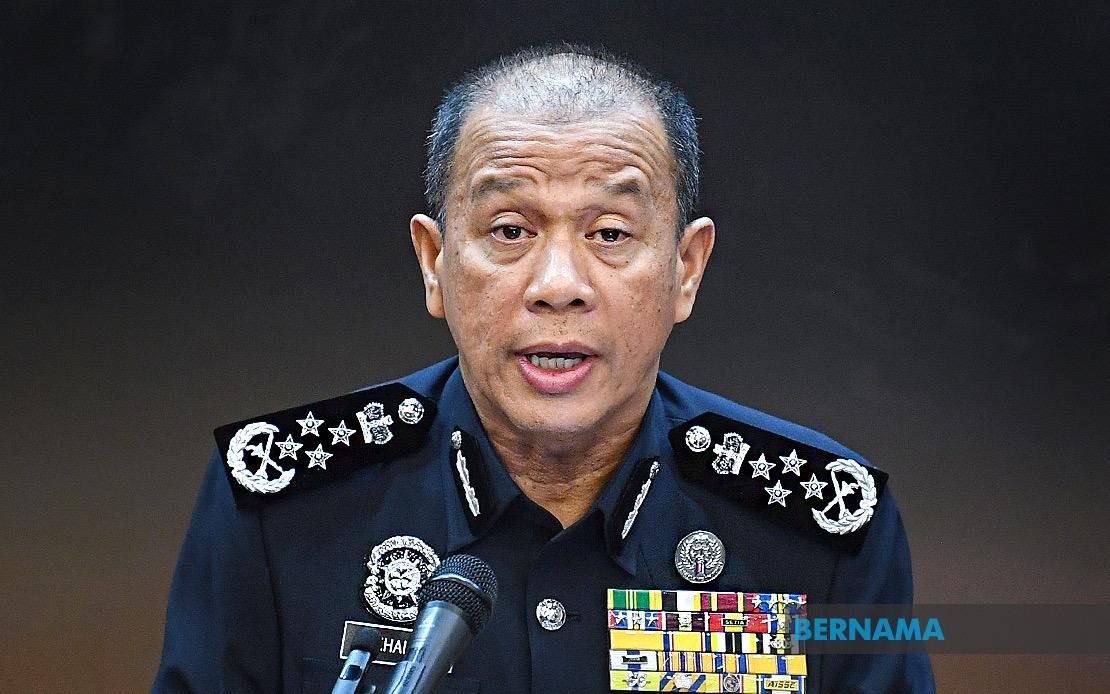
Malaysia's security establishment has welcomed a significant reform to how personnel within the Royal Malaysia Police and Malaysian Armed Forces advance their careers. Inspector-General of Police Tan Sri Mohd Khalid Ismail characterised the new promotion framework as a meaningful acknowledgement of the contributions made by officers and enlisted personnel tasked with maintaining national security and public order. Speaking on August 7, the IGP conveyed appreciation to Prime Minister Datuk Seri Anwar Ibrahim for prioritising improvements to career pathways within the security sector, describing the initiative as evidence of government responsiveness to long-standing concerns among uniformed personnel.
The structural overhaul addresses a perennial frustration within both the PDRM and MAF: bureaucratic delays in the advancement process. Prime Minister Anwar announced the government's in-principle agreement to streamline promotion procedures during his address at the Semarak Kenegaraan programme held at Terendak Camp. The objective is to align the security forces' promotion mechanisms with those governing the broader civil service, eliminating redundant administrative layers that have historically slowed career progression. This harmonisation represents a departure from parallel, sometimes divergent systems that previously characterised advancement within different government departments.
For the PDRM specifically, expedited promotion carries implications beyond individual career satisfaction. Mohd Khalid emphasised that smoother advancement pathways directly correlate with enhanced motivation among officers and operational personnel. When personnel perceive clearer career trajectories and fairer evaluation processes, institutional integrity strengthens and professional standards rise. This connection between career prospects and service quality is particularly relevant in policing, where officer morale directly influences interactions with the public and effectiveness in combating crime. The IGP noted that the government's commitment would reinforce PDRM's capacity to maintain the integrity, professionalism, and service standards essential for national safety.
The timing of this announcement carries symbolic weight. Prime Minister Anwar's declaration came during a military engagement, underscoring that the government views reform as benefiting both the police and armed forces equally. The detailed specifications of the new mechanism will be unveiled during Malaysia's Ambang Merdeka celebrations at Stadium Merdeka in Kuala Lumpur on August 30, a date deliberately chosen for its patriotic significance. This scheduling suggests the government intends to present the reform as part of a broader national strengthening narrative, framing investment in security personnel as investment in the nation's future.
For the broader Southeast Asian context, Malaysia's move reflects regional trends in how military and police establishments adapt to contemporary expectations around meritocracy and institutional transparency. Countries across the region have grappled with similar challenges: how to retain skilled personnel in security sectors while modernising promotion criteria and reducing perception of nepotism or arbitrary advancement. By aligning security force promotion with civil service standards, Malaysia positions itself as progressively reforming its institutions in line with contemporary public sector management principles.
The practical implementation of the new system will require extensive coordination between the PDRM, MAF, and relevant civil service bodies. Mohd Khalid's statement that the force stood ready to cooperate fully suggests the police leadership has already begun preparatory work. However, significant logistical and administrative questions remain: how will historical service records be evaluated under new criteria, what timeline will govern the transition, and how will grievances from personnel disadvantaged under previous systems be addressed? These implementation details, expected to accompany the August 30 announcement, will substantially determine whether the reform achieves its motivational objectives.
The morale dimension cannot be overstated. Personnel within both the PDRM and MAF have, for years, articulated frustration with promotion timelines and perceived inconsistencies in advancement criteria. Junior officers and non-commissioned personnel, in particular, have reportedly expressed concern that career progression felt arbitrary or excessively slow compared with civilian public service opportunities. By acknowledging these grievances and committing to systemic change, the government signals that it takes seriously the welfare of those bearing the greatest operational risks. This validation of longstanding concerns may itself generate short-term motivation improvements, independent of the reform's ultimate effectiveness.
Regionally, Malaysia's security personnel frequently engage in cross-border operations, maritime patrols, and coordinated exercises with counterparts from neighbouring nations. Career advancement incentives and institutional morale within the PDRM and MAF therefore have implications for regional stability and cooperation. Well-motivated, professionally advanced security forces tend to operate more effectively in joint operations and contribute more constructively to regional security dialogue. Conversely, institutional dissatisfaction can undermine operational cohesion and interagency coordination at critical moments.
The government's framing of this reform as part of its broader national security agenda reflects recognition that personnel motivation constitutes a strategic asset. Unlike physical infrastructure or equipment, which can be procured relatively quickly, institutional culture and personnel morale develop over extended periods and are difficult to rebuild if allowed to deteriorate. By proactively addressing promotion frustrations before they generate wider institutional disaffection, the government demonstrates strategic foresight in personnel management.
Looking ahead, the success of this initiative will depend on execution quality. The August 30 announcement will reveal whether the government has genuinely addressed structural obstacles to advancement or merely created cosmetic changes. Personnel will scrutinise whether the new mechanism truly eliminates bureaucratic delay or simply relocates administrative bottlenecks. Sustained monitoring of promotion timelines, demographic representation in senior ranks, and officer retention rates in the post-reform period will provide empirical evidence of whether the initiative achieves its stated objectives of strengthening motivation and professionalism across Malaysia's security establishment.

