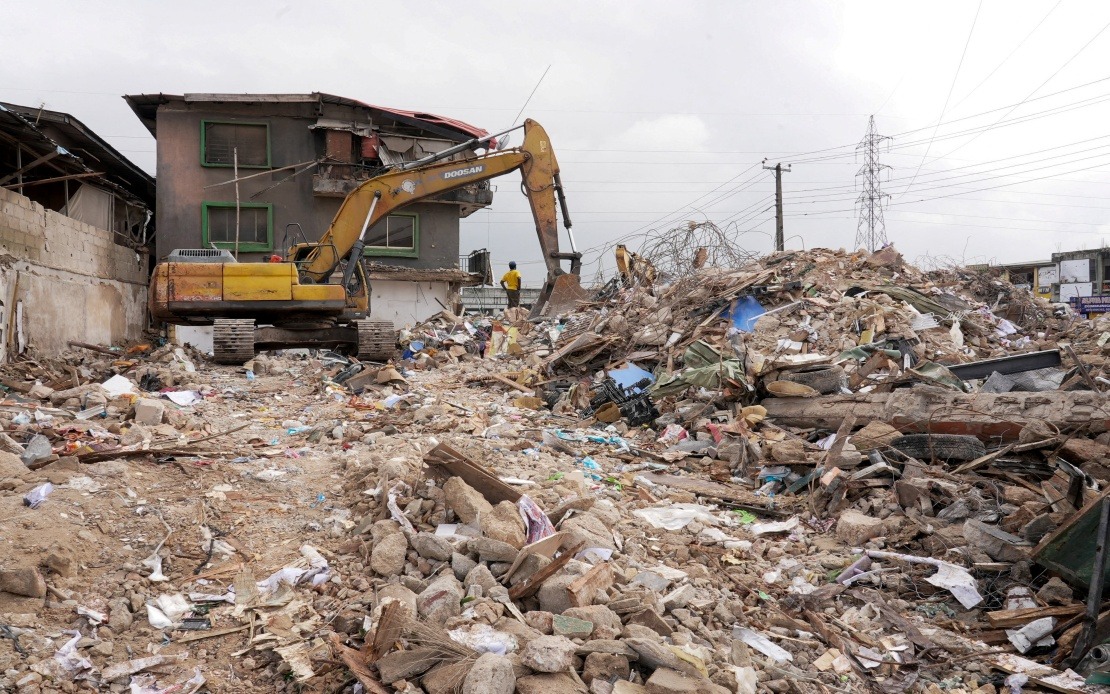
A three-storey shopping complex in the Alakija district of Lagos state has claimed nine lives, with 27 people rescued from the rubble following its collapse on Thursday morning. Nigerian authorities confirmed the conclusion of rescue operations on Friday after emergency responders worked continuously to extract victims buried beneath the debris of the commercial building situated along the Lagos-Badagry Expressway, a major arterial route serving Nigeria's most populous city.
Olufemi Oke-Osanyintolu, the permanent secretary of the Lagos State Emergency Management Agency, disclosed that rescue teams maintained around-the-clock operations to locate and extricate individuals trapped within the collapsed structure. The multi-agency response was mobilised swiftly after the building gave way, underscoring the scale of the emergency that confronted authorities in this satellite community experiencing rapid urban expansion.
Among the casualties and survivors were predominantly traders and patrons conducting business within the complex when the structural failure occurred. Additionally, neighbouring residents who were in close proximity to the site at the moment of collapse were among those affected. The rescued individuals sustained injuries of varying severity and have been transferred to medical facilities for emergency treatment and ongoing care.
Notably, the China Civil Engineering Construction Corporation, presently engaged in implementing a railway development project in the vicinity, deployed its resources to assist the rescue effort. This international involvement reflects the broader infrastructure investment transforming the Lagos-Badagry corridor, though it also highlights how adjacent construction activities must coordinate with public safety protocols.
The immediate cause of the structural failure remains under investigation, with authorities pledging to determine the precise factors contributing to the collapse. Understanding the root cause will prove essential for assessing liability and implementing corrective measures to prevent recurrence. Initial forensic assessment of the wreckage and engineering analysis are expected to illuminate whether design flaws, material degradation, or operational factors precipitated the disaster.
Building failures represent a recurring challenge across Nigeria, where experts consistently identify a constellation of contributing factors rooted in systemic and enforcement deficiencies. Deteriorating infrastructure—particularly structures constructed decades ago without adequate maintenance—poses ongoing risks throughout urban centres. Widespread disregard for established building codes and construction standards compounds this vulnerability, as developers and contractors frequently circumvent regulations to reduce costs and expedite project completion.
The widespread use of substandard materials throughout Nigeria's construction industry further amplifies structural integrity risks. Contractors often source inferior concrete, steel reinforcement, and other components to maximise profit margins, creating buildings inherently susceptible to premature failure. Inadequate quality control during construction, insufficient inspection regimes, and corruption enabling regulatory bypass have become endemic problems undermining public safety across the sector.
For Malaysian readers, the Lagos incident offers a cautionary perspective on the importance of rigorous building regulation enforcement and construction oversight. While Malaysia maintains substantially more developed institutional capacity for construction supervision through bodies such as the Construction Industry Development Board and local municipal authorities, complacency represents a persistent threat. The tragic outcomes in Lagos underscore why Malaysia's investment in building safety standards, regular inspections of aging structures, and professional accountability mechanisms warrant continued strengthening and vigilance.
Lagos state, as Nigeria's commercial and financial hub, faces intensified pressure from rapid population growth and inadequate urban planning resources. The Alakija area, situated along the busy expressway corridor, exemplifies how satellite towns expand without proportionate investment in infrastructure quality assurance. This pattern mirrors challenges facing rapidly urbanising regions throughout West Africa and broader developing economies.
The incident also underscores how natural disasters and infrastructure failures intersect with socioeconomic vulnerability in Lagos's informal economy. Shop owners and daily labourers working in commercial complexes typically lack insurance protection or formal safety nets, rendering them particularly exposed to catastrophic loss. The morning timing of the collapse—when business activity was commencing—likely contributed to the casualty toll.
Automated building monitoring systems, periodic structural assessments by qualified engineers, and strict enforcement of occupancy limits represent established international best practices that many Nigerian buildings lack. Implementation of such preventative measures requires sustained institutional commitment and financial investment that often exceeds available government resources in Nigeria's challenging fiscal environment.
As investigations proceed, the incident will likely prompt temporary closures of similar commercial structures for safety inspections throughout Lagos and potentially other Nigerian states. However, sustained systemic reform—addressing material standards, contractor licensing, inspector training, and regulatory compliance mechanisms—remains essential to fundamentally reduce building collapse fatalities. The challenge confronting Nigerian authorities reflects broader governance difficulties affecting infrastructure resilience across the region.

