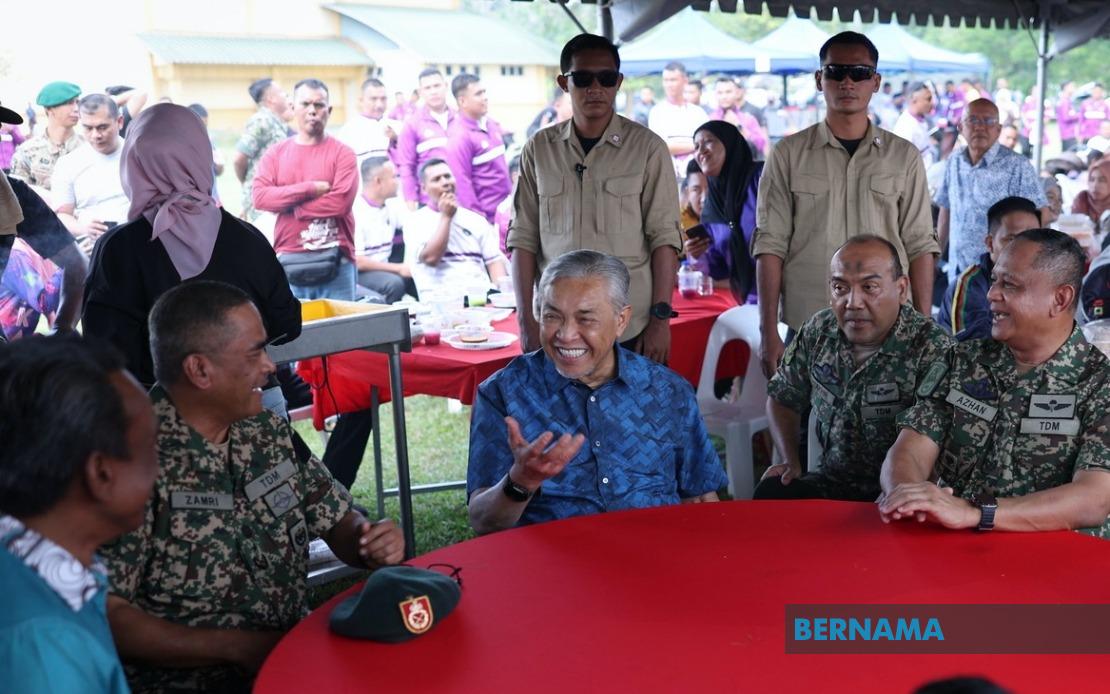
Deputy Prime Minister Datuk Seri Dr Ahmad Zahid Hamidi has made clear that no individual will escape legal scrutiny should their names surface in the forthcoming Royal Commission of Inquiry report on Lembaga Tabung Haji, rejecting any notion of immunity based on position or standing. Speaking at the Malaysian Armed Forces Southern Zone Family Day Carnival at Kem Syed Sirajuddin in Gemas, Ahmad Zahid, who also chairs Barisan Nasional and leads UMNO, stressed that the RCI findings must be disclosed in full transparency to the public.
The Deputy Prime Minister outlined the procedural framework that would govern any response to discoveries of misconduct, explaining that should the investigation uncover evidence of abuse of authority, procedural breaches, criminal breach of trust, or other forms of wrongdoing, the government possesses multiple avenues through which to pursue accountability. These mechanisms include filing reports with law enforcement authorities and launching formal investigations into commercial crime violations and associated legal violations. Ahmad Zahid's comments signal the government's intention to move beyond what has previously been a contentious delay in releasing the RCI findings.
Prime Minister Datuk Seri Anwar Ibrahim had separately indicated confidence that the Cabinet would ultimately approve public disclosure of the RCI report once formally presented for ministerial consideration. Anwar, who holds the portfolio of Finance Minister overseeing Tabung Haji, explained that the previous hesitation surrounding release had stemmed from concerns that premature disclosure could damage public confidence in the institution itself. This caution reflected legitimate institutional worries during a period when Tabung Haji was undergoing fundamental reforms and restructuring efforts.
The evolving approach now reflects changed circumstances. Anwar noted that Tabung Haji's financial and operational position has substantially improved, with the institution having secured international validation and recognition of its strengthened governance frameworks. This restoration of institutional credibility appears to have provided the political and administrative confidence necessary to move forward with transparency regarding the RCI inquiry. The timing, however, coincides closely with electoral activity in Negeri Sembilan, a politically significant state where voters are preparing for a state-level election.
When asked directly whether public release of potentially damaging findings could influence voting behaviour in the Negeri Sembilan contest, Ahmad Zahid expressed confidence in the electorate's sophistication and judgment. He asserted that Negeri Sembilan voters possess sufficient maturity and discernment to evaluate complex political considerations independently, suggesting that publication of the RCI report would not meaningfully shift their voting calculations. His characterisation reflected broader BN confidence that the ruling coalition's electoral performance would not be substantially affected by revelations from the inquiry, whatever those revelations might contain.
The Negeri Sembilan state election represents a significant test for BN's political standing following the coalition's restoration to national power. The state contests carry broader implications for the stability of the current federal government and Anwar's administration specifically. Early voting for the contest is scheduled for Tuesday, with general polling taking place on August 1, meaning the RCI report's release will occur within an intensely competitive electoral environment where messaging and voter perceptions carry heightened importance.
The Tabung Haji RCI itself represents one of the more contentious institutional examinations undertaken in recent Malaysian governance. The pilgrimage fund has been a structurally important institution for facilitating hajj journeys by Malaysian Muslims whilst simultaneously managing substantial investment portfolios and real estate holdings. Historical management decisions and alleged governance lapses at the institution attracted sustained scrutiny and public concern, particularly regarding investment losses and administrative practices during previous administrations.
The Royal Commission's deliberations have extended over considerable time, reflecting the complexity and sensitivity surrounding the investigation's findings. The delay in releasing conclusions, while officially attributed to institutional protection rationales, also reflected political calculations about optimal timing for public disclosure of potentially embarrassing or incriminating materials. The current government's apparent willingness to proceed with transparency suggests either confidence that findings, whilst critical, will not damage ruling coalition figures substantially, or a strategic decision that delayed disclosure has become politically untenable.
The principle Ahmad Zahid articulated—that legal accountability transcends institutional rank and position—carries particular resonance in Malaysian political discourse following the 1Malaysia Development Berhad scandal and subsequent judicial proceedings that demonstrated the potential for legal processes to examine senior political figures. Establishing clear commitment to this principle ahead of RCI release signals an attempt to preempt accusations of selective accountability or political manipulation of legal processes based on an individual's current position or influence.
How the government manages the RCI report's release and any subsequent investigations will test both the credibility of its reform rhetoric and the independence of Malaysian enforcement institutions. International observers and domestic stakeholders have expressed varying levels of confidence regarding the extent to which Malaysian legal and investigative authorities can function truly independently from political considerations when examining potentially compromising material involving senior figures. Ahmad Zahid's public commitment to universal accountability standards represents a clear benchmark against which the government's subsequent actions will inevitably be measured.

